Mobile phone use 'raises children's risk of brain cancer fivefold'
Alarming new research from Sweden on the effects of radiation raises fears that today's youngsters face an epidemic of the disease in later life
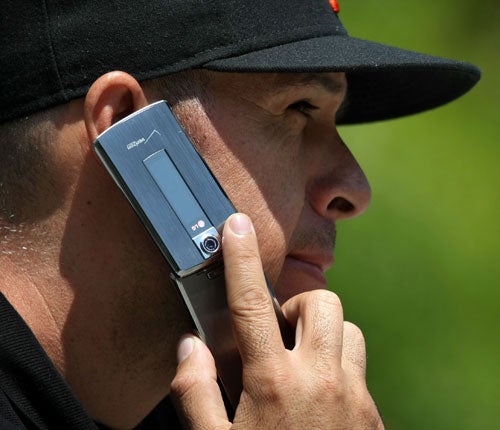
Children and teenagers are five times more likely to get brain cancer if they use mobile phones, startling new research indicates.
The study, experts say, raises fears that today's young people may suffer an "epidemic" of the disease in later life. At least nine out of 10 British 16-year-olds have their own handset, as do more than 40 per cent of primary schoolchildren.
Yet investigating dangers to the young has been omitted from a massive £3.1m British investigation of the risks of cancer from using mobile phones, launched this year, even though the official Mobile Telecommunications and Health Research (MTHR) Programme – which is conducting it – admits that the issue is of the "highest priority".
Despite recommendations of an official report that the use of mobiles by children should be "minimised", the Government has done almost nothing to discourage it.
Last week the European Parliament voted by 522 to 16 to urge ministers across Europe to bring in stricter limits for exposure to radiation from mobile and cordless phones, Wi-fi and other devices, partly because children are especially vulnerable to them. They are more at risk because their brains and nervous systems are still developing and because – since their heads are smaller and their skulls are thinner – the radiation penetrates deeper into their brains.
The Swedish research was reported this month at the first international conference on mobile phones and health.
It sprung from a further analysis of data from one of the biggest studies carried out into the risk that the radiation causes cancer, headed by Professor Lennart Hardell of the University Hospital in Orebro, Sweden. Professor Hardell told the conference – held at the Royal Society by the Radiation Research Trust – that "people who started mobile phone use before the age of 20" had more than five-fold increase in glioma", a cancer of the glial cells that support the central nervous system. The extra risk to young people of contracting the disease from using the cordless phone found in many homes was almost as great, at more than four times higher.
Those who started using mobiles young, he added, were also five times more likely to get acoustic neuromas, benign but often disabling tumours of the auditory nerve, which usually cause deafness.
By contrast, people who were in their twenties before using handsets were only 50 per cent more likely to contract gliomas and just twice as likely to get acoustic neuromas.
Professor Hardell told the IoS: "This is a warning sign. It is very worrying. We should be taking precautions." He believes that children under 12 should not use mobiles except in emergencies and that teenagers should use hands-free devices or headsets and concentrate on texting. At 20 the danger diminishes because then the brain is fully developed. Indeed, he admits, the hazard to children and teenagers may be greater even than his results suggest, because the results of his study do not show the effects of their using the phones for many years. Most cancers take decades to develop, longer than mobile phones have been on the market.
The research has shown that adults who have used the handsets for more than 10 years are much more likely to get gliomas and acoustic neuromas, but he said that there was not enough data to show how such relatively long-term use would increase the risk for those who had started young.
He wants more research to be done, but the risks to children will not be studied in the MTHR study, which will follow 90,000 people in Britain. Professor David Coggon, the chairman of the programmes management committee, said they had not been included because other research was being done on young people by a study at Sweden's Kariolinska Institute.
He said: "It looks frightening to see a five-fold increase in cancer among people who started use in childhood," but he said he "would be extremely surprised" if the risk was shown to be so high once all the evidence was in.
But David Carpenter, dean of the School of Public Health at the State University of NewYork – who also attended the conference – said: "Children are spending significant time on mobile phones. We may be facing a public health crisis in an epidemic of brain cancers as a result of mobile phone use."
In 2000 and 2005, two official inquiries under Sir William Stewart, a former government chief scientist, recommended the use of mobile phones by children should be "discouraged" and "minimised".
But almost nothing has been done, and their use by the young has more than doubled since the turn of the millennium.
Join our commenting forum
Join thought-provoking conversations, follow other Independent readers and see their replies
Comments
Bookmark popover
Removed from bookmarks