Playing God: the man who would create artificial life
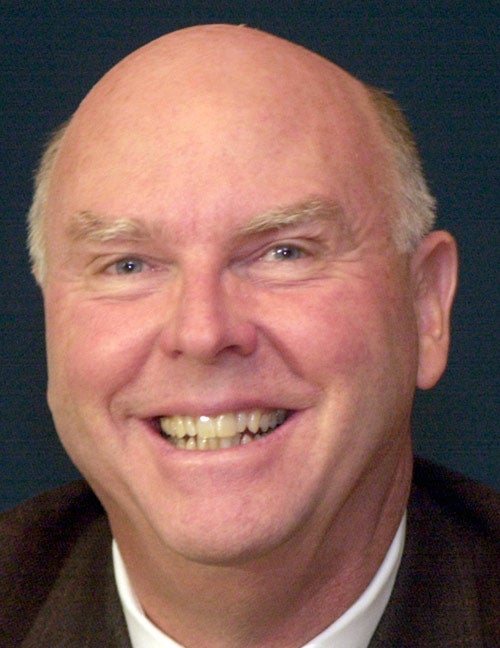
The possibility of a synthetic life form being created in a laboratory has come tantalisingly close to reality after scientists said last night that they had generated the largest man-made molecule of DNA – the chemical blueprint of life.
For the first time researchers, led by the controversial American scientific entrepreneur Craig Venter, have manufactured the entire DNA genome of a free-living micro-organism. This means that "artificial life" is on the verge of being created in a test tube.
The huge DNA molecule represents the chromosome that makes up the complete genome of Mycoplasma genitalium, a parasitic microbe that lives in the reproductive tract. Dr Venter and his colleagues made the chromosome by placing each of its 582,970 individual chemical units in their correct genetic sequence.
The achievement was the final step necessary before the scientists attempt their ultimate goal of inserting the synthetic genome into the empty "shell" of a non-living cell to see if they can create a fully-replicating, man-made organism.
Dr Venter said the aim of the research was to make new, artificial life forms that can help to solve the world's most pressing environmental problems, for instance by producing green biofuels, breaking down toxic waste or even absorbing carbon dioxide from the atmosphere.
He emphasised that any new microbes created by the process would be made incapable of infecting other organisms – especially humans – and that they would not be able to survive beyond the confines of a laboratory because of self-destruct mechanisms built into their DNA.
Dr Venter compared the achievement to the creation of a software programme for the operating system of a computer. The next step would be to put the operating system into the computer hardware of an empty cell and see if it could be "booted up".
"We want to emphasise that we have not yet booted up these synthetic chromosomes ... There are some problems to be overcome, but we are confident that they will be," Dr Venter said. "I'd be surprised if we couldn't do it in 2008."
The work, published in the journal Science, was carried out at the J Craig Venter Institute in Rockville, Maryland, by a team that included Hamilton Smith, who won a share of the 1978 Nobel Prize for his discovery of ways to cut DNA into fragments using chemicals called restriction enzymes.
Dr Smith said the study created 101 DNA fragments or "cassettes", each composed of between 5,000 and 7,000 DNA units, or base pairs, covering the entire length of the mycoplasma's chromosome. The cassettes were first grown, or "cloned", inside the cells of living bacteria and then transferred into yeast cells to make the final, fully-formed chromosome.
"We have completely chemically synthesised an entire Mycoplasma genitalium chromosome. It's about 580,000 nucleotides in length and we've successfully cloned the chromosome in yeast," Dr Smith said.
Mycoplasma genitalium was chosen because it has one of the smallest known genomes and the scientists were interested in knowing the minimal set of genes required to create a free-living organism. Its genome was first sequenced in 1995, by a team that included Dr Venter and Dr Smith.
In 1999, Dr Venter said he intended to start a minimal genome project based on mycoplasma to see which genes were essential for life, and which were superfluous.
"The goal would be to get a cell where every gene is absolutely essential so you can't mutate any of the genes without killing the cell," Dr Smith said.
"I like the analogy with the computer. You have an operating system which, by itself, doesn't do anything, but when you install it on a computer, then you have a working computer system.
"It's the same with the genome. The genome is the operating system for a cell and the cytoplasm of the cell is the hardware that is required to run that genome. The two together make a living, reproducing cells. So when we chemically synthesise the genome it's of no use sitting in the test tube, you have to transplant it into a receptive cytoplasm. Once you do that, then the genome is expressed and you have a dividing cell."
He said the synthesised genome would then be transplanted to see if his theory worked.
In the long term, the scientists want to engineer an artificial genome, containing extra sets of genes that can perform useful tasks, for example creating new biofuels such as pure hydrogen, which is one of the cleanest sources of energy.
Dr Hamilton said: "When we started this work several years ago, we knew it was going to be difficult. We have shown that building large genomes is feasible so that important applications such as biofuels can be developed," .
Dr Venter brushed aside questions about the ethics of creating artificial life forms, saying that he did not know of an area of modern science "that started with the ethical discussions before the first experiment was done".
Join our commenting forum
Join thought-provoking conversations, follow other Independent readers and see their replies
Comments
Bookmark popover
Removed from bookmarks