Scientists say you're not the Neanderthal they used to think
The shared DNA of Neanderthals and humans is probably due to a common ancestor
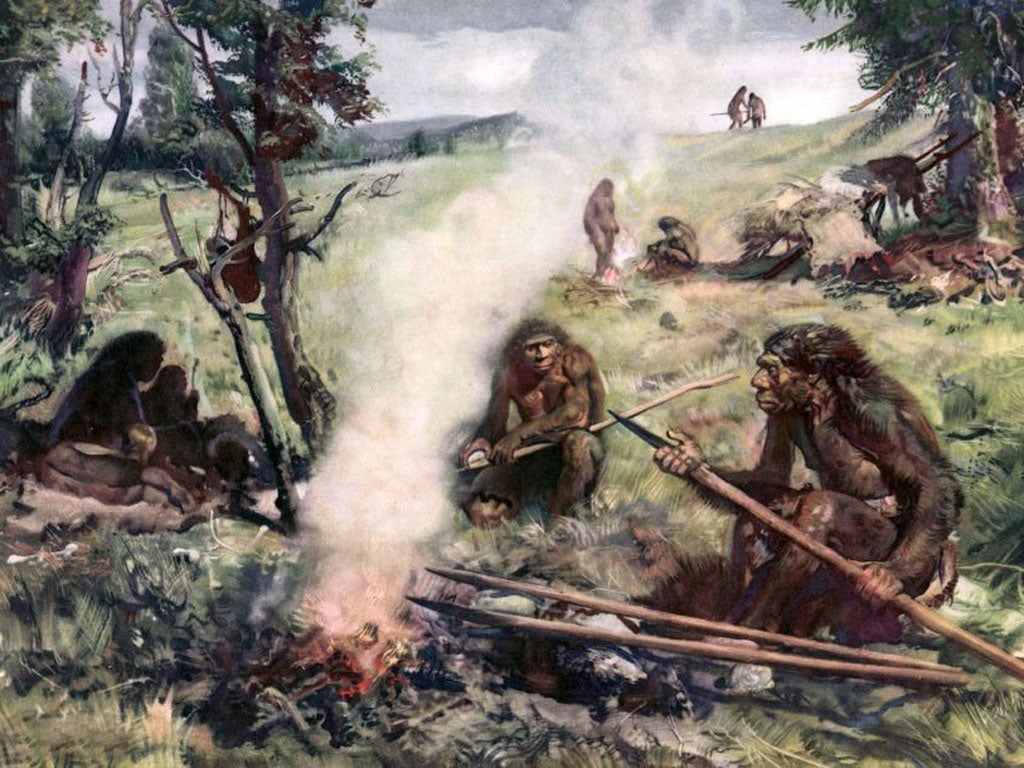
Neanderthal man did not, after all, leave his genes behind when he became extinct 40,000 years ago, according to a study that discredits the idea of the Neanderthals interbreeding with the ancestors of modern humans. The latest analysis of the Neanderthal genome has contradicted a study of 2010 that concluded there was limited interbreeding with Homo sapiens, suggesting there was a little bit of Neanderthal left in many people alive today.
The debate over what happened to the Neanderthals and whether they ever had children from "mixed marriages" with Homo sapiens has raged for several decades. In 2010, the first genetics evidence emerged in a study showing that between 1 and 4 per cent of the DNA of some modern humans was shared with the Neanderthals, indicating a brief period of hybridisation between the two species.
However, the latest study has concluded that this shared DNA was not a fossilised remnant of the time when Neanderthals and modern humans "made whoopee", but in fact a leftover from a much earlier point in human pre-history when Neanderthals and modern humans had shared a common ancestor in Africa.
Dr Andrea Manica of the University of Cambridge said that although his work does not totally discount the idea of some limited hybridisation, there is no doubt that if such interbreeding took place it left little if any mark on the genetic make-up of modern humans.
"To me the interbreeding question is not whether there was hybridisation but whether there was any hybridisation that affected the subsequent evolution of humans. I think this is very, very unlikely," Dr Manica said.
"Our work shows clearly the patterns currently seen in the Neanderthal genome are not exceptional, and are in line with our expectations of what we would see without hybridisation.
"So, if any hybridisation happened then it would have been minimal and much less than what people are claiming now," Dr Manica added.
The study, published in the journal Proceedings of the National Academy of Sciences, found that the 1 to 4 per cent similarity between the DNA of Neanderthals and non-Africans today probably arose from a divergence of the ancient human population in Africa between 350,000 and 300,000 years ago. One group moved north to become ancestors of the Neanderthals, who had emerged from an early migration from Africa into Eurasia. The second group moved south to become the ancestral population that gave rise to modern humans, Homo sapiens, which emerged from Africa about 70,000 years ago.
Join our commenting forum
Join thought-provoking conversations, follow other Independent readers and see their replies
Comments
Bookmark popover
Removed from bookmarks