Solved: riddle of Siberia's flattened forest
A century on, scientists say massive explosion was caused by comet collision
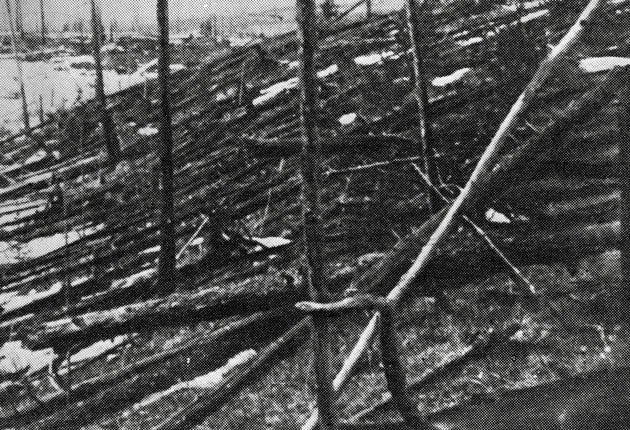
A massive explosion that flattened an entire forest in northern Russia over an area of 800 square miles more than a century ago was almost certainly caused by the Earth colliding with a comet, according to a study by rocket scientists in the United States.
The explosion in 1908 occurred in the sky at a remote location in Siberia near the Tunguska river. It is estimated to have been equivalent to a 20-megaton nuclear bomb, which would have decimated everything within the M25 had it occurred over London rather than a largely uninhabited region.
Tunguska has long been the subject of intense speculation, with suggested causes ranging from the release of a gigantic cloud of explosive methane gas from underground, to a collision with anti-matter particles from deep space, or even the crash of a visiting extra-terrestrial spacecraft.
One of the most likely explanations, however, had been that the Earth was hit by a piece of space rock – but a number of scientific expeditions to the area failed to find the impact crater, suggesting that if such a meteoroid had struck the Earth in 1908 it must have exploded high enough in the atmosphere to have disintegrated before reaching the ground.
Now a team of researchers studying the plumes of water vapour created by the rocket engines of the Space Shuttle believe they have found the crucial evidence in favour of another theory: a collision with the icy heart of a comet.
This would have released huge volumes of water vapour at very high altitude, creating highly reflective clouds that may explain why the sky was lit up for days after the collision, with people as far away as London saying that they could read newspapers outdoors at midnight, the scientists said.
"It's almost like putting together a 100-year-old murder mystery," said Michael Kelley professor of engineering at Cornell University in New York. "The evidence is pretty strong that the Earth was hit by a comet in 1908."
The dramatic illumination of the night sky in the day after the event on 30 June 1908 was probably caused by the formation of "noctilucent" clouds – named because they are visible at night – which are made up of ice particles formed at very high altitude and low temperatures, Professor Kelley said.
A study of exhaust plumes from the Space Shuttle have shown how noctilucent clouds can form a day after a shuttle launch and many miles from its flight path due to high-speed winds generated at this altitude, the scientists found. The exhaust plume is a model of how a comet would have created similar noctilucent clouds, they said.
The appearance of skies bright enough to read newspapers at night as far away as London – some 3,000 miles away from Tunguska – could be explained by the transport of huge volumes of water vapour arising from the comet by the high winds of the upper atmosphere where these clouds form, Professor Kelley said.
Join our commenting forum
Join thought-provoking conversations, follow other Independent readers and see their replies
Comments
Bookmark popover
Removed from bookmarks