Stressed out? It could be in your genes
To their surprise, neuroscientists have discovered that stress can be passed down the generations – and even though it can be harmful, there is a logical biological reason.
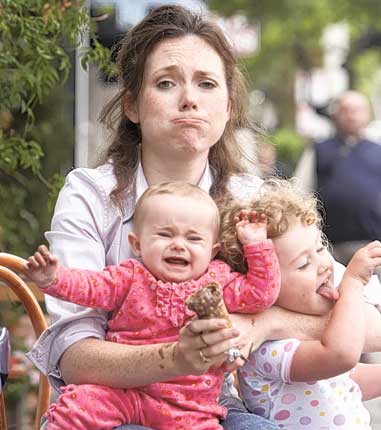
Stress: there's not a system in your body it doesn't poison in the end. Over time, it raises your blood pressure, increases your chances of infertility and makes you age faster, and that's not all. Remove the source of the stress and all those horrors vanish, right?
Wrong. A growing body of scientific evidence suggests that not only can stress bring about permanent changes in your body, but you can even pass on some of those changes to your offspring. What's more, some researchers are now arguing that, far from being an exclusively human problem, psychological stress is rampant in nature. Its influence is so powerful, they claim, that like the conductor of an orchestra, it imposes a rhythm on whole ecosystems, determining which species are booming, and which are bust.
In fact, says Rachel Yehuda, a neuroscientist at the Mount Sinai School of Medicine in New York City, it's time to rewrite the textbooks about stress, doing away with the outdated idea that its effects are transient. "Some effects of the environment and of experience are long lasting," she says. "And for that we need a new biology." Yehuda had her first inkling of the indelible mark that stress can leave on families back in 1993, when she opened a clinic to treat the psychological problems of Holocaust survivors, and was deluged with calls from their adult children. Investigating further, she found that those children were particularly prone to post-traumatic stress disorder (PTSD). Both parents and children tended to have low levels of the hormone cortisol in their urine. Stranger still, the more severe the Holocaust survivor's PTSD symptoms, the less cortisol there was in their child's urine.
Cortisol plays an important role in the body's stress response. When a threat presents itself, the brain instructs the adrenal glands, just above the kidneys, to release hormones, including adrenaline, into the blood. The result is the racing heart, rapid breathing and so on that prepare us for fight or flight. When the threat has passed, the brain sends another signal to the adrenal glands to release cortisol. Cortisol shuts down the stress response by binding to receptors in certain regions of the brain, including the hippocampus.
At McGill University in Montreal, Canada, neuroscientist Michael Meaney has shown that stressful events in the early lives of rats, such as being reared by a negligent mother, can affect their response to stress as adults. The pups of negligent mothers grow up to be fearful and skittish, and they have fewer hippocampal receptors tocorticosterone (the rat equivalent of cortisol) than the pups of attentive mothers.
Last year, Meaney's group made headlines when it reported a similar finding in humans. Meaney's former student Patrick McGowan managed to get hold of tissue samples from the brains of 24 adults who had committed suicide, half of whom had been abused as children, and half of whom had not. The researchers found that the hippocampi of the abuse victims contained fewer cortisol receptors than those of the individuals who had not been abused.
In both rats and humans, therefore, stressful early life events leave an enduring trace in the brain, causing those brains to be less sensitive to the stress-dampening effects of cortisol. And in both species, that reduced sensitivity is associated with so-called epigenetic changes – chemical modifications to DNA that alter the activity of genes without altering the genes themselves. Genetic change, also known as evolution, takes millions of years, but epigenetic changes can be accumulated in a lifetime, allowing organisms to adapt more quickly than their genomes can. Or as biochemist Susan Gasser of the Friedrich Miescher Institute for Biomedical Research in Basel, Switzerland, puts it: "Epigenetics frees us from being a prisoner of our genes."
Meaney's group found that the gene encoding the corticosterone receptor in rats carries different epigenetic marks, or modifications, in the brains of the offspring of negligent and attentive mothers. As a result, the gene is less active in the neglected offspring, meaning that it is translated into fewer of those critical receptors – the ones responsible for shutting down the stress response – with profound consequences for the pups' behaviour. They found a similar difference between the abused and the non-abused suicide victims.
Yehuda began to wonder if epigenetic mechanisms could explain the vulnerability to PTSD of the children of Holocaust survivors. This is a radical proposal, since it implies that epigenetic changes can be transmitted from one generation to the next. Most epigenetic marks are erased during the formation of the gametes – the sperm and egg – so that each generation starts out a blank slate. However, there is now good evidence that some survive that erasure process, and stress-related marks are among them.
Why should the effects of stress be so robust? Do they represent a failure of the system whereby our epigenetic status is reset to zero at conception, or could offspring that are programmed by their mothers for life in a dog-eat-dog world – offspring that are fearful, jittery, or in the jargon of psychiatrists, "hypervigilant" – actually have a better chance of survival than their more-relaxed counterparts?
It's a counter-intuitive idea, but studies in animals other than humans suggest there might be some truth in it. In European starlings, for example, a female's stress hormones contaminate the yolk of her eggs, meaning that her young are exposed to them from the earliest stages of life. Oliver Love, a behavioural ecologist at the University of Windsor in Ontario, Canada, has shown that fledglings that were exposed to high levels of stress hormones in the egg perform better in flight trials than fledglings that were not, because their wing muscles mature earlier. "[Stress] prepares them better for escape from predators," Love says. Rudy Boonstra of the University of Toronto's Centre for the Neurobiology of Stress, thinks that this kind of heritable stress response could explain the dynamics of entire food chains. In the boreal forest that covers half of Canada, for example, a suite of predators that includes lynx, coyotes and great horned owls prey on the snowshoe hare. Three hundred years ago, fur traders who in turn preyed on lynx had already noticed a strange relationship between predator and prey. The hare population cycles from low to high to low again, reaching its highest density approximately once a decade. Lynx numbers follow suit, with a lag of one or two years.
After 30 years of probing this mysterious synchrony, Boonstra thinks he has finally got to the bottom of it. When hare numbers are low and its predators numerous, hare mothers are stressed – not surprisingly, since hare mortality is close to 95 per cent at this point in the cycle – and the researchers can read the hormonal signature of that stress in the high cortisol content of their faeces. "We know what the hares are thinking, in the endocrinological sense," explains Boonstra.
He thinks that the hare mothers pass on that stress signature to their offspring, which then grow up to be hypervigilant. As in the case of Love's sparrows, that might prepare them to better evade their predators, so that they have a better chance of surviving and reproducing. Meanwhile, finding food becomes harder for the lynx, whose numbers continue to fall, only entering the upswing of recovery once hare numbers have recovered to a certain extent themselves, and the juveniles have become less wary again.
McGowan is now working with Boonstra to investigate the epigenetic mechanisms that might underpin that waxing and waning of wariness in the hares. Boonstra predicts that they will find big differences in the numbers of cortisol receptors in the brains of juveniles at the peaks and troughs of the cycle. "Predators are amazingly important in structuring communities," he says. "Until now we've focused on the direct effects of predators, but the indirect effects, the psychological effects, may be as great or greater."
What can such findings tell us about humans? Yehuda's work strongly suggests that a modified stress response may be heritable in us too. However, there is one major difference between people and the animals in Canada's boreal forest: we are long-lived.
Human longevity means that, unlike a hare, a person is unlikely to inhabit the same environment that her parents did, which in turn means that there is a risk of a mismatch between the environment she was programmed for, and the one she enters. It's that mismatch that can cause problems. As Yehuda points out, hypervigilance might be a boon for a prisoner in a concentration camp, but in a modern city in peacetime it can be a serious handicap – as she found when she began to treat the children of Holocaust survivors for PTSD.
We live long partly because we have been so successful in shaping our own environment. When it comes to stress, therefore, we may be the victims of our own success.
Join our commenting forum
Join thought-provoking conversations, follow other Independent readers and see their replies
Comments
Bookmark popover
Removed from bookmarks