Ten people who changed the world: Brian Cox, the man who turned science into a sexy subject
Whether in the cut-throat field of politics or the fashion industry's corridors of power, this year they left our planet a better place. Celebrate 10 of the best, nominated by Independent writers
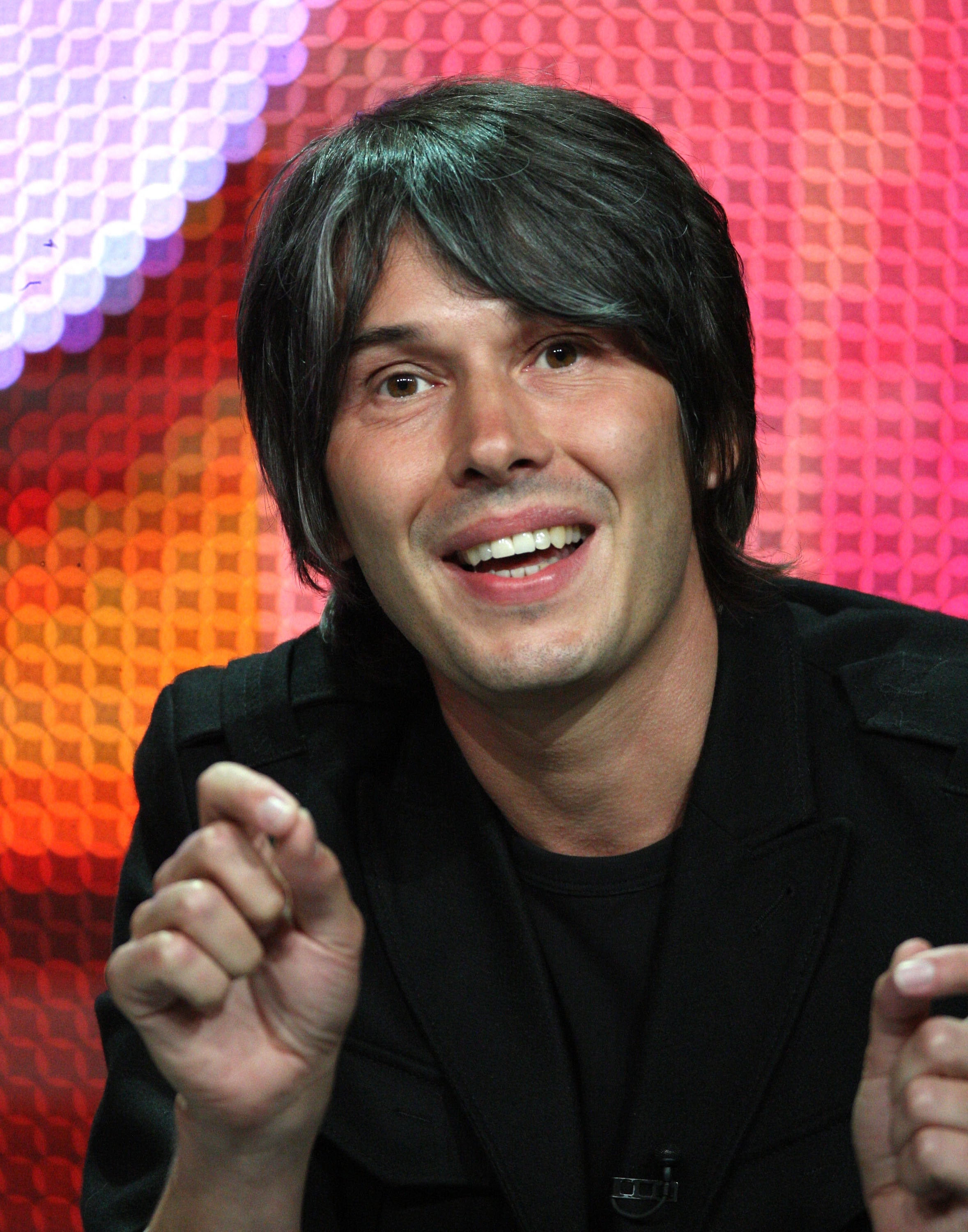
It was the year we saw an unprecedented turnaround in the popularity of science – especially the harder physical sciences – among A-level students. Exam boards marvelled at the increase in the number of teenagers who want to study the notoriously difficult subjects of physics and maths. There could be only one explanation: the Brian Cox effect.
With his floppy hair, youthful smile and telegenic good looks, Professor Brian Cox is living proof that you don't need to be bald with bad teeth to be a boffin. His second television series, Wonders of the Universe, was screened this year and received widespread critical acclaim. It drew in a young audience, demonstrating that the traditionally nerdy subject of physics is actually quite cool.
When senior examiners announced in August a dramatic rise in the number of students taking A-level physics (up 19.6 per cent over five years), maths (up more than 40 per cent) and chemistry (up 19.4 per cent), they had little doubt that Professor Cox had played an important role in putting the hard sciences at the centre of popular youth culture. "It could be the Brian Cox effect. It could be as simple as that," said Ziggy Liaquat, managing director of Edexcel, the exam authority.
Joe Winters of the Institute of Physics said that while the ultimate reason for the resurgent interest in physics is good teaching in schools, Cox has almost certainly had a part to play. "While we don't have any hard evidence to show that Brian Cox is the main reason for the resurgence in the popularity of physics, anecdotally we're confident that Brian has been a major driver of increasing interest levels in the subject," Winters says. And it's also true that many teenagers worried about future job prospects are increasingly aware that a degree in physics or maths is going to make them more employable than a softer humanities qualification.
As a television presenter with some style, Cox has evidently provided that extra encouragement to nudge young people along the path of a career in science or engineering. "I do have an agenda. I believe that Britain needs to be a more scientific nation. I'm happy to be one of the most high-profile scientists in the country, and I feel a responsibility to use that appropriately," he says.
"I go to schools and I see and hear there are a lot of kids, girls as well as boys, interested in science and engineering. This is the message: that these subjects are great things to do – for the individual it's great because there is a shortage of scientists and engineers, but it's also great for the country, because our country needs these people to improve our economy in the 21st century."
Cox, who is 43, is married to the television presenter Gia Milinovich, with whom he has a baby son. He is now professor of physics at Manchester University, where he undertakes experiments in particle physics at the Cern laboratory near Geneva. But before that, Cox played keyboards for the band D:Ream, whose single "Things Can Only Get Better" hit number one in 1994, and subsequently became New Labour's anthem.
He applied to do his first physics degree at Manchester at the relatively late age of 23. Before that he was a budding rock star with a band called Dare, which he left after a brawl in a Berlin bar. Despite his later success with D:Ream, his first-class physics degree allowed him to study for a PhD and become a full-time academic – and now part-time television presenter. His breakthrough as a professional science communicator came with his first TV series, Wonders of the Solar System, which attracted five million viewers. He also fronts a live show with science comedian Robin Ince, which has drawn capacity crowds at venues usually reserved for rock concerts.
Cox says that his media success shows that science can be a central part of modern popular culture. "There was a period of getting celebrities to do science programmes, but now it's academics doing it. There's a conscious decision to turn academics into presenters and celebrities," he told the Edinburgh International Television Festival in August.
"It's the opposite of the X Factor effect."
Join our commenting forum
Join thought-provoking conversations, follow other Independent readers and see their replies
Comments