Too late to contain killer flu science, say experts
US government's hopes of suppressing details of controversial research may be doomed, say scientists
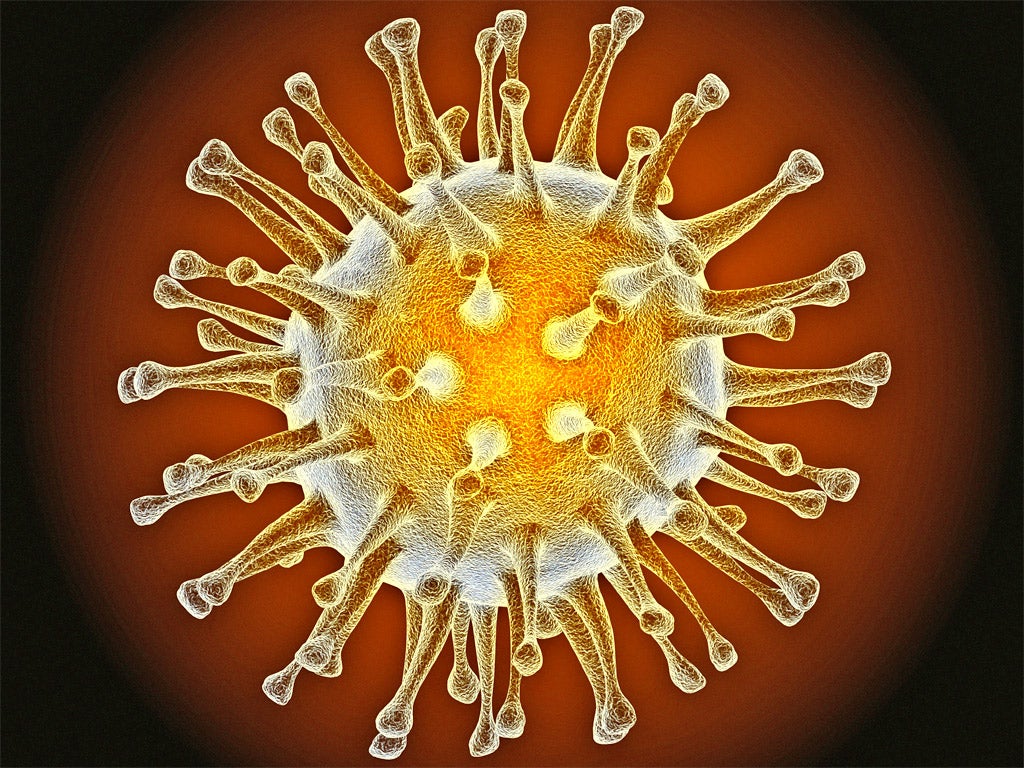
Attempts to censor details of controversial influenza experiments that created a highly infectious form of bird-flu virus are unlikely to stop the information from leaking out, according to scientists familiar with the research.
The US Government has asked the editors of two scientific journals to refrain from publishing key parts of research on the H5N1 strain of bird-flu in order to prevent the information falling into the hands of terrorists intent on recreating the same flu strain for use as a bioweapon.
However, scientists yesterday condemned the move. Some said that the decision comes too late because the information has already been shared widely among flu researchers, while others argued that the move could obstruct attempts to find new vaccines and drugs against an infectious form of human H5N1 if it appeared naturally.
Professor Richard Ebright, a molecular biologist at Rutgers University in Piscataway, New Jersey, said that the research, which was funded by the US Government, should never have been done without first assessing the risks and benefits.
“The work posed risks that outweighed benefits and that were clearly foreseeable before the work was performed,” Professor Ebright said.
“The work should have been reviewed at the national or international level before being performed, and should have been restricted at a national or international level before being performed,” he said.
Two teams of researchers, one led by Ron Fouchier of Erasmus Medical Centre in Rotterdam and the other by Yoshihiro Kawaoke of the University of Wisconsin-Madison, have submitted manuscripts on bird-flu virus to the journals Nature and Science. In them, they describe how they deliberately mutated the H5N1 strain of bird-flu into an “airborne” strain that can be transmitted in coughs and sneezes between laboratory ferrets, the best animal “model” of human flu.
In an unprecedented move, the US National Institutes of Health (NIH), which funded both projects, requested the deletion of key details of the methodology and viral genetic sequences from the manuscripts prior to publication. It did so following recommendations of its own independent advisers on the US National Science Advisory Board for Biosecurity.
Professor Paul Keim, chairman of the biosecurity board, said that the request to withhold certain details of the research is not the same as censorship and, although it sets a precedent in the biological sciences, it is common in other areas of science where there is potential for dual use of research in both civil and military applications.
“The US Government doesn’t have the legal authority to stop these publications. They have requested that the journals and scientists refrain from publishing the full details of their work, at this time,” Professor Keim said.
“It is hard to call that censorship. If the data and methods are restricted by the authors and journals, it is a voluntary action on their part. I also think that it is the responsible action for the current situation, and so does the US Government,” he said.
However, Dr Fouchier at the Erasmus Medical Centre in Rotterdam said that although his institute has agreed to abide by the voluntary restrictions on publication, he said it will be almost impossible to guarantee the confidentiality of the information given that the scientific data has already been shared with hundreds of researchers and governments in open scientific meetings.
Flu scientists in Britain, meanwhile, said that it is doubtful whether the details of the two experiments can be kept secret even if Science and Nature agree to the redaction of key parts of the scientific manuscripts – which they seem to have accepted.
“The exact mutations that made this transformation possible were not particularly novel or unexpected so anyone with a reasonable knowledge of influenza virology could probably guess at them if they so wished,” said Wendy Barclay, professor of influenza virology at Imperial College London.
“I’m very wary that information should be withheld from the scientific literature because we move forward by sharing information. It’s important to know if viruses such as H5N1 are capable of tolerating the mutations that would allow human-to-human transmission,” Professor Barclay said.
“We need to know the mutations to look our for. If we don’t know what the mutations are that make the virus more transmissible, we won’t know what to look out for when we monitor the spread of new flu viruses. This type of information is generated for a good reason – it’s to help us to be prepared,” she said.
Professor John Oxford, a flu expert at Queen Mary University of London, agreed: “The study by Fouchier is a huge service to all of us because it reminds us of how wafer thin the barrier is between a benign H5N1 virus and one that could spread easily. The 120 WHO flu labs around the world can use the DNA sequence information to identify and stop the spread of new H5N1 variants.”
Dangerous science: Discoveries for good – and bad
Nuclear physics
The splitting of the atom and the science of sub-atomic physics led to the development of nuclear power and advances in nuclear medicine, such as MRI scanners. It also helped the advance of nuclear weapons based on nuclear fission (A-bombs) and thermonuclear fusion (H-bombs).
Rocket technology
The development of rockets in the 1950s led to man's first landing on the moon. Since then rockets have placed countless civilian satellites in orbit, as well as powering space probes. But rockets are also the key delivery system for intercontinental ballistic missiles that carry nuclear warheads.
Neuroscience
Many areas of neuroscience have potential dual-use capabilities. For example, drugs that induce semi-conscious states may have legitimate medical uses, but they could also be used as incapacitating agents in military applications, to induce panic, pain, depression or delirium.
Molecular biology
Advances in DNA technology and genetic engineering, which have allowed scientists to reconstruct the genomes of simple organisms, have produced many benefits, from new vaccines to pest-resistant crops. But molecular biology could also be used to produce "weaponised" viruses and microbes that could kill large numbers of people.
Join our commenting forum
Join thought-provoking conversations, follow other Independent readers and see their replies
Comments