Under the Microscope: Should we be worried about cloned meat?
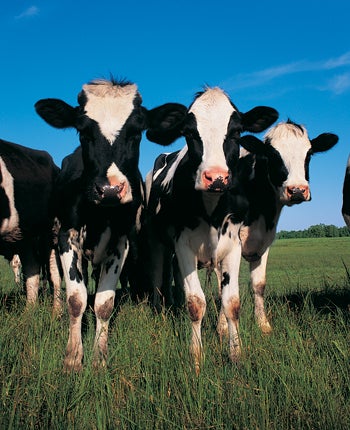
Asked by: William Carter, Edinburgh
Answered by: Professor Keith Campbell, School of Biosciences, Division of Animal Physiology, University of Nottingham
How cloning works
Cloning is a method of asexually reproducing a genetic copy of an animal. Sexual reproduction involves the fusion of a sperm and an egg, each contributing 50 per cent of the genetic material.
In the technique of somatic cell nuclear transfer – so-called "cloning" – the sperm is not needed. Instead, you take an egg and replace its own genetic material with genetic material from the animal you want to clone. You then place that egg into an animal, which carries it to full term and gives birth to the cloned animal.
Cloned food products
There are no proven differences between the products from animals produced by sexual reproduction and those from animals produced by cloning – and to be honest I would never have expected any.
Early concerns that there were differences prompted research to establish the differences and similarities. Of course, when there are no obvious differences, and no expectations as to what differences may occur, the process is more difficult; this has resulted in a large amount of research using many modern techniques to check the safety of these products.
There aren't millions of cloned animals in the world to study, but there have been major studies on the milk from cloned dairy cattle and on the meat from cloned beef cattle. The animals that we've been hearing about in the news at the moment have only been offspring of clones, not clones themselves, and similar studies have also been carried out on these second-generation animals
To my knowledge there are no cloned cows in the UK; it is only their offspring we are talking about. No cattle have been cloned in the UK, and cloned embryos have not been imported, due to international regulations. For technical reasons, these regulations restrict importation to the embryos that have been produced from cloned animals.
Safety concerns
Research has found that the product is safe. There is no danger from any meat or milk from cloned animals. I'm not sure what people were expecting; it's not going to be poisonous, or the animal itself would probably die.
The Food Standards Agency (FSA) said a year or two ago that they consider cloned food to be safe. The European Food Standards Agency, and the Food and Drug Administration in the US, have said it's safe to eat, but it appears that the EU wants to ban products associated with cloned animals. I think the public's confusion is due to the lack of information from the regulatory agents; it's difficult to make your way through the quagmire.
I don't know why the FSA considers meat and milk from cloned animals to be "novel food". Labelling food as novel suggests a difference, yet research has shown that the milk and meat from cloned cattle and their offspring is not different, and therefore is not novel.
Cloning for consumption
We are not going to be producing cloned animals to eat anyway – the cloning process is too expensive. However, the addition of cloning to breeding programs can help accelerate the breeding process. If you've got one good animal, you're limited to the number of offspring you can produce from it. If you clone it, on the other hand, you can increase the number of offspring, meaning that you can disseminate those desired genes into the population faster.
Cloning is less efficient than other methods of animal reproduction, so the animal would need to be worth an awful lot. I suppose it rather depends on what the product is – a Japanese Black cow may be worth cloning, because it's an expensive product, but in terms of your average roast beef it's just not going to be worth it.
Welfare concerns
There are welfare issues with cloning. Animals have been born overly large, which can cause problems for the surrogate mother, and some animals have been born with abnormalities. But looking at the data from around the world, there's been a reduction in abnormalities. The process has been modified and improved upon.
People worry that we are playing God by removing the reproduction process. But what cows mate naturally? Very few, whether in this country, Europe or the Americas. Artificial insemination is used. There was a huge furore back in the 1950s about the introduction of artificial insemination, but it is now accepted practice.
The addition of animal cloning to agricultural practice will accelerate breeding programs with no danger from the consumption of the products derived from the cloned animals or their offspring. In my opinion, this really is a storm in a teacup.
Join our commenting forum
Join thought-provoking conversations, follow other Independent readers and see their replies
Comments