Assisted suicide policy 'focused on suspect motivation'
New guidelines on assisting suicide will place closer scrutiny on the motivation of the suspect, the chief prosecutor in England and Wales said today.
Director of Public Prosecutions Keir Starmer said each case would be judged on its merits and denied he had legalised assisted suicide or "opened the door to euthanasia".
The stricter, final version of the policy will also place less emphasis on the health of the victim - such as whether they are terminally ill.
It also makes clear that anyone assisting suicide who benefits from the death is unlikely to be prosecuted as long as compassion was the "driving force" behind their actions.
Mr Starmer said: "The policy is now more focused on the motivation of the suspect rather than the characteristics of the victim.
"The policy does not change the law on assisted suicide. It does not open the door for euthanasia.
"It does not override the will of Parliament. What it does do is to provide a clear framework for prosecutors to decide which cases should proceed to court and which should not."
The new rules also removes the reference to husbands and wives or close friends being less likely to be prosecuted because of their close relationship to the victim.
Responses to the initial guidance, published last year, argued that such relationships could be "antagonistic or manipulative".
The eight pages of guidelines were released this morning along with a 45-page summary of responses.
The vast majority of responses were from individual members of the public.
Academics, health workers, politicians and religious groups also contributed their views.
Assisted suicide remains a criminal offence in England and Wales, punishable by up to 14 years in prison, but individual decisions on prosecution are made depending on the circumstances in each case.
The interim policy was published in September and has been in force since.
It made clear that someone acting out of compassion, to help a terminally ill patient with a "clear, settled and informed wish to die" is unlikely to face the courts.
But persuading or pressuring the victim to kill themselves, or benefiting from their death, would encourage prosecution.
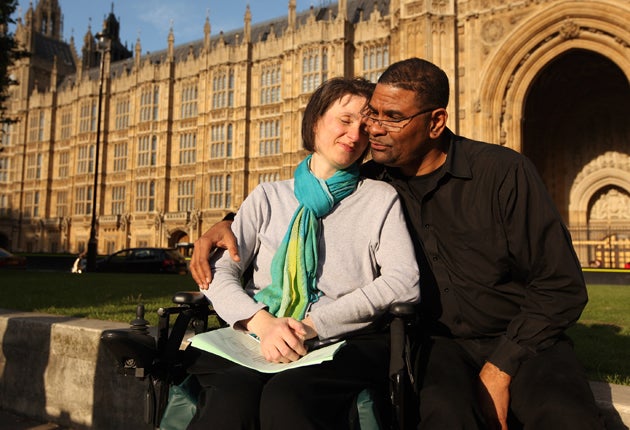
Mr Starmer was forced to issue the guidelines after a Law Lords ruling in favour of Debbie Purdy, who has multiple sclerosis.
She wanted to know whether her husband would be prosecuted for helping her to end her life.
Campaigners for the right to die welcomed the initial guidelines and called for the Government to legislate on the issue, but ministers were reluctant to intervene.
Critics have complained that Mr Starmer was effectively legalising assisted suicide.
Lord Carlile QC, chairman of Care Not Killing, welcomed the changes to the guidelines.
He said: "These revised guidelines greatly reduce the risk of undermining existing law.
"Our main concern was that the interim guidelines singled out as a group those who were disabled or ill, thereby affording them less protection than other people under the law.
"We are very glad this has been removed.
"There are still some flaws and problems which will need attention, such as how a compassionate suspect's motives are to be determined in practice."
Campaigners for a law on assisted suicide said they would continue to press the Government to act.
Sarah Wootton, chief executive of Dignity in Dying, said: "The guidelines are a victory for common sense and compassion. The guidance represents a significant breakthrough for choice and control at the end of life for those who feel they are suffering unbearably.
"Critically, the guidelines recognise the difference between assisting someone to die out of compassion, at their request, and a malicious or self-serving act which results in the death of another."
Ms Purdy added: "I am still overwhelmed and delighted by this victory. It was the right decision by the Law Lords, and people I meet every day in the street tell me how glad they are that we won. Omar and I can now get on with our lives.
"Because I will know the likely consequences of any decisions I choose to make about my death, I won't have to make those decisions early. I will continue to campaign for assisted dying to be legal in the UK."
Liberal Democrat MP Evan Harris said: "The fundamental problem remains that the law needs to be changed by Parliament.
"The Law Lords have essentially ruled that our existing law on assisted suicide is far too wide. It captures ethical acts of compassion which should not be prosecuted, as well as immoral acts of helping a depressive commit suicide, which deserve punishment - of up to 14 years in prison.
"No guidelines will ever be able to distinguish, with the clarity needed, between compassionate assistance to relieve terminal suffering of competent adults, and wicked assisted suicide of the mentally ill - legislation is needed, and Parliament should act."
Scope, a charity for the disabled, warned the new guidelines weaken legal protections for victims of assisted suicide.
Chief executive Richard Hawkes said: "We understand that assisted suicide is a complex and emotional issue.
"However, we do not support any weakening of the protection offered under the law on assisted suicide, which is exactly what these new guidelines do.
"Many disabled people are frightened by the consequences of these new guidelines and with good reason. There is a real danger these changes will result in disabled people being pressured to end their lives."
Bookmark popover
Removed from bookmarks