Exploited. Ignored. Depressed. Suicidal: Jersey tragedy exposes crisis
The lonely, isolated lives that many Poles are compelled to live in the UK mean pressures can mount
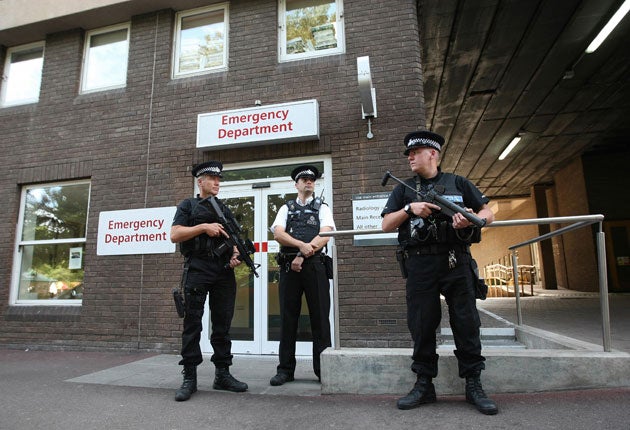
Police described it as one of the safest places in the Western world, with the last murder recorded almost a decade ago. Now, a week after six people, including three children, were stabbed to death on a summer's afternoon on the normally tranquil Channel island of Jersey, no one is left more shaken than the close-knit Polish community at the heart of the tragedy.
Detectives believe a construction worker, Damian Rzeszowski, 30, stabbed his wife Izabela, 30, their two children, Kinga, five, and Kacper, two, her father, Marek Garstki, her friend Marta de la Haye, 34, and her five-year-old daughter, Julia, during the frenzied attack in St Helier before turning the knife on himself.
It is still unclear exactly what prompted Rzeszowski, described as a "reliable guy" who "did everything for his family", to act. A family friend, Dominika Nalichowska, 29, revealed that he had tried to take his life less than a month earlier after suffering from depression and marital and financial pressures.
As investigators seek answers they are turning to the islands' wider 5,000-strong Polish community for help. The problem is, like the majority of the estimated 521,000 Poles who have come to Britain to live and work, too many are unaccustomed to being listened to.
Experts believe the lonely, isolated lives that many Poles are compelled to live in Britain are creating pressures that too often erupt in avoidable violence – largely directed against themselves – because they have been denied access to UK support services.
While Rzeszowski is accused of turning his anger on his family, more typically Poles in Britain inflict violence on themselves by committing suicide. The Polish consulate in Manchester estimates up to 30 per cent of all Polish deaths in the north of England and Wales are the result of suicides. Community workers are warning that homelessness, mental health problems, alcohol abuse and debt management problems are all rising as a result of the economic downturn.
They say that more crises will occur in Polish communities unless more is done urgently to prevent Poles being exploited by unscrupulous employers. Local and national government need to ensure that help is extended into these isolated communities, they say.
EU expansion gave Poles open access to Britain in 2004, but the now-defunct Worker Registration Scheme meant they could not call on public funds or services until they had been employed continuously for 12 months. Reconnections, a Leeds-based charity working to help destitute Poles return home, say that 63 per cent of their clients who came to the UK felt they had been exploited at some point.
"While the majority of Polish migrants who come here are successful business people," says Ewa Sadowska, head of the Polish charity Barka, "we need to look to the margins, to those who fall through the net. Poland is very much about family units, connections and communities. People need that here just as much."
For Ms Sadowska, there are "simply less services now" and "less relief support". "There are less and less services for the community," she insists. "They are faced here with such huge challenges and, too often, there are too few people to share them with."
Arkadiusz Stypulkowski, a construction worker, knows exactly what is at risk if those support systems are absent. Returning home from work last year, one night in July, he expected to find his wife asleep in their bedroom. When she was not there, he checked his nine-year-old twin children's room. When he found her hanging from the bathroom's door frame, she was already dead.
Marta Stypulkowski, 31, was a cleaner. She and her husband, like an estimated one million Polish people, took advantage of the new freedoms that Poland's accession to the EU brought, and decided to start a better life in the UK. But, for Marta, that dream was marred by poverty and isolation. It was a hopelessness that she found impossible to bear.
Monika Panasiuk, first secretary at the Polish consulate, believes problems can stem from the migration process and the fact that "the expectation is totally different from the reality" that many experience.
Milka Witkowska, project manager at the Upper Room, a support service for Eastern European migrants, agrees. "Very often, people are exploited. They have worked for free for two months sometimes ... When they come here and things don't work out the way they want, the level of stress can be too high to cope with," she says.
Figures compiled by homeless charities in London show that, last year, 25 per cent of rough sleepers were from Eastern Europe. While the Worker Registration Scheme was lifted in May this year, charities helping the most vulnerable fear this will not prove a quick fix.
"A significant proportion of our clients report feeling low, feeling hopeless – they relate that directly to their situation. Probably about 30 to 40 per cent of our clients, from Poland in particular, have more serious depression," said Keith Armitage, a support services manager at London homeless charity, Providence Row.
A unpublished study from the University of Wolverhampton found that almost half the new Polish migrants they surveyed were suffering from significant levels of mental distress and were at risk of developing mental disorders. They suffered higher levels than a similar sample of the UK population, indigenous nationals, and any other migrant group.
This is not just about new migrants, either. Gera Drymer, chair of London's East European Advice Centre, said the organisation sees 3,400 clients each year – 97 per cent of whom are Poles – and that 40 per cent of its clients have lived in the UK for five to 10 years. The centre has seen "significantly increased demand" for services over the past few months.
Ms Drymer said: "People can reach a crisis point very easily and very quickly. The risks are high unless you are well-established or have means of support. Any loss of resources can tip them into crisis – many have no other support."
Adam Symanski (not his real name), 35, left his small town in the south of Poland after the building company he worked for as a sales manager closed down in 2004, four months before Poland joined the EU. He moved to London with his wife and son, and found a job as a kitchen porter, getting paid £9 an hour.
Four years later, he was on the minimum wage and separated from his wife. He tried to kill himself twice after his marriage ended. He said: "It's a different life in the UK than in Poland. The marriage broke. I was working 18 hours per day. I'd been very settled at home."
A month passed between each of Mr Symanski's suicide attempts, yet he was offered no support. "The doctors didn't speak with me about my problems. Nothing," he said.
Ewa Sadowska, charity head
While the majority of Polish migrants who come here are successful business people, we need to look to the margins, to those who fall through the net. Poland is very much about family units, connections and communities. People need that here just as much. They are faced with such huge challenges and, too often, there are too few people to share them with.
Case study: Krystyna Wysocki, 37, interior designer
Krystyna (not her real name) came to the UK four years ago with her boyfriend. After working 15 hours a day as an interior designer in Poland, she hoped for a better standard of life for herself and her six-year-old daughter, whom she left behind in Poland with her mother. Now separated from her partner and living in a hostel for victims of domestic abuse, she says there have been times when she has considered suicide. The thought of her daughter has always stopped her
"I lived in a flat with my boyfriend. He had been violent for a long time but I didn't see it. My mother had it exactly the same, so I thought that was how it was. He broke my collarbone. After that, I couldn't get a job.
"When I left him, I became homeless. I was living with his friends, but I couldn't live in his space any more. I was completely isolated. Sometimes, when I had no choice, I would sleep on the bus. The 149 is a long bus, so it was a good place to sleep.
"In Poland, I was working. I had lots of friends and family. People had known me for 15 or 20 years. Here, I'm an alien. I'm just an immigrant. Nobody cares about you. When you stay in bed, you are dead."
Sarah Morrison
Bookmark popover
Removed from bookmarks