Key Macpherson report figure says Met is still racist
One of the panel identified stop and search as proof of continuing racism
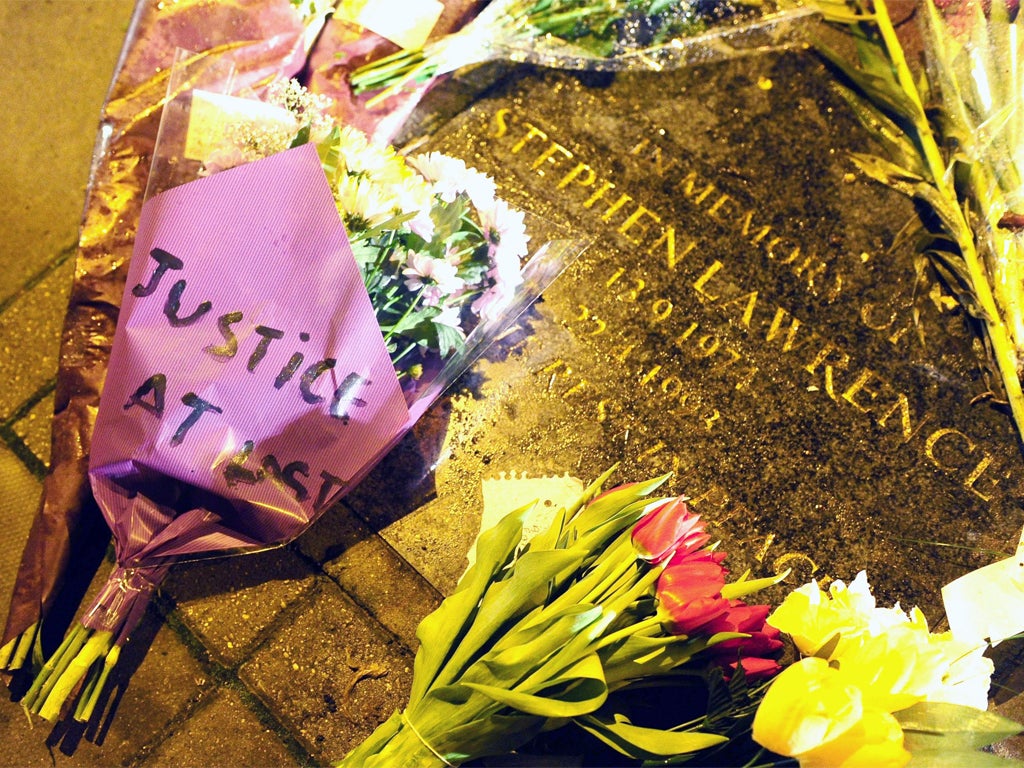
The Metropolitan Police remains "institutionally racist", a member of the Stephen Lawrence Inquiry panel told The Independent, and has wasted the opportunity to carry out major reforms.
Dr Richard Stone – one of the four men whose damning conclusions in the 1999 Macpherson report led to major changes in UK race relations – said that police tactics remained biased against the black population. Dr Stone identified stop-and-search tactics, which disproportionately target young black men, and the absence of even one serving black or Asian officer above the rank of commander at Scotland Yard.
"The police really haven't moved on when it comes to racism at all," Dr Stone said. "After all that effort that everybody put in, somehow nothing has really changed."
Dr Stone said Lord Macpherson told him that, of all the things he had done in his life, that inquiry was the most important. "I felt the same," he said. "I feel it's all wasted. It's very sad." Asked if he thought the force remained institutionally racist, he said: "I'm afraid so."
Dr Stone was one of the three assistants to Lord Macpherson on the panel whose findings produced a wave of national soul-searching after it said that Britain's biggest force was institutionally racist. The term was defined as the collective failure to provide proper policing to people because of their colour, culture and ethnic origin. Discrimination was seen through "unwitting prejudice, ignorance, thoughtlessness and racist stereotyping".
Following the report, the Met underwent major changes to the way it conducted murder inquiries, dealt with victims' families and worked with the community. Operation Trident, which investigates gun-related murders in London, has won plaudits for the way it has worked with the black community. Scotland Yard now has nearly 10 per cent of black or ethnic minority officers, up from 3.4 per cent at the time of the inquiry's report in 1999.
Acting Deputy Commissioner Cressida Dick said the force had been "completely transformed" in the past 12 years.
"There are still some things we would like to improve further but if you look at our recruitment of minority staff, our use of independent advisers and the way we deal with racist incidents, it's all utterly different from the way we were at the time of the inquiry."
She added: "It's for others to judge if we are institutionally racist or not."
Yet since the departure of Assistant Commissioner Tarique Ghaffur in 2008, there has been no ethnic minority officer above the rank of commander – a situation that is mirrored nationally. A survey in 2010 revealed that only four of the 269 officers at the level of assistant chief constable or above were from a minority background.
Mr Ghaffur left the force after accusing the then Commissioner Sir Ian Blair of racism. He later withdrew the claim after settling his discrimination claim out of court. The incident prompted Boris Johnson, the London Mayor, to order another inquiry into racism at the Yard and led to the temporary boycotting of ethnic minority recruitment by the Metropolitan Black Police Association.
Its chairman, Bevan Powell, said the organisation was now working with the force and there had been improvements. "There is still work to be done. It's still institutionally racist but that doesn't mean that individual officers are racist."
The post-Lawrence years have seen other damaging race rows involving police forces, prompting campaigners to claim the problem had merely been driven underground. One BBC reporter went undercover at Greater Manchester Police in 2004 and secretly filmed trainee officers expressing racist views.
The programme led to a formal investigation by the then Commission for Racial Equality into the way police were recruited, trained and promoted.
Meanwhile, community leaders have pointed to stop and search – a report in 2010 found that a black person was at least six times as likely to be stopped and searched by police in England and Wales as a white person – as a continuing cause of mistrust.
Dr Stone's conclusion was disputed by Derek Barnett, president of the Police Superintendents' Association, who said the service today is "unrecognisable" from that of the time when Stephen Lawrence was killed "in terms of the seriousness with which the service treats hate crime, investigative standards, the interviewing of suspects and the collection of exhibits. All of these have become more professional and transparent."
* Stephen Lawrence: How the case breakthrough came
* A shrunken family: The first journalist to interview the Lawrences recalls the scene
* The science that helped convict Gary Dobson
Bookmark popover
Removed from bookmarks