New powers to prosecute war criminals living in UK
Four Rwandans suspected of genocide may face UK trials after loophole is closed
Suspected mass murderers and war crimes suspects living in Britain, including four men accused of taking part in the Rwandan genocide, will face prosecution for the first time after the Government announced the closure of a loophole which had made the United Kingdom a haven from justice.
The Justice Secretary Jack Straw unveiled the biggest change in British laws covering crimes against humanity in 20 years, following an outcry over a High Court decision in April not to send four Rwandans resident in the UK back to their home country to face prosecution.
Under the proposals, the law which bars charges relating to any war crime, act of genocide or crime against humanity committed before 2001 will be changed to allow prosecutions for atrocities committed since 1 January 1991, including the Balkan wars and the 1994 conflict in Rwanda, in which 800,000 people were systematically exterminated.
Mr Straw said the change, which will be put before Parliament in the autumn, could lead to "tens" of alleged war criminals and "genocidaires" who have gained British passports or are resident in the UK facing trial in this country.
Anti-genocide campaigners last month unveiled evidence that at least 18 suspects have been using the loophole to live with impunity in Britain, including an alleged torturer from Robert Mugabe's Zimbabwean regime, a suspected member of a notoriously cruel group of fighters in Sierra Leone and an Afghan police chief accused of commissioning torture.
Gordon Brown, who was hosting the Rwandan President Paul Kagame at Downing Street, said the proposals meant the "message to anyone suspected of genocide now living in the UK is simple: your time is up. You may have run from responsibility, but you can no longer hide from justice".
The most significant change in legislation allowing prosecution for atrocities committed outside British borders since the 1991 War Crimes Act, it will lead to calls for the re-establishment of a specialist Scotland Yard unit to investigate genocide suspects.
The Aegis Trust, which campaigns against genocide, reported last month that about 300 people suspected of war crimes or genocide trying to enter Britain had been referred for further investigation since 2004 but only 22 cases had been handed to the police.
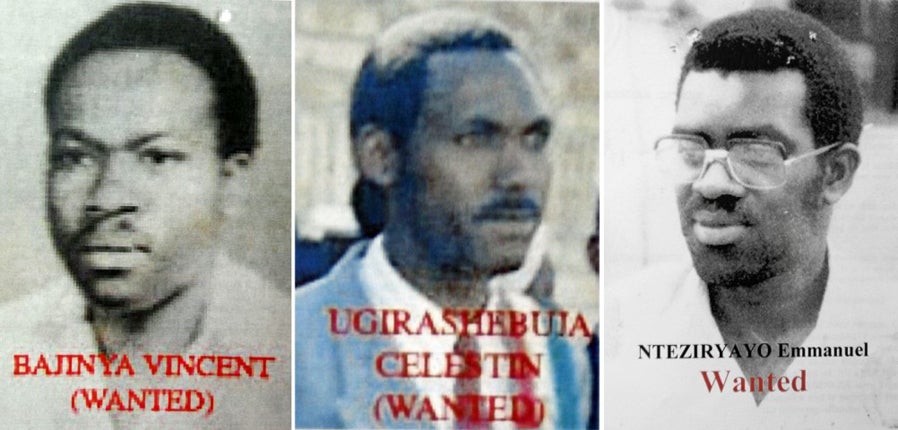
Among the first likely to be considered for prosecution in the UK will be the four Rwandans – Vincent Bajinya, Celestin Ugirashebuja, Charles Munyaneza and Emmanuel Nteziryayo – arrested in 2006 at their homes across Britain on suspicion of playing key roles in the genocide of Tutsis and moderate Hutus in 1994. All four denied wrongdoing. Mr Ugirashebuja was detained after he was traced by The Independent to Walton-on-the-Naze in Essex, where had been living with his wife since 2000, finding employment as a care worker and becoming a stalwart of his local Anglican church.
A decision by the then-Home Secretary Jacqui Smith to allow the extraditions was thrown out by the High Court in April after judges ruled there was "a real risk they would suffer a flagrant denial of justice" if returned to Rwanda.
That ruling, announced on the 15th anniversary of the start of the genocide, sparked calls for urgent reform after critics said it confirmed Britain's status as a "safe haven" from justice because suspects could neither be sent home to face trial nor face prosecution in the UK for any offence pre-dating 2001.
Mr Straw said: "It's extremely important that a strong and principled message goes out that there are not going to be any safe havens for people who have committed these kinds of crimes."
There was concern that the Government had not gone far enough: it refused to change the law so that the mere "presence" of a suspect on British soil, visiting on holiday or for business, was sufficient grounds for arrest and prosecution.
Redress, which campaigns against torture, said visitors to the UK such as Felicien Kabuga, the alleged chief financier of the Rwandan genocide, and Chucky Taylor, the son of the former president of Liberia Charles Taylor and an alleged torturer, will still slip through the net.
The Rwandan Four: Fugitives from justice?
Vincent Bajinya, 48
The most senior of the alleged Rwandan "genocidaires", Dr Bajinya is rated as a "category one" offender by the Kigali authorities. He is accused of organising the murderous Interahamwe militias and manning road blocks where hundreds of Tutsis were hacked to death with machetes. A medical doctor, he came to Britain and began working for a charity in London helping victims of torture. After gaining British citizenship, he changed his name to Vincent Brown.
Celestin Ugirashebuja, 56
The care worker from Walton-on-the-Naze, Essex, is accused of having been a "bourgmestre" or local mayor in the rural commune of Kigoma. In 1994, he allegedly chaired meetings in which he exhorted the killing of Tutsis. At one village he is accused of using his authority to persuade Tutsi residents to return home, after which they were all slaughtered.
Charles Munyaneza, 51
The cleaner from Bedford is accused of organising the training of Interahamwe militias in his commune in southern Rwanda. When the genocide began, he allegedly used his role as bourgmestre to set up and supervise road blocks where Tutsis were stopped. Once the Tutsis were identified from their identity cards there were led off to be killed by Interahamwe.
Emmanuel Nteziryayo, 51
The jobless father-of-five, who lives in Manchester, was accused of handing out weapons and overseeing roadblocks in Mudasomwa commune, where he was bourgmestre. Prosecution files claim he once drove Tutsis to a police station to be killed. He claimed asylum when he arrived in Britain and was granted leave to remain.