Terror suspects' DNA could be held for life
News in pictures
News in pictures
On Facebook
From the blogs

Roy Hodgson for England: A club of one

To argue against Harry Redknapp for England is akin to arguing in favour of bankers bonuses. While s...

Time for a reality check on the Sri Lankan civil war

Sri Lanka, much like Britain, has side-lined accountability long enough.

Children Of Alcoholics week: One million children may just be the tip of the iceberg

Children Of Alcoholics week starts today. So, what are the aims for Nacoa during this important week...

Review of Being Human: ‘Being Human 1955’

Following on from an episode tinged with tragedy, this week lifted the mood with something lighter.

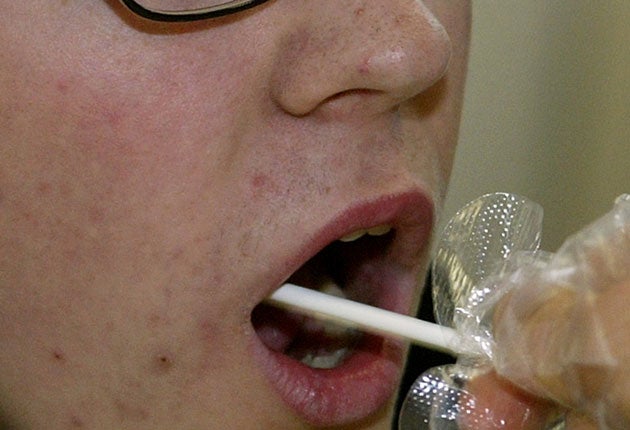
Terror suspects who are released without charge could face having their DNA profiles stored for life, it was revealed today.

Proposals announced by the Home Office could see the information on anyone arrested for terrorist offences but either not charged or acquitted kept indefinitely on the national database.


Under the plans, senior police officers would review each case every two years on national security grounds to see if holding on to the genetic profile of each individual was warranted.


Even under 18s arrested but not charged could have their DNA profiles stored for much longer periods than for other crimes.


Home Office minister Alan Campbell said terror offences needed to be treated differently from other crimes because of the length of police investigations.


He said the proposals were "proportionate" and would ensure the right people were on the database.


"The reality is that many investigations of certain terrorist activity take a very long time indeed, and they have to be treated differently to the other offences we are talking about," he said.


"In some instances the information could be held for longer, but there's a review procedure and if the evidence is there that it is not necessary to hold that data it could come off earlier."


In a policy document launched today, the Home Office signalled a partial retreat in the face of outrage over plans to hold the DNA of thousands of innocent people for more than a decade.

Adults who are arrested but not convicted of a serious crime will have their profiles held for six years instead of the 12 proposed this summer.


Juveniles who are cleared or not charged with serious crimes will have their data kept for three years, or six if they are aged 16 or 17.


The earlier consultation proposed holding data on all under 18s arrested for a violent or sexual crime for 12 years, even if they were not convicted.


But for minor crimes committed by young offenders, the proposals have been toughened up.


A first conviction will lead to profiles being held for five years.


The Government had suggested all young offenders found guilty of minor misdemeanours should be removed from the database when they reached 18.


Ministers were forced to review the current policy, which allows police to hold profiles of every person arrested indefinitely, after a European Court of Human Rights ruling last year.


Judges in Strasbourg said the "blanket" policy breached human rights because it treated everyone the same regardless of the offence or whether they were convicted.


Between half a million and a million people with no criminal convictions have their DNA profiles stored on the database, the largest of its kind in the world.

Day In a Page

Apple admits it has a human rights problem

Apple admits it has a human rights problem

After years of complaints and workers' suicides in China the technology giant faces up to the human cost of its gadgets
Peter Moore: 'I feel guilty I'm the only one alive'

Peter Moore interview

'I feel guilty I'm the only one alive'
Sellafield faces nuclear option as overspending threatens plant's future

Sellafield faces nuclear option

Overspending threatens plant's future
Israel blames Iran for embassy bomb attacks

Israel blames Iran for embassy bomb attacks

Tehran rejects Netanyahu's 'lies' after diplomats in India and Georgia targeted
Former manager enjoying Apoel crack at the big time

Tommy Cassidy interview

Former manager enjoying Apoel crack at the big time
James Lawton: Patience may not be a virtue this time, Roman – Andre Villas-Boas looks all at sea

James Lawton: AVB looks all at sea

Abramovich's visits to training reinforce the idea of a coach feeling pressure from above and below
The 10 Best sledges

The 10 Best sledges

Not all of them require snow...
Procrastination: Not now – I'm busy

Procrastination: Not now – I'm busy

Confronting the real reasons for puttting things off can help us beat it
Fun in the sunset years

Fun in the sunset years

A new movie follows retirees moving to India for low-cost care and a culture of respect for the elderly. For many Britons, it's already a reality
Picture preview: Lucian Freud drawings

Lucian Freud drawings

Picture preview
Silent revolution at the Baftas as the French take top awards

Silent revolution at the Baftas

The Artist wins in seven categories, with Meryl Streep the other big success story
Whitney Houston: The diva who had – and lost – it all

The diva who had – and lost – it all

Nick Hasted charts the highs and lows of Whitney Houston's life
How Picasso won over (some of) the British

How Picasso won over (some of) the British

Winston Churchill and Evelyn Waugh hated his work, but Picasso provided inspiration for a whole generation of UK artists
Topshop: A Decade Of Design

Topshop: A Decade Of Design

When London Fashion Week starts on Friday, Topshop will celebrate 10 years backing its brightest young stars
John Prescott: 'My wife thought I'd just retire, but I'm not a slippers man'

'My wife thought I'd just retire, but I'm not a slippers man'

At 73, John Prescott isn't mellowing. In fact he's taking a shot at becoming a police commissioner