Abandoned! Are Britain's pets the latest victims of the credit crunch?
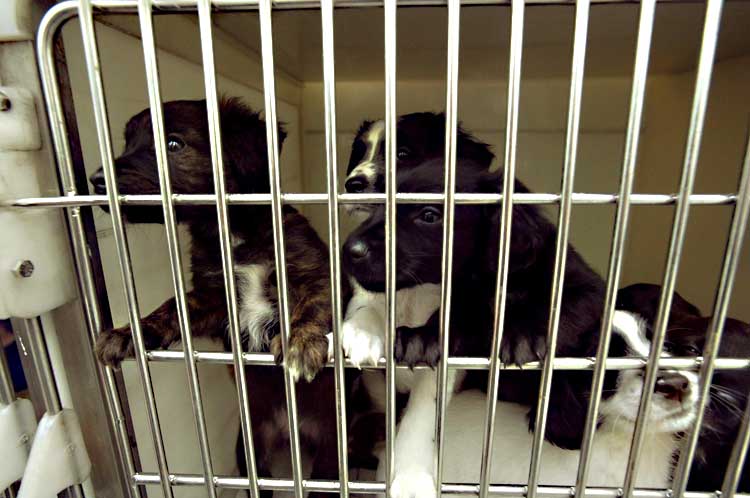
Britain's economic woes are forcing people to abandon animals in unprecedented numbers as desperate families struggle to cut costs by dumping their pets. Animal sanctuaries say they have been overwhelmed by the number of animals delivered to them in recent months as the credit crunch continues to bite and the cost of living rises sharply. They fear that the situation could become unmanageable if the downturn continues.
According to RSPCA records, the number of pets abandoned by their owners in 2007 was 23 per cent higher than the previous year. And as the possibility of recession looms, the figures for the first quarter of this year suggest that the number of abandoned animals is continuing to rise. Last year, Britain's leading animal charity was forced to rescue 7,346 animals abandoned by their owners. In the first four months of 2008, a further 2,621 animals have been picked up. Almost half of all the animals abandoned were cats, the charity said.
New figures from the Cats Protection League's 29 adoption centres show a 77 per cent increase in the number of unwanted felines that were dumped or returned during the first four months of this year compared to the same period last year. The Scottish Society for the Prevention of Cruelty to Animals (Scottish SPCA) said cases of unwanted cats in the first three months of this year were 18 per cent higher than the same period last year, while cases of unwanted dogs jumped by more than 90 per cent.
There has also been a significant increase in the number of abandoned exotic pets, which are traditionally popular when the economy is booming but are often discarded during times of difficulty because they require more specific and costly care. Last year, the RSPCA rescued 20 per cent more exotic animals than the previous year.
With the average cost of keeping a dog for its lifetime approaching £10,000, charities are most concerned about the fates of cats and dogs, Britain's two most popular pets. Owners are increasingly cutting back on additional expenses such as insurance and veterinary bills, leading to an increase in abandoned injured animals as well as unwanted litters.
Patricia Bernie, a cat specialist and trustee of the Wythall Animal Sanctuary near Birmingham, said her sanctuary has been "utterly overwhelmed" in the past 12 months. "Usually spring and autumn are the busy seasons because that is when cats breed, but we've been busy all year round," she said.
She believes increasing numbers of owners are deciding not to have their cats neutered because of the costs. "You find that during times of economic difficulty, people start to cut back on going to the vet because it's expensive," she said. "That's not only cruel to the animals, it also means a huge increase in the number of unwanted litters. Sometimes people are honest and say they simply can't afford to keep their pet any more, but most of the time they simply try to pretend their pet isn't theirs or was a stray."
Gillian Stewart, 27, runs the Capricorn Sanctuary in North Wales alongside her mother, Sheila. She also believes the economic downturn is leading to more and more families deciding it is time to abandon their pets. "I think that's appalling because animals don't have the luxury of being able to choose their homes, but they're often the first to suffer," she says. "We've seen a constant flow of abandoned animals over the past 12 months; dogs tied to lampposts, litters of kittens abandoned at the side of the road, you name it, we've had them."
Mrs Stewart says that an increase in property repossessions may also have a knock-on effect on the sanctuaries. "There's been a noticeable increase in the number of people saying that their house is being repossessed by the bank," she says. "Rental accommodation often doesn't allow pets, so the animals are either handed in to sanctuaries or simply just abandoned." In the United States, which has been hit particularly hard by the global credit crunch, animal charities say they have also noticed a significant increase in abandoned animals.
Kimberley Intino, of the Humane Society of the United States, said yesterday: "Many shelters are indeed seeing an increase in animal intake due to people losing their homes. However, it is not a uniform increase across all areas of the country. The hardest hit regions seem to be those where the economy and/or the real estate market had already been suffering." There are also fears that horses may be particularly vulnerable to being abandoned because of the greater costs involved in keeping them. Horse and pony rescues by the RSPCA went up by 66 per cent last year, largely because of the widespread flooding in the summer.
John Logan, from the National Equine (and Smaller Animals) Defence League, based in Carlisle, said they received a pony yesterday that had been tied to a fence and abandoned. He said: "It's certainly worrying to think that if people do have money issues we might end up seeing more animals abandoned."
Henry Macaulay, an RSPCA spokesman, urged owners to take out insurance to help them pay for unexpected costs. "We would urge people to take out pet insurance to help them cover the cost of having their pet treated by a vet when it becomes ill," he said. "Vet bills can be expensive and insurance helps to cover the cost."
Border collie pup who was thrown down a rubbish chute: Clyde, eight weeks old, Dalmuir
Caretakers at a block of flats in Dalmuir, West Dunbartonshire, discovered eight-week-old Clyde at the bottom of a rubbish chute in the building last month. The black and white border collie pup had been thrown down the chute by his owner.
Despite falling 14 storeys and suffering serious internal injuries, Clyde somehow managed to survive his fall and was taken into care by the Scottish Society for the Prevention of Cruelty to Animals. Although it is difficult to say exactly why he was abandoned, the Scottish SPCA believe Clyde's owner may have attempted handing him in to them earlier in the week because he could no longer afford to keep him.
Doreen Graham, spokeswoman for the Scottish SPCA, said yesterday: "People abandon animals for all sorts of reasons, sometimes it's out of sheer cruelty, and sometimes because of circumstances. We often find a spike in the number of abandoned puppies around, or after, Easter time. These puppies are often bought at Christmas time when owners often use their hearts over their heads to make the original purchase of the dog but have failed to take into account whether they can actually afford to keep it. The cute little puppy soon grows up into a boisterous young dog and the owner finds they can no longer afford the time or the money to look after their pet."
Clyde has since been rehomed with a local family. A Scottish SPCA inspector, Nicki Scott, said: "He has really rallied and we are sure he is going to be fine. He was battered and broken but is a very lucky boy."
He added: "There is no way he could have done this by accident as the chute is operated by opening a heavy metal drawer which is three feet off the ground."
Police are investigating the incident.
The costs of keeping a pet over its lifetime
DOG
(average lifespan 12 years).
One 80p tin of dog food daily: £3,504.
£15 of mixer every month: £2,160.
Annual pet insurance at £100: £1,200.
Fortnight's boarding fees at £140 a time: £1,680.
One £50 sickness visit to vet each year: £600.
Vaccinations and worming: £600.
Bedding and sundry equipment: £100
Total: £9,844
CORN SNAKE
(average lifespan 25 years).
One large mouse a week at a cost of £72 per year: £1,800.
Vivarium(reptile tank): £200.
Vet costs at an average of £100 per year: £2,500.
Cleansing fluid at a cost of £20 a year: £500.
Substrate (for their homing) at £40 a year: £1,000.
Total: £6,000.
RABBIT
(average lifespan 10 years).
Feed at £260 a year: £2,600.
£50 vet costs per year: £500.
Cage: £90.
Litter tray at £9 a year: £90.
Total: £3,280.
CAT
(average lifespan 14 years).
One 60p tin of cat food daily: £3,066.
80p box of biscuits a week: £583.
Annual insurance at £75 per year: £1,050.
Litter at £3 a week: £2,184.
Fortnight's cattery fees at £84 a time: £1,176.
One £50 sickness visit to vet each year: £700.
Routine vaccinations, flea and worm treatment: £600.
Bedding and sundry equipment £100.
Total: £9,459.
Rhia Chohan
Join our commenting forum
Join thought-provoking conversations, follow other Independent readers and see their replies
Comments