Coming home: the last Briton in Guantanamo
Binyam Mohamed’s family warned that they may not recognise him
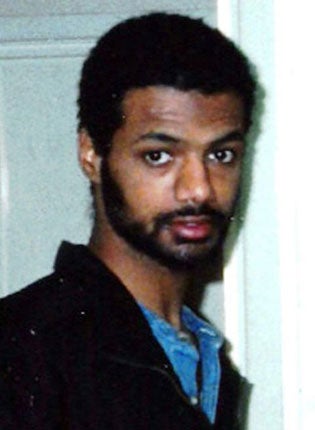
The seven-year ordeal of a British resident held by the Americans at Guantanamo Bay is expected to end this evening when an RAF plane touches down at a military airfield somewhere in the Home Counties.
Family and friends waiting to be reunited with Binyam Mohamed, 31, have been warned that they may not immediately recognise the figure who emerges from the darkness of the aircraft on to the floodlit asphalt airstrip.
Mr Mohamed, who left Britain for Afghanistan in 2001, has shed a quarter of his bodyweight after being held in what he describes as barbaric conditions of detention and torture.
The first signal of his transfer from American to British custody will be the cutting of his plastic handcuffs by members of the Metropolitan Police team of officers and medics who have been sent to collect him from the naval base in Cuba.
During the eight-hour flight to UK airspace Mr Mohamed will be offered a halal meal as well as spiritual sustenance from an Islamic cleric who is expected to be on board the plane.
After arriving in Britain he will be handed over to officers working for the UK Border Agency who will ask him a series of formal questions about his residency and immigration status. He may also be asked to surrender his passport, if he still has one. But Mr Mohamed is unlikely to follow the next stage of a journey familiar to the other four British residents and nine nationals released from Guantanamo Bay. Instead of the long drive to Paddington Green’s high-security police station in west London to face further questioning under terror legislation, Mr Mohamed is expected to be freed immediately.
Clive Stafford Smith, Mr Mohamed’s lawyer, said last night: “I think everyone knows just how much Binyam has suffered. There is absolutely no need to prolong his terrible ordeal by further detaining him and I expect he will be freed pretty quickly.” Of greater concern will be his medical condition. Mr Mohamed, who is over 6ft tall, has spent the last few weeks of his detention at the notorious prison camp on hunger strike and now weighs 8st 9 lb. He has been strapped to chair and force-fed through a tube. There are also concerns about his psychological health. Mr Mohamed says that after his arrest in Pakistan in 2002 the Americans took him to Morocco, where he was severely beaten, deprived of sleep and had his genitals cut with a scalpel. Eighteen months later he was flown to Kabul where he claims to have been held in a black hole in a prison, beaten, hung up and subjected to loud music before being transferred to Guantanamo Bay. In both places, under torture, he said he had confessed “to anything those inflicting that treatment on him wanted him to say”.
The focus of his care and rehabilitation will be the responsibility of the Medical Foundation for the Care of Victims of Torture which has helped other Guantanamo detainees after release.
Mr Mohamed’s family live in America but his two sisters and older brother are to fly to Britain today for a reunion. They lost contact with him shortly after Binyam travelled from his west London home to Afghanistan in 2001.
His brother and sisters remember a caring sibling who enjoyed sport and academic lessons. Benhur, his older brother who emigrated to America to become a doctor, says that Binyam enjoyed Western culture including popular TV progammes including Cheers: “He also liked listening to George Michael and his favourite sport was soccer. One of Binyam’s favourite films was Police Academy. He watched it constantly and had the entire thing memorised. It used to drive me crazy,” he said.
Mr Mohamed came to Britain as an asylum-seeker at the age of 15 in 1994 when he was granted temporary residence and studied engineering and computers. Later he worked as a caretaker before going to Afghanistan and Pakistan in 2001, in order, he said, to resolve his drug addiction.
Pakistani forces held him in April 2002 as he tried to return to the UK. He was questioned by CIA and MI5 officers before being flown by the Americans to Morocco.
Once Mr Mohamed’s medical treatment has been addressed his family and legal team will organise his resettlement in Britain. Mr Mohamed’s most pressing need will be establishing his financial independence to support his new-found freedom. Other British Guantanamo detainees have found it necessary to raise funds by selling their exclusive stories to the media. But the immediate outlook is still bleak. The mental scars of incarceration and torture make it difficult for a former Guantanamo inmate to find work while the stigma associated with an accusation of terrorism makes it impossible to rejoin ordinary society. But public interest in Mr Mohamed is unlikely to fade away. His return to Britain may only mark the beginning of the next stage on his road to justice.
Life after Camp X-Ray
*Bisher al-Rawi
Former public schoolboy whose family came to Britain to escape Saddam Hussein’s regime. Mr Rawi was arrested in Gambia after going there with his brother to set up a mobile peanut processing plant. He was released from Guantanamo in April 2007 and at first found it difficult to adjust to life in Britain, but now works for a voluntary human rights group.
*Moazzam Begg
A former law student and bookshop owner from Birmingham joined hundreds of other “unlawful combatants”, shackled and dressed in orange jumpsuits, at Guantanamo Bay. He was arrested by CIA in Islamabad in February 2002. Since his release in 2005 he has established himself as a leading human rights activist, campaigning for the closure of his former prison.
*Martin Mubanga
Mubanga, who has dual British and Zambian nationality, was one of four Britons who were released from the camp in January 2005. He said he was sent there after being interrogated by a British man who said he was from MI6, shortly after his arrest in Zambia in March 2002. Originally from north London, there is little information about his life or present whereabouts.
Join our commenting forum
Join thought-provoking conversations, follow other Independent readers and see their replies
Comments