Court urges Ministers to free Yunus Rahmatullah
 

News in pictures
News in pictures
On Facebook
From the blogs

The ugly face of TV: How Jeremy Clarkson brought facial prejudice to a head

If you saw someone with a facial disfigurement walking down the street, would you A) Laugh at them B...

Atlantic Odyssey: Exclusive first hand account of how a world record attempt ended in near disaster

Writing exclusively for The Independent, Mark Beaumont recounts the incredible events that saw an at...

Stacking shelves won’t help career progression

Over the last week, we have seen a series of dodgy manoeuvres by the government regarding unpaid ret...

Is catastrophic global warming, like the Millennium Bug, a mistake?

"The whole idea of climate being one number driven by another number is nutty." Prof Richard Lindzen...

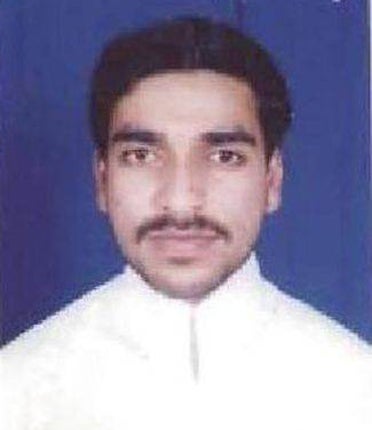
Judges yesterday used 14th-century common law to order the UK to secure the release of a Pakistani man seized by British special forces in Iraq in 2004 and handed to the US.

In July, the High Court ruled that Yunus Rahmatullah, 29 – now being held without charge in Afghanistan – was "in the hands of the Americans" and it was "impossible" to say a British minister could "direct [his] delivery".

But that decision was overturned yesterday in the Court of Appeal by the Master of the Rolls, Lord Neuberger, Lord Justice Maurice Kay and Lord Justice Sullivan.

With the help of the legal charity Reprieve, which has successfully lobbied for Guantanamo inmates, Mr Rahmatullah's family had resorted to ancient English common law and filed a writ of habeas corpus, an ancient legal tool used to free prisoners from detention when no charges have been made.

The Court of Appeal agreed Rahmatullah's detention was "unlawful" and ordered Britain to pursue his release.

Lord Justice Maurice Kay argued: "On the face of it [Rahmatullah] is being unlawfully detained and [British ministers] have procedures... to enable them to take steps which could bring the unlawful detention to an end."

For the past six years he has languished in the sprawling prison complex at Bagram air base in Afghanistan, often dubbed America's second Guantanamo Bay.

His family says his mental health has deteriorated rapidly in that time.

He was seized by the SAS from an unknown location in Iraq and handed to the Americans, who flew him to Afghanistan, where many suspects have been held incommunicado for years.

Lawyers fought a long battle to reveal his identity and are trying to force the British Government to intervene in his ongoing detention.

Prisoners captured by British forces and handed to their allies are subject to a "memorandum of understanding" that allows the original arresting country full access to the detainee and the ability to return the captives to British custody.

But the Government has fought attempts to access Mr Rahmatullah, initially refusing to acknowledge his existence and then arguing in court that he was in US custody and inaccessible.

A later hearing will decide how the pursuit of his release is to be achieved, but much will depend on whether the US is willing to release him.

Bagram's shame: A legacy of torture

Criticism of America's detention of terror suspects has focused on Guantanamo Bay, but in many ways Bagram has a more shameful legacy. Many of those rendered to Cuba in the early days of the "war on terror" were processed through Bagram and it gained a reputation for torture and deaths. No lawyer has ever been inside and the US has only once released a list of detainees – heavily redacted. In 2006 it admitted at least 40 foreigners were held there.

Career Services

Day In a Page

Can we pull the plug on the plug?

Can we pull the plug on the plug?

Wireless power is beginning to surge its way into homes, businesses and garages
The 10 Best Lecture Series

The 10 Best Lecture Series

From Intelligence Squared - possibly the world's premier debating forum - to the ICA Talks
Still making a big noise: A season of Michael Frayn plays is set to reaffirm the brilliance of his work

Michael Frayn: Still making a big noise

A season of Frayn's plays is set to reaffirm the brilliance of his work
'You could have a job like mine': How successful alumni can inspire pupils

How successful alumni can inspire pupils

Hilary Wilce sees an innovative scheme in action at a London comprehensive
The tuition paradox: You pay more money, you get less choice

The tuition paradox

You pay more money, you get less choice
The rivals: Canberra's political hate story

The rivals: Canberra's political hate story

Six years ago, Kevin Rudd was ousted as Australian PM by former ally Julia Gillard. Is he about to get his revenge?
Menswear finds its swagger to escape role as poor relation of British fashion

Menswear finds its swagger...

... and escapes role as poor relation of British fashion
'There was someone who needed it...' 60 lives, 30 kidneys, all linked in longest donor chain

60 lives, 30 kidneys, all linked in longest donor chain

Organ donation to stranger starts an amazing series of events across 11 US states
The ad that only plays to women: the future of marketing or useless gimmick?

The ad that only plays to women

The future of marketing or useless gimmick?
Sam Wallace: Chelsea's class of 2012 fail to make the grade

Sam Wallace

Chelsea's class of 2012 fail to make the grade
Lewis Moody: My five ways England can bring down the red curtain

Lewis Moody column

My five ways England can bring down the red curtain
Picture preview: Charline von Heyl, Tate Liverpool

Charline von Heyl, Tate Liverpool

Picture preview
Slow progress in Christchurch one year after quake

Christchurch a year on

Residents mark the first anniversary of the earthquake
Niceness rocks! Ballads take centre stage at the Brits

Niceness rocks!

Ballads take centre stage at the Brit Awards
Robert Fisk: 'If only hague and clinton would listen to yusuf islam'

Robert Fisk

'If only Hague and Clinton would listen to Yusuf Islam'