Exclusive: Britain: A 'safe haven' for war criminals
More than 50 people wanted for murder and torture living here free from prosecution, campaigners say
Record numbers of alleged mass murderers and torturers have found safe haven in the UK, making this country one of the war criminal capitals of the world, it is claimed today.
Among the war crimes suspects living in Britain are senior officials from the regime of Saddam Hussein, a member of the Criminal Investigations Department in Zimbabwe under Robert Mugabe, and a Congolese police chief who confessed to a crime during a media interview.
But although the Home Office has handed the names of 51 suspects to the Metropolitan Police, not a single case has been prosecuted in the UK courts. A further 500 suspects uncovered in the past five years have been refused residency or immigration and refugee status because of government concerns over their involvement in war crimes.
The new figures, obtained by the Aegis Trust, a human rights group which campaigns against genocide, after a question from the Tory MP Stephen Crabb, a member of the House of Commons International Development Committee, paints a picture of Britain fast becoming the destination of choice for war criminals on the run.
They suggest that despite laws brought in to tackle war criminals living in the UK, little has been done to bring perpetrators to justice.
Nick Donovan, head of campaigns at the Aegis Trust, last night compared the profile of war crimes prosecutions to that of white-collar crime. He said: "The time has now come to enforce the law. It's like white-collar crime such as insider trading in shares. You need arrests to prove that the law is a credible deterrent. We urge the Home Office to resource these investigations properly and consider resurrecting the specialist war crimes unit at Scotland Yard."
The Metropolitan Police's specialist war crimes unit was shut in 1999 after cases were closed into the prosecution of the few surviving Nazi suspects living in the UK. But genocide and war crimes committed in the former Yugoslavia, Rwanda, the Democratic Republic of Congo, Somalia and Darfur have reignited fears that war criminals escape justice by fleeing to the UK.
Although there have been recent examples of suspected war criminals being arrested in the UK, these all relate to extradition hearings following warrants for arrests being issued by other countries and will end in prosecutions abroad.
The Government enacted new war crimes legislation nine years ago which gave the courts the power to try suspects accused of committing war crimes overseas. To date only one British soldier has been convicted under this legislation.
In 2004 only three war crimes cases were referred to Scotland Yard for further investigation by the UK Border Agency (UKBA) out of a total of 47 files. By last year the number of the suspects referred to the police had risen to 18 amid a total of 143 suspicious cases. By the end of February this year the UKBA had passed on a further eight names.
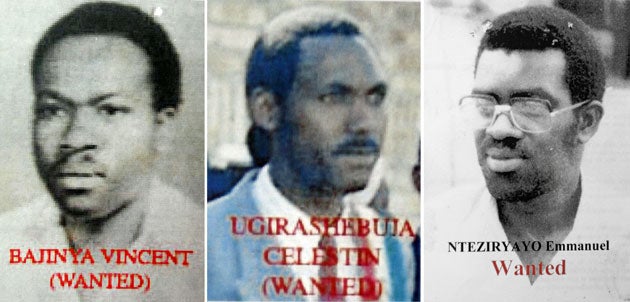
Among the most controversial cases to be considered are four Rwandans – Vincent Bajinya, Celestin Ugirashebuja, Charles Munyaneza and Emmanuel Nteziryayo – arrested in 2006 at their homes across Britain on suspicion of playing key roles in the genocide of Tutsis and moderate Hutus in 1994. All four denied wrongdoing. Mr Ugirashebuja was detained after he was traced by The Independent to Walton-on-the-Naze in Essex, where had been living since 2000 and finding employment as a care worker.
A decision by the then Home Secretary, Jacqui Smith, to allow them to be extradited was thrown out by the High Court in April last year after judges ruled there was "a real risk they would suffer a flagrant denial of justice" if returned to Rwanda. That ruling sparked calls for urgent reform after critics said it confirmed Britain's status as a "safe haven" from justice because suspects could neither be sent home to face trial nor face prosecution in the UK for any offence pre-dating 2001. Today the 2001 bar to prosecutions will be lifted allowing suspects to be brought to trial for alleged war crimes dating back to 1991.
Mr Donovan said: "These laws must be enforced. If not, Britain will remain a safe haven. In the 1980s and 1990s big efforts were make by the US, Canada, the UK and France and we have slowly realised that there are suspects living here from Rwanda, the former Yugoslavia, Somalia and Afghanistan. But it has taken those Western countries a long time to wake up these issues."
A spokesman for Scotland Yard said: "The Metropolitan Police Service has a group of officers who are the first point of contact for allegations of war crimes received. Information is dealt with appropriately on a case by case basis when accessing allegations of offences to secure corroboration evidence available in this country to meet the threshold for a charge to be brought."
A Crown Prosecution Service spokesman said last night: "The changes to the law will allow offences committed since 1991 to be considered by the CPS after the police have investigated the suspected crime and passed a file of evidence to us. We have agreed a protocol with the Metropolitan Police on how to deal with cases of suspected war crimes."
Living in the UK: Wanted abroad
Celestin Ugirashebuja
Care worker, 56, from Walton-on-the-Naze, Essex. Faces accusations of having been a bourgmestre, or local mayor, in the rural commune of Kigoma. In 1994, he allegedly chaired meetings in which he exhorted the killing of Tutsis. At one village he is accused of using his authority to persuade Tutsi residents to return home, after which they were all slaughtered. He denies any wrongdoing.
Emmanuel Nteziryayo
Jobless father of five children, who lives in Manchester. Now 51, he is accused of handing out weapons and overseeing roadblocks in Mudasomwa commune, where he was mayor. Prosecution files claim he once drove Tutsis to a police station to be killed. He claimed asylum when he arrived in Britain and was granted leave to remain. He denies any wrongdoing.
Vincent Bajinya
At 48, Bajinya is the most senior of the alleged Rwandan "genocidaires" and is rated as a "category one" offender by the Kigali authorities. A medical doctor, he came to Britain and began working for a charity in London helping victims of torture. After he gained British citizenship, Bajinya changed his name to Vincent Brown. He denies any wrongdoing.
Charles Munyaneza
A 51-year-old cleaner from Bedford accused of organising the training of Interahamwe militias in his commune in southern Rwanda. He denies any wrongdoing.
Ejup Ganic
The former Bosnian vice-president, 64, accused of having a role in the 1992 death of Yugoslav army troops in Bosnia, was arrested last month at Heathrow on a Serbian war crimes warrant. Ganic is a US-educated engineering professor who had been in the UK for several days attending events at Buckingham University, partnered with the Sarajevo School of Science and Technology. He denies the charges.
Join our commenting forum
Join thought-provoking conversations, follow other Independent readers and see their replies
Comments