From grainy CCTV to a positive ID: Recognising the benefits of surveillance
The technologies and methods used by the authorities to monitor us has never been more advanced, as Rob Hastings found out
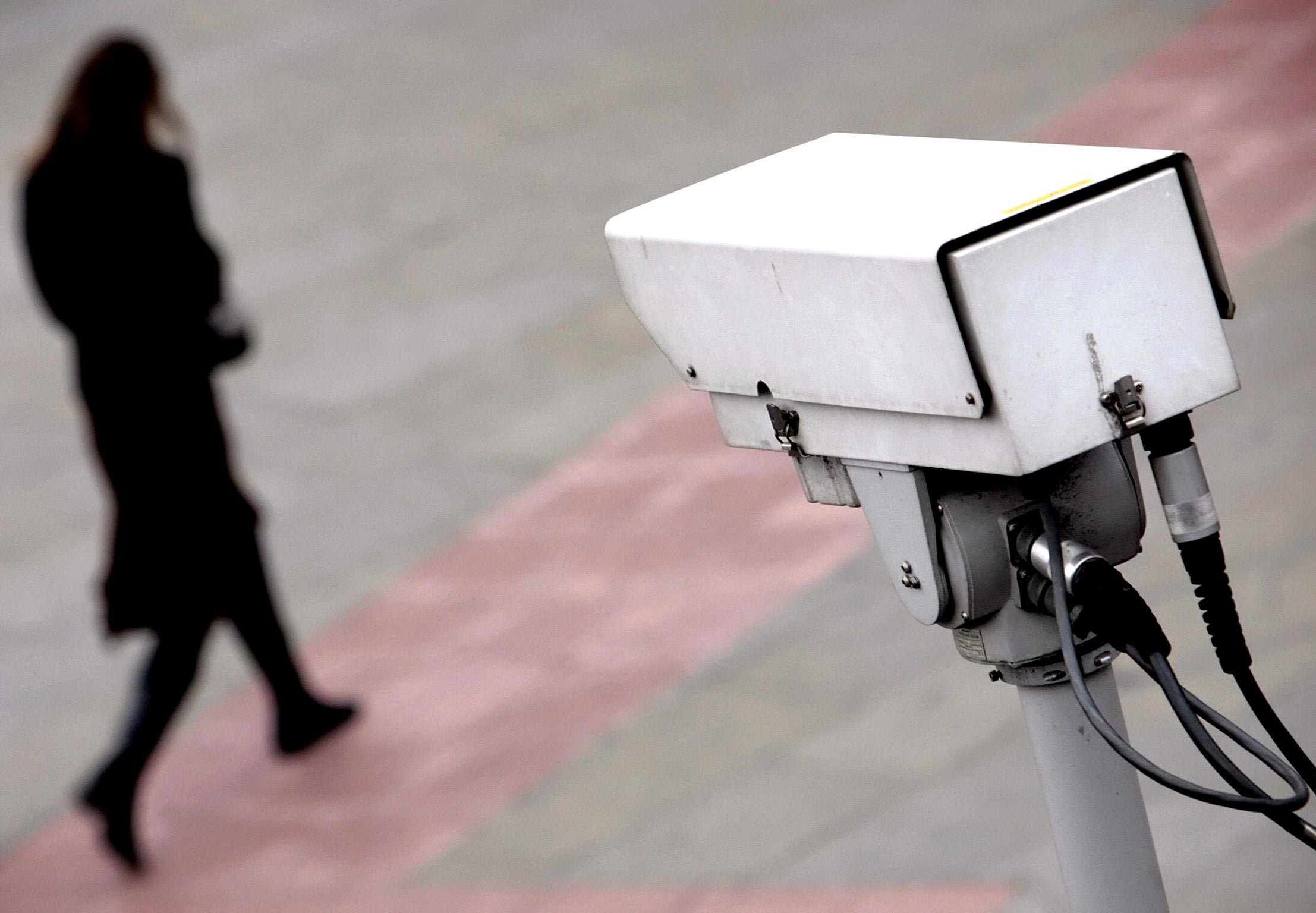
Professor Mark Nixon has “had a few fights” with civil liberties groups in his time. As a world-leading expert in developing biometric techniques to identify people using CCTV – every anti-surveillance campaigner’s Big Bother bête noir – he knows all too well what they think of his work.
“They say we’re ruining their privacy,” he says. “I don’t think their personal liberty is in danger.” The techniques he has pioneered “have been used to put murderers away – and I agree with that”.
Through the work of Prof Nixon and Dr John Carter at Southampton University, it is becoming increasingly easy for authorities to monitor us all. Research at the School of Electronics and Computer Science – funded by the Pentagon and the Ministry of Defence among others – means technology can spot and identify criminals in surveillance footage with increasing accuracy.
Now Prof Nixon’s department has received extra funding from GCHQ to form part of the national Cyber Security Centre of Excellence, with Southampton specialising in biometrics: ID-ing people using personal traits or physical characteristics.
It’s a controversial area of science which Prof Nixon can claim to have helped father. One of the key aspects is gait analysis: allowing people to be identified by their body shape and the way they walk.
It has helped solve several crimes in Britain and in Sweden helped convict the killer of foreign minister Anna Lindh in 2003.
The potential of such surveillance systems is enormous. But so too, warn campaigners, are the privacy risks.
Last year the Government’s first Surveillance Commissioner, Andrew Rennison, said there was a worrying lack of regulation over how CCTV is used, and that human rights laws may be broken in the process.
“It is the Big Brother scenario playing out large,” he told The Independent. “It’s the ability to pick out your face in a crowd half a mile away.”
But Prof Nixon rejects this. Privacy concern has a long history. If you read into the history of maps, people didn’t want the cheeky bastards making maps of their land. People are always suspicious of what they don’t know, but most people would say they don’t mind the police knowing if they can eliminate a serious threat. [But] we do need some appropriate legal framework and we haven’t got it. I’ve been trying to convince lawyers to work on it but if there isn’t a case they don’t tend to work on it, which is bizarre.”
The need is likely only to increase. Soon artificial intelligence programming may be able to alert security personnel to suspicious behaviour automatically before the person in their sights has done anything illegal.
“Screens and monitors are actually very hard for a human to keep their attention on,” says Prof Nixon.
“We could use artificial intelligence to alert people to events, using activity monitoring to spot suspicious behaviour. How do you flag suspicious behaviour? There are now databases in our department set up purely to evaluate this sort of thing.”
His research into facial recognition, which turns the measurements of someone’s facial features into a series of numbers to be matched against a database by a computer, has played a large part in making it a viable technique – one that was used in the wake of the 2011 London riots in an attempt to catch looters and those breaking the law in other ways.
And as Prof Nixon says: “Your identity is manifest in many different ways.” Ears, eyes, foot steps – all can be used to identify people. Even your heartbeat can betray who you are, and it can be detected from a distance without requiring contact with the body.
For those wearing masks or scarves over their faces, there are still plenty of ways computers can identify them. Much of the research has been carried out in the “biometrics tunnel” built in Prof Nixon’s department.
It’s a facility that requires a lot of technical expertise and patience – as Dr Carter tells us: “I’ve spent the last three months tracking down a fault in a cable.”
As I wander down it, eight cameras film my strides from a variety of angles against multicolour backgrounds, allowing electronic silhouettes and a 3D virtual model of my body to be constructed by a computer. The distance between my feet, knees, hips, shoulders and head are measured and the pattern of their motion analysed. Were I suspected of a crime, police would then be able to compare my gait profile to information gathered from CCTV footage of the incident – either eliminating me from their enquiries or encouraging them to delve deeper.
“We helped in a conviction of a bagsnatcher who robbed somebody,” says Prof Nixon. “He’d covered up his face with a motorbike helmet, that withheld his DNA, as there was no spit or breath. He wore gloves, so there were no fingerprints left – everything was covered up. But he still ran. We used images of him and presented images to the judge.”
Some of the work in the new centre will go into online identification. Keystroke analysis, looking at the minute differences in timings and patterns between different computer users’ typing mannerisms, is under development.
And Professor Vladimiro Sassone, the director of Southampton’s cyber security centre, says that use of vocabulary, grammar and choice of words may yet be enough under what he calls “cybermetrics”. “You might have two different identities on a social network but the particular choice of words you picked can reveal that they belong to the same person,” he says.
“It mixes ideas from psychology and computer science and biometrics. I wouldn’t bet on when, but there is a chance this can be done.”
Next on the agenda for Prof Nixon is soft-biometrics, which could see verbal descriptions from witnesses of crimes converted into computer code to scan through CCTV footage and pull out potential suspects.
“We’re bridging the semantic gap,” he says. Prof Nixon is keen to point out that biometrics is not just about surveillance and crime catching, however.
Iris recognition systems have been rolled out in many airports in the UK, and in Japan 40 per cent of the cash tellers have automatic finger vein technology to recognise the users.
“Biometrics makes life convenient,” says Prof Nixon, imagining the perfect use of biometric identity recognition.
“How about when you get to your front door with your papers under your arm and you look for your keys and you drop your papers in a puddle – wouldn’t it be nice if your door opened and said hello?”
Crimestopper: When it works
John Gibson Rigg, a burglar from Bolton, Lancs, was given a two-year jail term in 2008 after the swagger from his bowed legs was matched to CCTV footage using gait analysis.
Mijailo Mijailovic, the killer of popular Swedish foreign minister Anna Lindh who was tipped to become prime minister, was identified partly by his walk before he confessed.
Armed robber Liam Gould, 24, was jailed in Preston last year after police used facial recognition software that matched the size and shape of his upper nose and eye, despite wearing much of his face being obscured by a hood.
Join our commenting forum
Join thought-provoking conversations, follow other Independent readers and see their replies
Comments