Grangemouth shut down sends fuel cost to new high
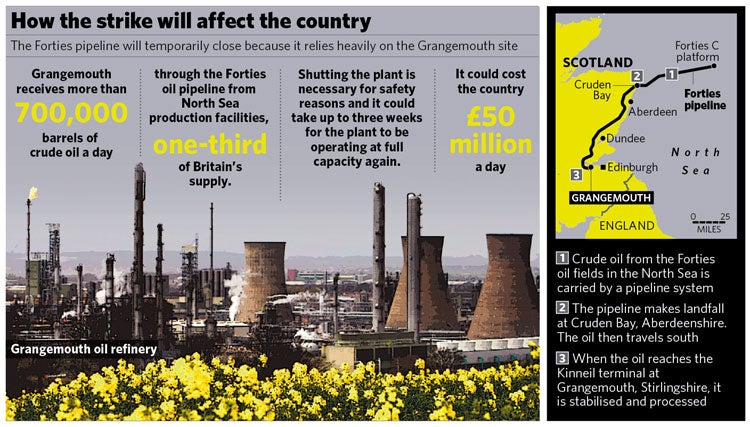
Fears of petrol shortages across much of Britain were growing ahead of a walkout tomorrow by workers at one of the country's largest oil refineries.
As staff at the giant Grangemouth site in central Scotland vowed to press ahead with the two-day strike, petrol stations north of the border were hit by a surge of motorists filling up their cars.
Elsewhere fuel prices hit new records, with the average cost of a litre of petrol in the United Kingdom reaching almost £1.10.
The Government urged motorists to resist panic-buying fuel but the Energy minister, Malcolm Wicks, admitted it could not guarantee a continuous supply to all the country. He said: "I hope the vast majority of people are sensible about this. They might have to be patient. People will have to be sensible and rational."
Edmund King, the AA president, called on drivers to reduce their numbers of journeys and warned: "If we do get petrol-supply difficulties in the next few days then prices at the pumps will rise.
BP announced it would have to close temporarily the Forties network of pipes, which delivers almost one third of Britain's oil supply, because it relies on steam produced from a plant on the giant Grangemouth site.
Seventy North Sea oil platforms will either stop or reduce production because of the pipeline closure, costing the country £50m a day, half of which would have gone in taxes to the Treasury.
The Government insists demand for petrol can be met from existing stocks and imported fuel and says there are contingency plans should the dispute escalate. But privately ministers fear that a repeat of the 2000 fuel crisis, which caught Tony Blair's government off guard, could intensify the political pressure on Gordon Brown.
Grangemouth, which supplies fuel to Scotland, the north of England and Northern Ireland, receives more than 700,000 barrels of crude oil and 80 million cubic metres of gas a day.
The refinery shut down last night in preparation for the industrial action, the first to hit the plant since the Second World War. The dispute centres on moves by the plant's owner, Ineos, to close the Grangemouth final-salary pension scheme to new employees.
Talks between the unions and management broke down on Wednesday and positions hardened on the eve of the walkout. Tony Woodley, general secretary of the Unite union, which represents 1,250 of the 1,400 Grangemouth workers, predicted the company would eventually try to close the final salary pension scheme to all staff.
After a mass meeting at the plant yesterday, Mr Woodley confirmed that tomorrow's walkout would go ahead. "Our members ... are extremely angry and extremely determined to make sure this company does not weaken or remove the pension scheme that will affect their sons and daughters who may very well follow them into this company here," he said.
Ineos says the pension scheme is unsustainable if it is to remain competitive and letters were sent to staff yesterday saying it would not back down.
Tom Crotty, chief executive of the company, said: "This is likely to lead to a shutdown of a substantial proportion of North Sea oil production. Unite's action will impact on the whole of the UK."
The Prime Minister broke off from campaigning in south Wales for next week's local elections to urge the sides to return to negotiations at Acas, the arbitration service. He said: "There is no need for an industrial dispute. People should get round the table as quickly as possible."
Alan Duncan, the shadow Business Secretary, said: "The Government has been very slow to cotton on to the harmful effects of this strike.
"A prolonged strike would affect us all, with very serious consequences for the oil industry and for petrol prices. The Government must stretch every sinew to get all parties back round the negotiating table as a matter of urgency."
Join our commenting forum
Join thought-provoking conversations, follow other Independent readers and see their replies
Comments