Locked-in syndrome sufferers lose legal challenge over assisted dying
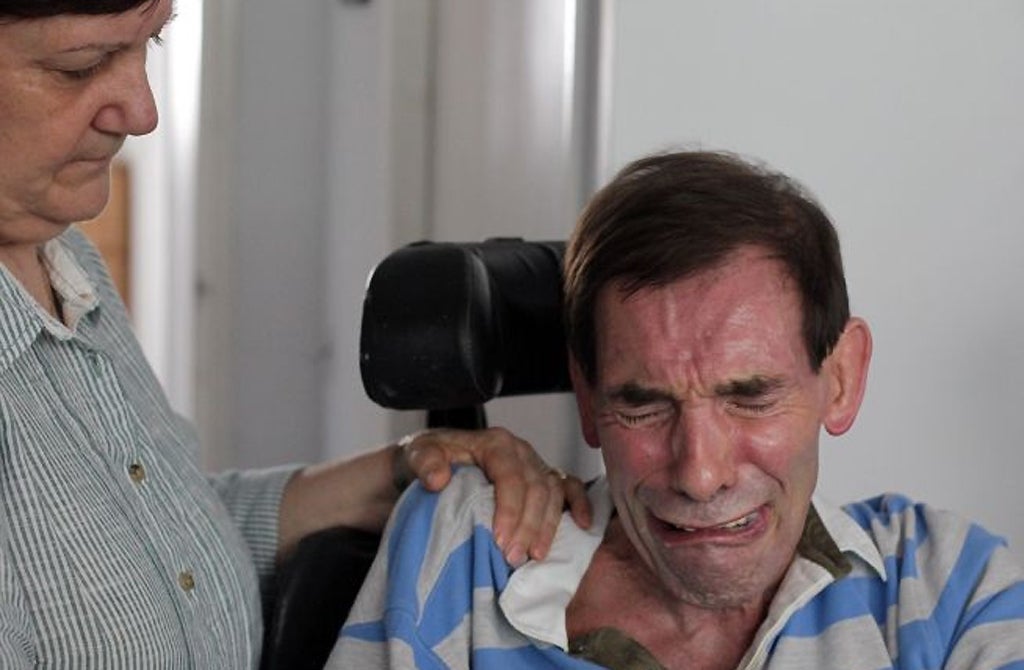
The debate about assisted suicide has been reignited after the High Court ruled that two men with locked-in-syndrome cannot be legally helped to die.
Tony Nicklinson, 58, and a second man known as Martin, 47, mounted legal challenges in attempt to secure immunity from prosecution for any professional who helped them to die.
Click HERE to see the Tony Nicklinson judgement document
The men are completely physically dependent and can only move their eyes and eye lids yet remain cognitively sharp. Both want to die but neither is capable of taking their own life.
Lawyers acting for Mr Nicklinson, who suffered a catastrophic stroke in 2005, argued for an extension to the common law defence of ‘necessity’ for murder because the alternative – forcing him to stay alive – is worse. They also argued that the government is in breach of his Article 8 right to ‘privacy, dignity and autonomy’, a right he cannot exercise independently because of severe disability.
The court rejected the “bold” submission, stating that there was no precedent anywhere in the world and such socially controversial changes were only for Parliament.
The decision was condemned by Mr Nicklinson and his family but welcomed by medical leaders and religious groups.
Both men are likely to appeal and will most likely end up in the Supreme Court.
Martin, who also suffered a stroke, bid to have the Director of Public Prosecutions (DPP) amend current guidance regarding assisted suicide.
The clarification he sought would have meant that if a doctor or lawyer were to help Martin to end his life by taking him to the Swiss clinic Dignitas, they would not face criminal and/or disciplinary action. Martin cannot currently fulfil his wish to end his life as his wife, a nurse and carer, is not willing to actively assist in any steps leading to his death.
The three judges, who said the court had been “deeply moved” by both men’s circumstances, ruled that such matters were for Parliament to decide.
Lord Justice Toulson said: “Their desire to have control over the ending of their lives demands the most careful and sympathetic consideration, but… a decision to allow their claims would have consequences far beyond the present cases.
“To do as Tony wants, the court would be making a major change in the law. To do as Martin wants, the court would be compelling the DPP to go beyond his established legal role. These are not things which the court should do.”
Mr Justice Royce said: “Each case gives rise to most profound ethical, moral, religious and social issues. Some will say the Judges must step in to change the law. Some may be sorely tempted to do so. But the short answer is that to do so here would be to usurp the function of Parliament in this classically sensitive area. Any change would need the most carefully structured safeguards which only Parliament can deliver.”
Mr Nicklinson, whose physical condition has deteriorated in recent weeks leaving him in constant pain and discomfort, last night said he was “devastated” by the decision.
“I thought that if the court saw me as I am, utterly miserable with my life, powerless to do anything about it because of my disability then the judges would accept my reasoning that I do not want to carry on and should be able to have a dignified death. I am saddened that the law wants to condemn me to a life of increasing indignity and misery,” Mr Nicklinson said.
His daughter Beth Nicklinson said the whole family was “ disappointed” but they would continue to support Tony’s quest to die. “The state has taken my dad’s right away from him - I don’t see why we should do the same.”
Martin, who also has the support of his family, said the decision had left him “angry and frustrated”.
“My life following my stroke is undignified, distressing and intolerable. I wish to be able to exercise the freedom which everyone else would have - to decide how to end this constant tortuous situation.”
He was seeking to alter the guidance on assisted dying from the DPP, which was changed in February 2010 followed a victory for Multiple Sclerosis sufferer Debbie Purdy who sought immunity for her husband if and when he helps her to Dignitas.
The guidance includes a list of factors that make prosecution more or less likely. These favour friends or relatives of the victim; professionals working with the individual are not favoured and would be likely to face prosecution.
Mr Nicklinson was asking the judges to extend common law – something which has developed through the courts over hundreds of years.
Mr Nicklinson said: "Judges, like politicians, are happiest when they can avoid confronting the real issues and this judgement is not an exception to this rule… this means yet another period of physical discomfort, misery and mental anguish while we find out who controls my life – me or the state."
His lawyer Saimo Chahal drew attention to a recent Canadian case in which the court declared unlawful aspects of the criminal code, and permitted one of the Claimants to exercise the right to voluntary euthanasia with help from a doctor under strict safeguards. "It is enlightening to read the judgment in this parallel case in Canada… It is a great shame that such an approach has not been taken in this country when the arguments here are equally compelling."
Professor John Saunders, Chair of the RCP’s Ethics Committee, said: "A change in the law would also have severe implications for the way society views disabled people."
Fighting To Die: Previous Cases
Debbie Purdy, who has multiple sclerosis, wanted her husband freed from the threat of prosecution if he held her hand while she took a lethal dose of barbiturates at Dignitas. In 2009, the Law Lords ruled for her and the DPP had to issue fresh guidelines on the law.
In 2002, Diane Pretty, a sufferer of motor-neurone disease, lost her attempt to win the right for her husband to be allowed to help her die.
Tony Bland was in a vegetative state after being crushed in the Hillsborough disaster. In 1993, the Airedale NHS Trust sought, and won, legal permission to withdraw life-sustaining treatment.
Judge's words: 'It is not for the court to decide on these matters'
"Tony’s and Martin’s circumstances are deeply moving. Their desire to have control over the ending of their lives demands the most careful and sympathetic consideration, but there are also other important issues to consider. A decision to allow their claims would have consequences far beyond the present cases. To do as Tony wants, the court would be making a major change in the law. To do as Martin wants, the court would be compelling the DPP to go beyond his established legal role.
It is not for the court to decide whether the law on assisted dying should be changed and, if so, what safeguards should be put in place. Under our system of government these are matters for Parliament to decide...not for the court on the facts of an individual case or cases. For those reasons I would refuse these applications for judicial review."
Join our commenting forum
Join thought-provoking conversations, follow other Independent readers and see their replies
Comments