Memorial to Crimea's black nurse in danger
Series of events planned to boost appeal funds for statue of 'forgotten' national heroine Mary Seacole
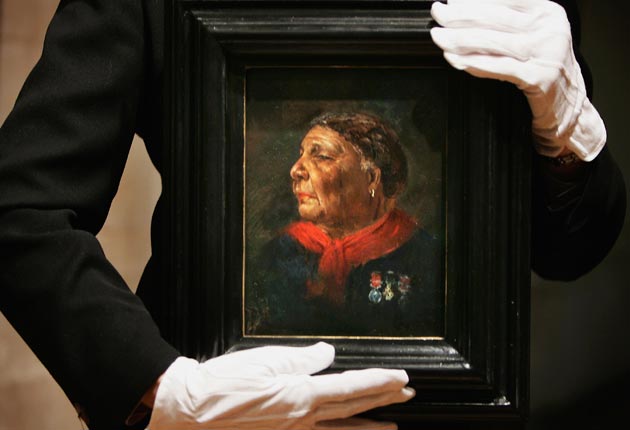
She was the forgotten heroine of the Crimean War, a black nurse from Jamaica who tended the wounds of injured and dying soldiers and whose reputation at the time rivalled that of Florence Nightingale.
But while Britain's collective memory of the "Lady the lamp" has endured for more than 150 years, Mary Seacole was only a historical footnote. Her real status was revealed only after her story was included in the national curriculum and taught to primary-school children to give them a better understanding of racial attitudes and the contributions made by ethnic minority women to British society.
In 2005 – the same year that she was voted the greatest black Briton – a campaign was launched to ensure her place in history was secure by erecting a permanent memorial to her in the grounds of Guy's and St Thomas' Hospital in London, on the south bank of the Thames.
Now, five years down the line, the Mary Seacole Memorial Statue Appeal is still struggling for money. The fundraising total is £50,000, a long way short of the estimated £400,000 it will cost to complete the project.
The memorial will be dominated by a bronze statue by the sculptor Martin Jennings, selected from a shortlist of eight artists. His design depicts Seacole standing in front of a giant bronze disc, cast from a patch of ground in Crimea near where she worked.
Organisers have so far relied on small donations from individuals and schools, but are now looking at ways of raising much larger sums. A variety concert has been scheduled for the spring, with pop and classical musicians, as well as reggae artists, actors, poets and dancers. The exact lineup is being kept secret until nearer the time. The gig will be hosted by the Brixton Academy or the Shepherd's Bush Empire. Both buildings are owned by O2, who have guaranteed that the concert will raise at least £50,000.
Another fundraising scheme is a competition which people pay to enter by text message. The winner of the top prize, which will be announced at the concert, will have his/her name engraved on a plaque at the memorial.
Philomena Davidson, a former president of the Royal Society of British Sculptors, said fundraising had been slow but was "pretty much going to plan", adding that she expected the coffers to fill quickly after planning permission for the memorial was granted, because this will pave the way for large sponsorship deals. Mary Seacole was born in 1805 in Jamaica, to a Scottish army officer and a Creole mother who ran a boarding house in Kingston and passed on her medical knowledge to her daughter. When war broke out in the Crimea in 1853, Seacole travelled to London to offer her services as an army nurse, but despite holding excellent references from doctors in Jamaica and Panama, her offer was rejected.
Undeterred, she travelled to the Crimea using her own money, and set up the British Hotel near Balaclava to nurse, feed and house soldiers recovering from war injuries. She often visited the front line of the battlefield – sometimes under enemy fire – carrying baskets of medicines which she used to tend the wounded.
Beloved by the soldiers, who called her "Mother Seacole", her reputation soon rivalled that of Florence Nightingale, who worked in a hospital several miles behind the front line. After the war ended, she Seacole was awarded four medals including the Crimean Medal and the Légion d'Honneur, in recognition of her courage.
When she returned to London bankrupt and ill, a charity gala was held for her over four nights attended by more than 80,000 people. In 1857, she published her memoirs, The Wonderful Adventures of Mrs Seacole in Many Lands, an instant bestseller. She died in 1881 at 76, and was buried in Kensal Green in north-west London.
Over the years, her memory faded from public view, and her grave was neglected until 1973; it is now restored. The Crimean War Memorial, erected in central London in 1915, included a statue of Florence Nightingale but not one of Seacole. To this day, there is not a single statue dedicated to a named black woman anywhere in the UK.
Join our commenting forum
Join thought-provoking conversations, follow other Independent readers and see their replies
Comments