MoD doctor: we've no idea how many troops suffer from trauma
Fight for our veterans: Military psychiatrist fuels debate about Britain's treatment of soldiers who fought in Iraq and Afghanistan
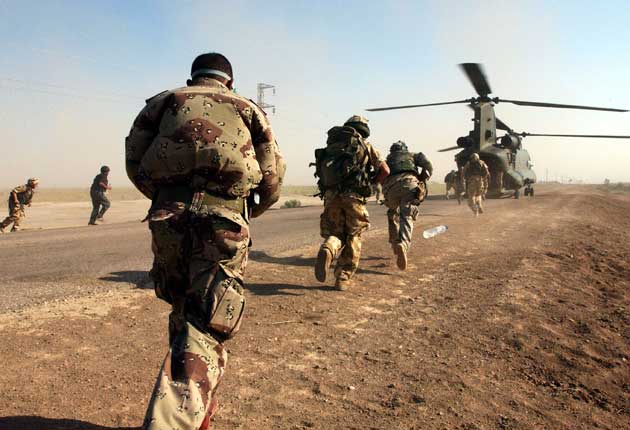
One of the country's most senior military psychiatrists admitted yesterday that the Government has "no idea" how big a problem it faces in the number of traumatised troops returning from Iraq and Afghanistan.
Experts have predicted an "explosion" of post-traumatic stress sufferers with many combat veterans unwilling to seek help for years – and sometimes only after their symptoms lead to a life of dependency, destitution or even crime.
Two weeks ago the Army's most decorated serving soldier, L/Cpl Johnson Beharry, said in an interview with this newspaper that the Government was "disgracefully" failing those it sends to war. L/Cpl Beharry, who was awarded the Victoria Cross, was backed by a host of commanders and tapped into military anger so acute that The Independent launched a campaign to get better treatment for veterans. Dr Ian Palmer, a former lieutenant-colonel and now the Ministry of Defence's civilian expert on veterans' mental health, conceded: "We have no idea of the size or scale of the problem."
He suggested that GPs be forced to record when patients had served in the armed forces to collate statistical evidence about combat-related mental health disorders.
The Government has been criticised for the number of veterans failing to get priority treatment in the NHS – contrary to the promises made to them by ministers. But Dr Palmer insisted that it was against medical principles to prioritise someone simply because they had served in the armed forces. Answering complaints that military charities are forced to fill a gap left by inadequate care from the Government, Dr Palmer insisted he saw no reason why charities shouldn't foot some of the bill.
Following Dr Palmer's remarks, the MoD said it would ask GPs to register whether patients had served in the armed forces, acknowledging that it was "extremely difficult to track" veterans through the health system.
Experts such as Combat Stress – the mental health charity that provides care for some former members of the armed forces – insist that if the Government continues to fail those who risked their lives in combat with inadequate healthcare, the country will face an upsurge of men and women with acute social and psychological problems. Rather than relying on an over-stretched NHS staffed by civilians who have no concept of what it is like to live through the horrors of battle, dedicated specialist care is needed, they say.
Having served 25 years in the Army, Dr Palmer acknowledged that many veterans felt that only fellow servicemen could truly understand them. But he added that they shouldn't expect perfection and had to accept "what is good enough, not perfect". He insisted that clinical excellence in the NHS made it the best place for former soldiers to seek treatment.
Just two weeks ago, after 29-year-old L/Cpl Beharry spoke out, the head of the Army, General Sir Richard Dannatt, insisted: "They [ex-servicemen and women] should have a priority. Government policy is that they have priority within the NHS and I should hope that the NHS managers remind themselves of that."
But Dr Palmer, who heads the MoD's Medical Assessment Programme, offering treatment to veterans of conflicts dating back to 1982, said that servicemen and women had to wait in NHS queues like civilians, insisting that the "fundamental tenet" of medicine was to prioritise according to "clinical need". The MoD later clarified that veterans would only get priority over patients with similar conditions.
Nevertheless, Dr Palmer said primary care trusts across the UK should all have a "veterans champion" while every traumatic stress clinic must be able to call on someone with military expertise. Dr Palmer insisted that civilian NHS staff could offer suitable treatment and said the greatest problem was getting former soldiers to admit they needed help and come forward.
"If they don't want to engage it is easier to say I don't like the therapist," Dr Palmer said. "I want people to take a risk, have the courage to talk to a therapist. Trust your warrior ethos, take a deep breath and trust someone."
Dr Palmer insisted he saw no reason why military charities shouldn't fill a gap in treatment, adding that voluntary organisations often bankroll projects within the NHS.
The MoD is currently supporting six community-based pilot projects which, where possible, offer veterans a clinician with military experience. If they are successful, the MoD may look to replicate the model across the NHS.
However, a spokesman for Combat Stress said: "Six NHS pilots to cover the entire UK is inadequate. We are told by any number of veterans that the care provided by the NHS is missing the mark. The operational tempo over the last decade has led to a large number of military traumas. These traumas are different to those experienced by a civilian counterpart. The military experience is different, and veterans, because of their military traumatic experiences are different too."
City welcomes soldiers home
Cheers and tears of joy greeted troops in an emotional homecoming parade in Leicester city centre yesterday as the 9th/12th Royal Lancers returned after a tour of duty in Basra, Iraq. Captain Christopher Miles said: "Today has been superb. Thousands of people lining the streets – it's what soldiers want to see."
Join our commenting forum
Join thought-provoking conversations, follow other Independent readers and see their replies
Comments