Now ambulance workers fall victim to battlefield stress
Crippling condition remains taboo among paramedic colleagues
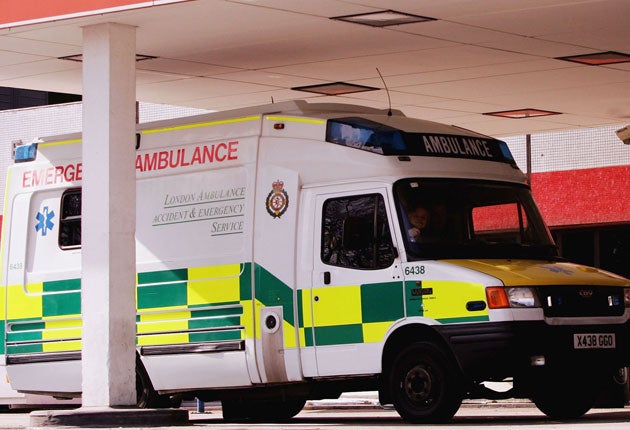
During a 20-year career in which he was among the first to reach casualties in the 1996 Manchester IRA bombings, paramedic Jon Bradshaw routinely walked into scenes most people could not comprehend.
When colleagues discovered he had developed post-traumatic stress disorder (PTSD), they left a letter pinned to the station noticeboard addressed to Jonathan Bradshaw, Chief Ambulance Skiver, c/o The Padded Cell, Rampton Secure Mental Institution (sic). Inside they had inscribed a series of jokes. One read simply "Sick!! RIP".
Although PTSD is now taken seriously by the armed forces, the crippling condition remains taboo among many sectors of the ambulance service, so much so that researchers at King's College London, are about to begin a new research project into the illness.
The Healthcare Commission's annual staff survey found that 34 per cent of ambulance workers had suffered work-related stress last year.
An assessment of Oxfordshire Ambulance Service staff in 1999 estimated that 20 per cent of workers were suffering from PTSD, with cot death rated as the most traumatic event they had to deal with.
With the introduction of stricter response times this year, more ambulance workers are being sent out alone and have less opportunity to talk through traumatic events with colleagues.
"People in this profession are resilient but nobody is totally immune and extreme stress can get to anybody," said Professor Anke Ehlers, the clinical psychologist leading the study into different predictive factors which might help identify and minimise PTSD among ambulance workers. New staff will be interviewed at intervals.
The long-term aim is to develop a prevention programme where paramedics will be taught how to recognise the symptoms as part of their standard training.
Mr Bradshaw, 39, said that suffering from stress carried a stigma: "There is a culture that if you say you have PTSD, depression or anxiety, they think you are nutty. I know of several people who are suffering but they are all being treated abysmally."
For 21 years, the medic, who joined the Greater Manchester Ambulance service as a 16-year-old cadet, prided himself on being a calm man who never lost his nerve or his temper – a worker with an outstanding service record and commendations.
He thought little of the sleepless nights. Each job brought a different level of sadness but scant time to dwell on it. Then one day he was driving when he began shaking uncontrollably, sobbing like a child, gripped in a panic attack.
Unaware that he was suffering from PTSD, he could not understand why the sight of an ambulance left him a shivering wreck.
The father of two young boys spent hours hidden away in the lavatories at work crying, trying to compose himself, fearful his sickness would jeopardise a patient.
Old, grisly cases came to Mr Bradshaw in nightmares and flashbacks. His station manager placed him on lighter duties but his colleagues found out and left the mocking note for him on the noticeboard.
Another serving ambulanceman, who did not want to give his name, said he endured bullying and barbed jokes after colleagues discovered that he had PTSD and knew of other colleagues who had suffered the same problems.
"I think they just think that it is a joke, just thought I made it up," he said, adding he was "disgusted" by the lack of help offered to suffering ambulance workers.
His illness first came to a head almost three years ago when he was unable to save a baby who was suffering from meningitis.
"It was not until I started therapy that I realised I had been carrying cases with me for 14, 15 years. I have had nightmares, flashbacks, crying," he said.
Sam Oestreicher, the secretary to Unison's National Ambulance Sector Committee, said that most trusts had policies and counselling services in place, but paramedics' work had doubled in the past 10 years, meaning crew had less time to seek informal help from colleagues.
He added that new emergency call guidelines had increased pressure on an overstretched service, causing a rise in vehicles manned by a single paramedic, which could lead to staff feeling more isolated.
Dr Ben Green, a consultant psychiatrist advising the ambulance service, said that frontline emergency services were "markedly under-provided for" in terms of addressing "inevitable" cases of stress disorders among staff.
Dr Green added: "A delay of 18 months in providing therapy to a frontline emergency service worker, such as a policeman, fireman or ambulance driver is unacceptable. Earlier and more intensive treatment may have enabled such a well motivated person, such as Mr Bradshaw, to be rehabilitated into the service."
Join our commenting forum
Join thought-provoking conversations, follow other Independent readers and see their replies
Comments