Philip Hammond attacks Scots defence idea
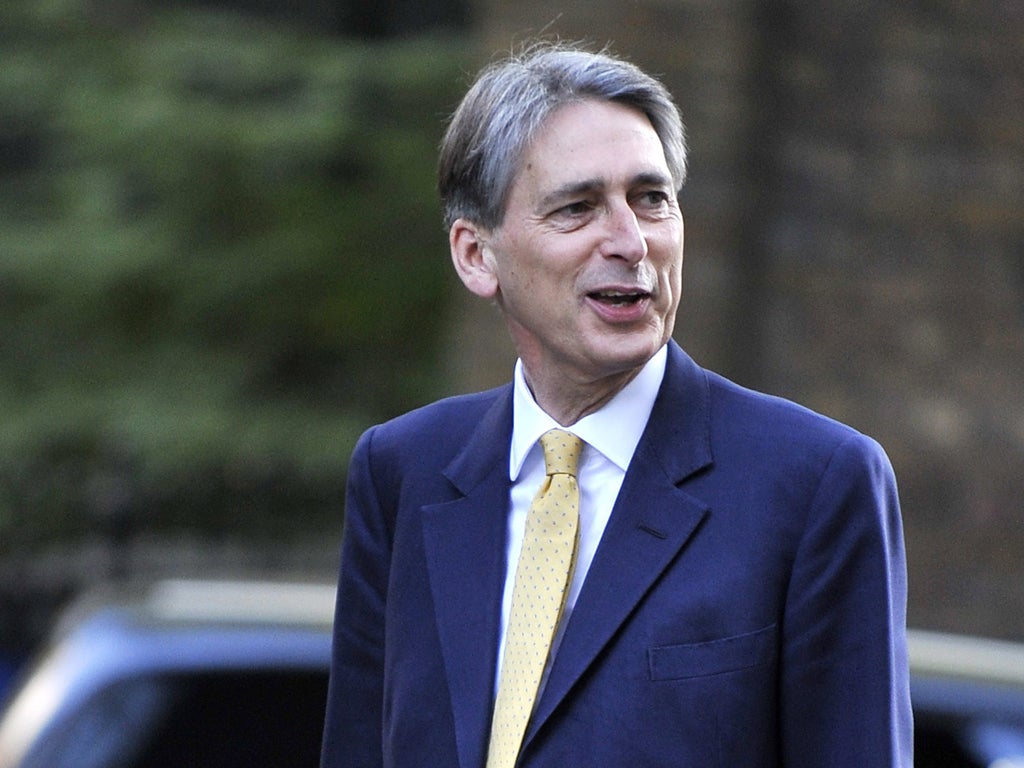
Defence Secretary Philip Hammond today poured scorn on suggestions that an independent Scotland could form its own defence force.
Mr Hammond said a small Scottish defence force would struggle to attract recruits and was unlikely to be sustainable in the long term.
"There seems to me to be a misunderstanding among some Scottish politicians expressed at its most extreme that an independent Scotland would still have the Scots Guards, the Royal Regiment of Scotland ... and that would form a Scottish defence force of some kind," he said.
"It isn't clear to me that they would find it easy to recruit in such an organisation. It isn't clear to me that such an organisation would be sustainable and I don't believe it would be in the best interests of the Scottish units of the Army or indeed in the best interests of Scots wishing to serve in an effective military force."
Addressing the Royal United Services Institute's land warfare conference in London, Mr Hammond confirmed that some historic Army units would be scrapped and others merged in the coming years as it scaled back its regular strength from 102,000 to 82,000.
He said the changes would mean an increased reliance on private military contractors and on part-time reservists whose numbers are set to double to 30,000 as a result of plans set out in the Government's Strategic Defence and Security Review.
In future, the reserves would take on some tasks currently carried out by regular troops, which in turn would require greater commitment by individual reservists to training and preparation.
"The integrated Army concept means, for instance, that light infantry battalions will be reinforced on deployment through a permanent partnership with reserve units," he said.
"And for less complex tasks a reserve unit could, in the future, form the basis of an operational deployment with augmentations from regular forces - particularly on homeland resilience duties.
"This is a fundamental change in role requiring a fundamental cultural shift in approach: a new deal for reserves."
Mr Hammond also indicated that when it came to deciding which units were to be axed, the Army would take account of demographic changes around the country.
"Against a background of an increasing UK population overall, it is projected there will be around 12% fewer males by 2020 in the typical infantry recruiting age range," he said.
"Although all regions face this decline, there is local variation: in particular, the south and south-east of England will see the lowest decline.
"So while we are determined to maintain an effective regimental system, it must be based on the realities of today, and the primacy of capability.
"That means focussing on analysis of recruitment performance, demographic trends and future recruiting needs."
Also addressing the conference, the head of the US Army, General Raymond Odierno, emphasised America's strategic shift towards the Asia-Pacific region under the Obama administration.
At a time when the US Army was cutting 80,000 troops, he said it was increasingly looking towards the "many challenges and opportunities" in that area of the world.
"We have ignored that region for many, many years because of our other commitments," he said.
"We will build on the strong foundations achieved in partnership with our allies while also seeking opportunities to engage in new relationships."
During questions and answers, the head of the British Army, General Sir Peter Wall, acknowledged ethnic minorities were still under-represented.
He said he hoped to see new ideas coming forward over the next few years to redress the balance.
"We have made strenuous efforts in the past to correct this imbalance, without startling success," he said.
"Those who are serving from different ethnicities in the Army are making a huge contribution on a day-to-day basis. We need to acquire more of them."
Meanwhile, Tory MP Colonel Bob Stewart, a former commander of British troops in Bosnia, warned that the scale of the cuts could see the Army reduced to little more than a self-defence force.
"It is going to be a huge impact on the Army. Already we are short of numbers on the ground, particularly in the fighting bit of the Army," he told BBC Radio 4's The World At One.
"An Army used to be defined by being 100,000-strong. If it is less than that, some people argue it is a self-defence force. We will certainly carry less clout in the world. Our capability to react and to fight will be reduced."
He also warned that Scottish regiments must take their share of the cuts and must not be protected for "political reasons".
"As an ex-commanding officer of an English regiment, I'd fight tooth and nail to say that this time the Scottish regiments will have to take their share of the cuts because last time the English regiments took more cuts than the Scottish regiments did," he said.
"So I think for political reasons it is not good enough to say we must keep the Scottish regiments."
Angus Robertson, the Scottish National Party's leader at Westminster, said there had been a "disproportionate decline" in the defence "footprint" in Scotland, despite Government assurances of an increased presence.
"With the ongoing uncertainty over the future of our historic recruited units, it seems the UK Government's cuts just keep coming," he said.
"Far from Scotland benefiting from a Union dividend, we have been hit again and again by a UK defence downturn. It's no wonder the people in Scotland cannot trust a word the UK Government say on defence."
For Labour, shadow defence secretary Jim Murphy accused Mr Hammond of "presiding over decline, not planning for the future".
"It will strike many as perverse, if not self-defeating, to sack 30,000 from the forces only to hire private contractors," he said.
"The Government plans to plug self-made capability gaps rather than reform our forces for the future."
PA
Join our commenting forum
Join thought-provoking conversations, follow other Independent readers and see their replies
Comments
Bookmark popover
Removed from bookmarks