Qatada can be deported despite torture fears, law lords rule
Decision paves way for 11 more terror suspects to be sent to home countries
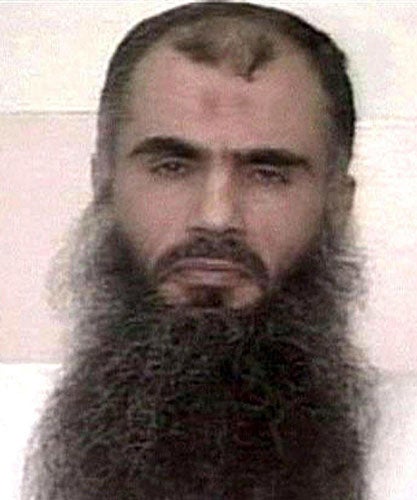
The man described as al-Qa’ida’s “spiritual leader” in Europe has lost his legal battle to stay in Britain after a landmark ruling in the House of Lords makes it possible for the Home Secretary to deport 11 more terror suspects to countries with questionable human rights records. Abu Qatada, 48, a radical Islamic cleric who was granted asylum in Britain in 1993, now faces deportation to Jordan where he faces a life sentence for alleged involvement in terrorism. Yesterday’s law lords ruling was welcomed by the Government but condemned by human rights groups.
Qatada’s lawyers vowed to take the case to the European Court of Human Rights in Strasbourg.
The Government also won its case involving the proposed deportation of two Algerians, identified only as “RB” and “U”, who the Home Secretary considers are a threat to national security. A further nine people from Algeria and Jordan have cases pending before lower courts.
Last year, the Court of Appeal ruled that deportation would breach Qatada’s human rights because evidence used against him in Jordan might have been extracted by torture. The Government has relied on written assurances by Jordan and Algeria that suspects handed over will not be ill-treated. Lord Phillips, sitting with Lords Hoffmann, Hope, Brown and Mance, said there were no reasonable grounds for believing that Qatada would be denied the right to a fair trial in Jordan. Qatada’s solicitor, Gareth Peirce, said the Government was sending a message that it did not object to countries’ continuing violation of one of the most abhorrent of international crimes. “This judgment will pour a dose of cold water on our belief that we have indeed advanced in our willingness to confront the ugly issue of the use of torture.” she said. “It puts into reverse the ethos created by an earlier House of Lords decision. This was a chance to reaffirm that decision, instead it is a backwards step.”
Amnesty International urged ministers not to take the judgment as a “green light” to deport more people to regimes where they risked torture.
Eric Metcalfe, director of human rights policy at Justice, said the agreements not to torture made by countries where Britain was seeking to send terror suspects were worthless.
He said: “A promise not to torture from a regime that tortures its own people is worth nothing. It is shameful that the Government negotiated these deals in the first place and saddening that the courts have refused to intervene to stop them.”
But the Home Secretary Jacqui Smith said she was delighted with the decision: “It highlights the threat these individuals pose to our nation’s security and vindicates our efforts to remove them. My top priority is to protect public safety and ensure national security and I have signed Abu Qatada’s deportation order which will be served on him today.”
Abu Qatada, a father of five, is currently being held in Belmarsh high security prison in south London after a ruling that there was a risk he could breach his bail conditions. He was first detained in 2002, when an immigration court described him as a “truly dangerous individual”.
The Special Immigration Appeals Commission said he had given religious authority to high-profile terrorists, including those behind the September 11 attacks. Qatada has issued a series of fatwas supporting the killing of non-believers and a number of his videos were found in the Hamburg flat of Mohammed Atta, a ringleader of the September 11 hijackers.
In 1999, a Jordanian court convicted him, in his absence, of conspiracy to carry out bomb attacks on two hotels in Amman and providing finance and advice for another planned series of bombings for which he was sentenced to life imprisonment.
Qatada ruling: Where suspects could be sent
Jordan
Torture and ill-treatment in Jordan is as evident today as it was 20 years ago, according to Amnesty International. The Jordanian authorities maintain a system of incommunicado detention which facilitates torture and other ill-treatment of detainees and a related special security court whose judgments regularly appear to be “confessions”, allegedly extracted under torture. The General Intelligence Department (GID) is the primary instrument of abuse of political detainees and for obtaining these so-called ‘confessions’. The GID has wide-ranging powers and near total immunity, allowing it to act as a law unto itself.
Algeria
Beatings, electric shocks and the forced ingestion of dirty water and urine are all forms of torture documented by Amnesty International. Suspects face secret detention by Algeria’s military security police, the DRS (Département du renseignement et de la sécurité) which relies on a range of torture techniques to extract confessions and information. A 2006 report, Unrestrained Powers: Torture by Algeria's Military Security, examined several cases of torture and other ill-treatment by the DRS in detention centres without access to lawyers, doctors, family, or any civilian oversight. It was based on a series of case studies collected between 2002 and 2006.
Join our commenting forum
Join thought-provoking conversations, follow other Independent readers and see their replies
Comments