SAS's best soldiers forced to retire by 'bean counters'
Anger as nearly 40 of the most experienced fighting men are told they must leave elite regiment early
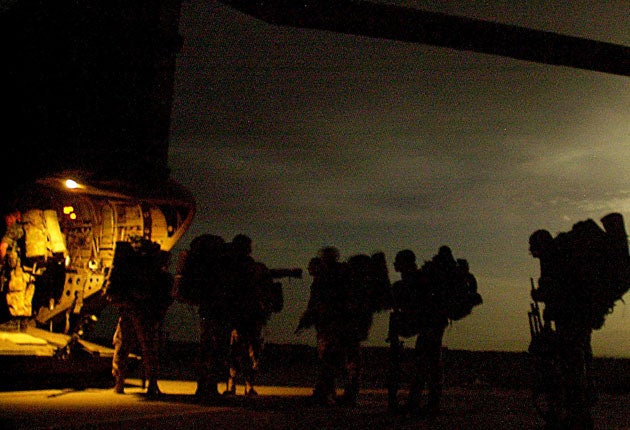
Britain's special forces have been dealt a devastating blow that has seen the number of elite Special Air Service (SAS) personnel on active duty slashed.
The move was condemned last night by leading SAS figures as "madness" which will result in the loss of some of the country's most experienced and senior special forces personnel.
The dozens of soldiers axed – who were informed last week – include some of the SAS's best men, whose efforts have been crucial in a series of successful missions to kill or capture senior Taliban commanders in Afghanistan.
This follows a decision by Whitehall officials to end a practice called "continuance", which allows special forces soldiers to serve up to the age of 45 – five years longer than their regular Army counterparts. As a result almost 40 men – the equivalent of half of one of the regiment's four squadrons – were informed last week that they will be forced to retire.
The move has provoked fury within the SAS. One regimental insider, speaking to The Independent on Sunday last night, slammed the decision as "madness" and said: "This is the work of bean counters who know nothing about military operations. It has hugely damaged morale within the regiment."
It is understood that the cut was decided several months ago, by the former government, and is not part of the current defence review, which in itself could result in further cutbacks. "I'd be astonished if Liam Fox [the Secretary of State for Defence] is even aware of this, given what he has said about not reducing the effectiveness of the Army or resorting to salami slicing of budgets. This isn't about getting rid of dead wood, it's quite the opposite – these are the very people who really know how it works. How it is that senior NCOs who are counter-insurgency experts cannot be regarded as essential is beyond most military people," the insider added.
Former SAS officer Colonel Clive Fairweather condemned the move as a "clever dick idea" and said: "I'd hang on to the special forces, to every bit of experience they've got, even if they are grey-haired, old dogs – it's what's in their heads that's important. I would really fight hard to keep those guys."
He added: "People have this idea of the SAS being macho and terribly physically fit but it's much more about what's in their heads and their experience... The SAS isn't actually about 'Who Dares Wins', it's about who trains and who prepares wins."
Special forces are vital in the war against the Taliban, said Colonel Richard Kemp, former commander of British forces in Afghanistan. "In Afghanistan they have done enormous damage to the leadership of the Taliban. In the current operations that we're engaged in, special forces are absolutely critical, they're extremely important and if this measure looks like weakening the capability of the SAS then it should be resisted."
And expertise built up over a lifetime cannot be quickly replaced, Col Fairweather warned. Wider cuts to the Army would result in increased pressure on special forces, he claimed. "If you reduce the size of the armed forces, as we're about to do so, you can't sustain very large special forces because the talent pool to recruit from is diminished."
Col Fairweather likened Liam Fox to the maniac Dr Strangelove played by Peter Sellers. "I don't think Fox likes the Army very much. I think Fox thinks he's cleverer than the Army, but he's not.
"He worries me; he's a maverick that could get it quite badly wrong. Strangelove is the name I have for him in my mind. He looks like him, and he carries on like him."
In a statement to The IoS, General Sir Richard Dannatt, who stepped down as David Cameron's military adviser earlier this month following tensions with Dr Fox, called for the SAS to be protected against cuts. "During the early stages of a defence review, a lot of painful options are examined and then sensibly shelved. I am sure that reductions to the capability of our special forces will come into that category."
And Bob Shepherd, a 20-year veteran of the SAS, commented: "It's madness, but it's the bean counters that rule the MoD... The way that the special forces have performed in Afghanistan and Iraq has been quite magnificent, and anything that's going to be detrimental to them is just going to be smacking them right in the face. It's dreadful."
In a statement, the Ministry of Defence said: "The Army is using a number of measures to ensure that there is the right match of personnel to tasks. These include offering fewer opportunities for officers and soldiers to extend their service."
On learning of the news last night, US General Stanley McChrystal, former commander of Nato forces in Afghanistan, said it would be inappropriate to comment on the cut, but paid tribute to Britain's special forces: "Real professionals – I know your nation is truly proud of them. I am."
Join our commenting forum
Join thought-provoking conversations, follow other Independent readers and see their replies
Comments