Spencer renews battle with the media
Diana's brother loses legal battle for blanket ban on reporting his second divorce

Get the free Morning Headlines email for news from our reporters across the world
Sign up to our free Morning Headlines email
When he denounced the media's lack of morality at his sister's funeral, it was clear there would always be an uneasy relationship between Charles Spencer and the journalistic world.
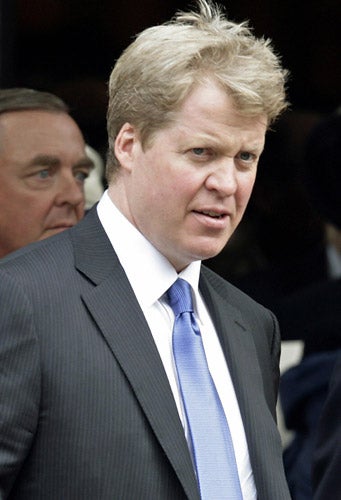
Yesterday, Princess Diana's brother was warned to brace himself for further scrutiny of the most intimate recesses of his private life as a judge rejected calls for a blanket ban on media coverage of his second divorce battle, issuing a landmark ruling that celebrities should be subject to the same principles of openness in the family courts as ordinary people.
Mr Justice Munby, sitting in the Family Division, dismissed claims by the Earl's counsel and that of his former wife Caroline Freud that reporting details of their divorce settlement served no public interest, and merely fed the media's "prurient" interest in the lives of the rich and famous.
The couple split three years ago when the Earl walked out on his wife and two children, then aged two years and four months. Despite the acrimony of the separation, they put on a united front to oppose the reporting of the case. The Government opened up family court proceedings to journalists in April after a hard-fought campaign by newspapers and other media organisations for access.
Nicholas Mostyn QC, representing the Earl, called for the couple's right to privacy under the European Convention on Human Rights to be respected, arguing that the object of the reforms was not to give the media carte blanche to report anything: "There is nothing interesting about this case apart from the fact that it is Earl and Countess Spencer. If this were two anonymous people there would be no press people in here at all. It would be fundamentally boring. We are going to be looking at housing and budget."
Lewis Marks QC, representing the countess, said there was "no public interest in the outcome of this case".
But Mr Justice Munby, who will consider further applications for injunctions today, said that agreeing to an exemption for the Spencers would set an unwelcome precedent. "That is dangerous territory because it potentially gives privilege to one group in the community over and above others," he said. If the claim succeeded it would establish one rule for celebrities and another "for those who live their lives in tranquillity and anonymity".
The Earl's first divorce from Victoria Lockwood in 1997, three months after Princess Diana died, became a humiliating daily soap opera as the world's media descended on Cape Town to witness his attempts to have the case heard before a South African rather than a British judge.
The Earl also sought to gag reporting of the proceedings, on the grounds that it would harm the welfare of his children by his first marriage. He eventually withdrew the application and instead found himself engaged in a public battle with his former wife, who was in recovery from addictions to drink and drugs and whose life had been blighted by eating disorders.
Critics claimed the Earl had sought to have the case heard in South Africa to limit the scale of the settlement and he pleaded poverty by claiming his fortune was tied up in his ancestral estate at Althorp in Northamptonshire, where his sister is buried. He eventually agreed out of court to pay his ex-wife $1.8m and hand over a $250,000 home in Cape Town.
Subscribe to Independent Premium to bookmark this article
Want to bookmark your favourite articles and stories to read or reference later? Start your Independent Premium subscription today.
Join our commenting forum
Join thought-provoking conversations, follow other Independent readers and see their replies