Terrorism detentions for 28 days to be ended
The controversial power for police to hold terrorist suspects without charge for 28 days is to be scrapped within months, The Independent has learnt.
The detention period – the longest in the western world – looks certain to be trimmed in an overhaul of anti-terror laws by the Coalition Government, political and security sources signalled last night.
The 28-day limit became a symbol for human rights activists of an increasingly authoritarian approach to civil liberties over the last decade, although police and Labour ministers insisted it was essential because of the increasingly complex and global nature of terrorist conspiracies.
No final decision has been taken on the period that will replace it, but ministers are seriously considering halving the time limit to 14 days, with suspects able to be released on bail at any point during the second 14 days. Currently the police are not able to bail any suspect arrested on suspicion of a terror offence and must decide whether to charge or release within 28 days.
The pre-charge limit was successively raised by the last government from 24 hours to 28 days between 2000 and 2006. Attempts to increase it further to 90 days and 42 days were abandoned in the face of parliamentary opposition.
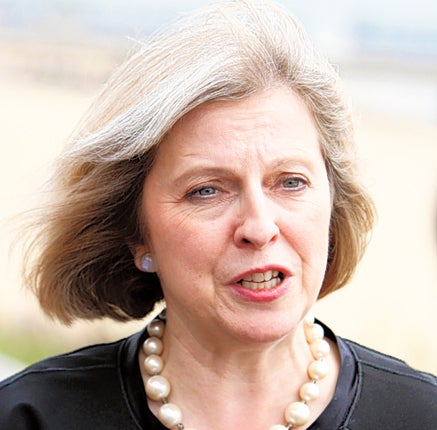
Theresa May, the Home Secretary, announced in June that the 28-day period would be reconsidered as part of a wide-ranging review of counter-terrorism measures. The use of control orders, under which suspects face tough restrictions on leaving home, and of stop-and-search powers are also being examined as part of the review.
Mrs May temporarily renewed the 28-day detention power for six months in June, meaning that ministers will have to decide whether to renew it for a second time by the end of the year. She told MPs that she supported the reduction of the period "over time".
Sources close to the review told The Independent that the 28-day period would almost certainly be cut. One said: "I would be amazed if we end up in a position where it is retained."
One minister said: "Twenty-eight days will go. It is just not clear yet exactly what will replace it."
One option being seriously considered is holding suspects for up to 14 days and then being able to release them on bail during the second fortnight – something which is currently not allowed.
Opponents of that suggestion warn of the danger of releasing potentially dangerous individuals into the community before they have been thoroughly questioned.
Another possible compromise would be to reduce the period to 21 days. Supporters of a reduction point out there have been no cases in the last four years where it has been necessary to hold suspects beyond three weeks.
A reduction would be a boost for the Lib Dems, who support a limit of 14 days. The Conservatives backed 28 days the last time that the issue was debated in the Commons. David Davis, who was then the shadow Home Secretary, believes it should be reduced further – a position shared by other party figures.
Senior police officers are resigned to the prospect of a cut from 28 days, but believe they could accommodate a compromise of a 14-day period combined with a further 14 days during which a suspect can be bailed. Officers are privately known to dislike the fact that terrorist suspects must currently be either charged or released within 28 days without the possibility of bail.
A police source said: "Sometimes we arrest fairly low-level suspects. We gather the evidence and question the suspect but cannot bail them. There might be no real risk associated with giving that person bail – they are not likely to commit any offence and cannot destroy evidence because we have it – but we cannot do it."
Changing face of detention limits
24 hours Before 2000, terror suspects were covered by ordinary criminal law.
7 days The Terrorism Act of 2000 brought in a seven-day limit – if police could get the support of a judge.
14 days The new maximum under the Criminal Justice Act of 2003.
28 days The current limit, which has been in force since the Terrorism Act of 2006.
42 days The period championed by the former home secretary Jacqui Smith, but abandoned in 2008 in the face of certain defeat in the Lords.
56 days Floated by Gordon Brown's government in 2007.
90 days Tony Blair's preferred limit, thrown out by MPs in 2005 after a Labour rebellion.
Join our commenting forum
Join thought-provoking conversations, follow other Independent readers and see their replies
Comments