Women under 37 will be unable to try for twins at first IVF treatment
NICE states that only one embryo should be replaced to reduce the risk of complications
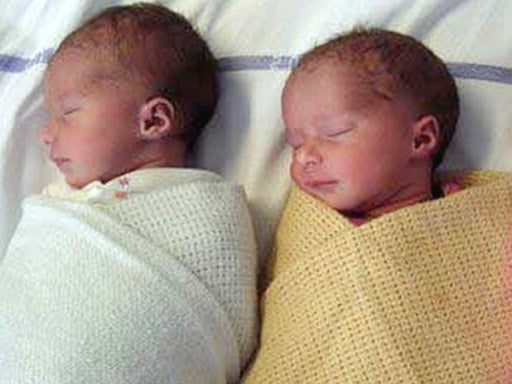
Women under 37 having IVF will not be permitted to try for twins at their first attempt, under official guidance published today.
Only one embryo should be replaced to reduce the risk of complications associated with a multiple birth, the National Institute for Clinical Excellence (NICE) has said.
The ruling angered campaigners who said it flew in the face of Government directives on patient choice. But medical experts welcomed the move saying it would bring "major benefits" to mother and child.
The guidelines, updated for the first time since they were published in 2004, also recommend the upper age limit for IVF be extended from 39 to 42, reflecting advances in treatment.
However, women in this age group will be restricted to one cycle of IVF, compared with the three recommended for younger women, on grounds of cost effectiveness. Success rates decline rapidly in women over 40.
Same-sex couples are included in the guidelines for the first time. They say those hoping to start a family should be treated according to the same criteria as heterosexual couples. Also, IVF should be considered for couples after two years trying for a baby, rather than the current three.
The new guidance comes at a time when the NHS is under growing financial pressure as it seeks £20bn of savings by 2015. Many trusts do not follow the existing guidelines, such as providing three cycles of treatment to eligible women, on grounds of cost. One cycle costs the NHS about £3,000.
Clare Lewis-Jones, chair of the National Infertility Awareness Campaign, welcomed the extension of the eligibility criteria for IVF. But she warned: "It is pointless if the recommendations are not put into practice."
Keith Reed, chief executive of the Twins and Multiple Births Association, said: "This is a sad day for patient choice. Previously a desperate family may have made an informed decision to have twins to complete their family but these guidelines remove this option."
The Human Fertilisation and Embryology Authority (HFEA) said multiple births "remain the biggest single preventable health risk to mothers and babies following IVF." It increases the risk of stillbirth, infant death and disability in babies, and miscarriage, high blood-pressure and pre-eclampsia in the mother.
The HFEA has ordered clinics to reduce the multiple birth rate to less than 10 per cent of all IVF births from the current 20 per cent (in the general population it is less than 2 per cent).
Dr Tony Falconer, president of the Royal College of Obstetricians and Gynaecologists, said: "We know that replacing more than one embryo in the uterus can result in a multiple pregnancy, which carries a higher risk of complications, therefore a reduction in multiple births would have major benefits."
A spokesperson for NICE said the one embryo limit applied only to the first attempt at IVF for women under 37. Two embryos were permitted at subsequent attempts.
Case study: 'We had no hesitation opting for two embryos'
Kirsty Broadbent and her husband Philip had been trying for a baby for five years by the time they started IVF treatment on the NHS at St Mary's Hospital Manchester in 2008.
She was 29 and after having all the tests, which failed to reveal a cause for the couple's infertility, they were asked if they wanted one embryo or two, the maximum allowed at that time.
"We had no hesitation. We had been trying for so long and to us it increased our chances. We opted for two." She got pregnant at the first attempt.
"Matthew and Isobel were born within two minutes of each other. They were perfectly healthy and have stayed healthy since."
Join our commenting forum
Join thought-provoking conversations, follow other Independent readers and see their replies
Comments