A moment for truth as Britain exits Iraq
Gordon Brown says British troops will leave Iraq by July. But after six years of occupation, 178 British deaths, as well as countless Iraqi casualties, there is growing pressure for an independent inquiry into the causes, conduct and cost of war
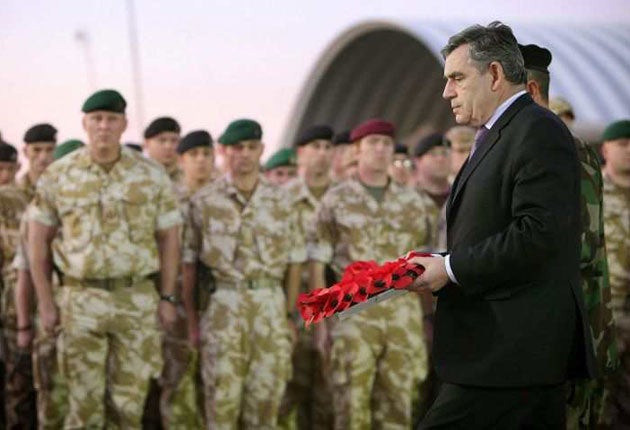
Politicians from across the political divide will today demand an inquiry into the cost, causes and conduct of Britain's operations in Iraq as Gordon Brown returns home after announcing the final withdrawal of troops from the country by July.
Opposition parties believe Mr Brown may allow the long-delayed inquiry to begin next summer but that it will not report until after the next general election, which could be as late as June 2010. Mr Brown will make a statement on Iraq to Parliament today.
The Ministry of Defence (MoD) told The Independent that the cost of British operations in Iraq since the 2003 invasion has been £7.836bn – the equivalent of £3.7m a day.
Critics say that would be enough to fund 25,200 teachers for 10 years and to build 107 new hospitals. The final bill will increase before the pullout of the remaining 4,100 troops.
Some defence experts also say the Government's figure understates the true cost of the Iraq operation. The MoD admits that it does not include payments to the families of the 178 servicemen killed or the cost of treating the injured. Some experts claim the official figure does not cover the wear and tear on military equipment, but the MoD insists that has been taken into account.
Day-to-day costs such as servicemen's pay is met from the MoD's £34bn annual budget. Extra operational costs, including top-up payments for troops, are met from a special reserve fund at the Treasury, to which the MoD submits a bill twice a year. MPs claim the Iraq budget has been shrouded in secrecy. Initially, the Government declined to give separate figures for the cost of operations in Iraq and Afghanistan. Some figures emerged only through freedom of information requests. MPs have demanded more openness, citing the greater scrutiny by the US Congress of America's spending on Iraq, which dwarfs Britain's and is estimated at £400bn by the end of last year.
Mr Brown, who visited Baghdad and Basra yesterday, announced that the British mission in Iraq would end no later than 31 May, and that the troops would come home within two months. Between 200 and 300 military advisers are expected to remain to help the Iraqi government.
The Prime Minister said: "We have made a huge contribution and, of course, given people an economic stake in the future of Iraq. We leave Iraq a better place. I am proud of the contribution British forces have made."
Nick Clegg, the Liberal Democrat leader, said last night: "The Government is trying to end this war as they began it by trying to hide the true cost and deceiving the public. But Gordon Brown cannot be allowed to sidestep the massive part he played in signing the cheques for the biggest foreign policy disaster in half a century. There must be a fully independent public inquiry which must include the true financial cost of this catastrophic war and its aftermath."
Peter Kilfoyle, a former Labour defence minister, said the true cost of the war in Iraq was being "camouflaged". "Any figure cannot reflect the human cost of what was a colossal error of thinking, based on our slavish devotion to the special relationship with a fading US superpower," he said.
He added that British forces were trying to maintain a role in the world they were no longer capable of, and which the public would not support if they were told the real financial cost.
Liam Fox, the shadow Defence Secretary, said: "Now that we know our troops are being withdrawn there is no excuse not to have the inquiry into the Iraq war that we have demanded. We need to learn the lessons from Iraq so that we do no repeat the mistakes in places such as Afghanistan."
The Stop the War Coalition said: "The British people will continue paying for this war long after it is over. Injured and maimed soldiers will have to be cared for; reconstruction in Iraq will have to take place and Britain may be sued by Iraq for reparations for this illegal war."
Mr Brown has promised that there will be an Iraq inquiry "when the time is right", but has not said whether it would be held in public or who would head it. Downing Street said there had already been four investigations into aspects of the war. But critics say their remit was tightly drawn and there has been no over-arching inquiry.
Six years in Iraq
2003
21 March: 45,000 British troops enter southern Iraq alongside 250,000 American soldiers, who quickly topple Saddam Hussein's regime.
24 March: British forces take Basra, Iraq's second largest city, and consolidate control of Iraq's three southern, Shia-dominated provinces.
9 April: Baghdad falls to US forces and President George Bush declares end of "major operations" on 1 May. British troop numbers reduced to 18,000.
13 December: Saddam captured near Tikrit.
2004
Jan–Feb: Low-level insurgencies intensify in Baghdad and Sunni western provinces. Basra and the south are relatively calm.
May: Revelations of abuse of PoW's by British troops leads to escalating clashes between UK forces and militants loyal to Shia cleric Muqtada al-Sadr.
28 June: US hands sovereignty to interim Iraqi government.
2005
30 January: Iraq votes and power shifts towards Shias.
May: UK troop numbers fall to 8,500 and Tony Blair hints at possible withdrawal.
September: Tensions in Basra ignite as riots spread across the south following a series of anti-British protests.
2006
22 February: The Al-Askari Mosque in Samarra, left, one of Shia Islam's most important sites, is blown up; tens of thousands of Iraqis are killed.
6 May: British Lynx helicopter is shot down, killing five, including the first British servicewoman to die in action in Iraq.
13 July: British and Australian forces hand Muthanna to the Iraqi authorities.
30 December: Saddam Hussein is hanged.
2007
January: President Bush orders a troop surge into Baghdad and western provinces.
March: Iraqi forces initiate a crackdown on Shia militants in the south. US criticise UK's role.
September: Remaining 5,000 UK troops in the south withdraw to Basra airport.
December: Basra's province is handed over to the Iraqis.
2008
March: Army is called in to back Iraqi forces against Mehdi army militants.
27 November: Iraqi parliament approves a security pact in which withdraws by 2011.
17 December: Gordon Brown announces UK troop withdrawal by July 2009.
Join our commenting forum
Join thought-provoking conversations, follow other Independent readers and see their replies
Comments