Brown: I will cut spending
£25bn Trident nuclear weapons system may be among key projects delayed or cut
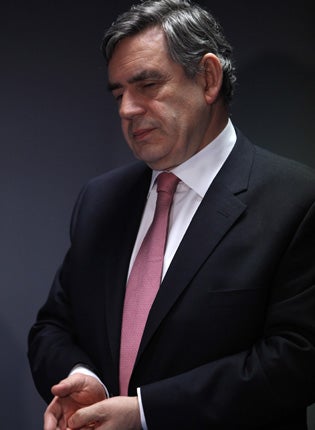
Gordon Brown is to issue a list of specific spending cuts before the general election in an attempt to convince voters that Labour will reduce the soaring deficit in public finances.
The Prime Minister has been reluctant to use the word "cuts", fearing that Labour would look no different to a Conservative Party committed to spending less than Labour. But The Independent has learnt that as a key part of Mr Brown's autumn fightback he will change tack on the issue which will be the central battleground in the election expected next spring.
Mr Brown will deny he is redrawing his favourite "dividing line" – contrasting "Labour investment versus Tory cuts". However, he has come under pressure from Cabinet ministers, led by the Chancellor, Alistair Darling, to change his language on public spending amid fears that Labour could lose the argument.
Initially, Mr Brown will seek to establish in voters' minds the key differences between Labour and the Tories – on policy, government intervention to limit the impact of the recession and preserving frontline services. Then he will acknowledge that the Government needs to go beyond the £35bn of efficiency savings it has already promised. The aim will be to show Labour is serious about reducing the deficit, which is set to rocket to £175bn in the current financial year and to £173bn next year.
Cabinet ministers will announce that some projects will be abandoned, shelved or delayed to save money. One admitted yesterday: "Efficiency savings are useful but not a substitute for real savings. There will be things that need to be put off, done more slowly or abandoned altogether."
No specific decisions have yet been taken, but the move will fuel speculation that the Government may delay the £25bn renewal programme for the Trident nuclear weapons system. Aides insist that Mr Brown remains committed to retaining Britain's deterrent.
Under a fightback plan being written in Downing Street, the Government will accept that efficiency measures must be taken by all Whitehall departments and real savings identified on top of them.
It will draw up a programme to cut future debt without harming the frontline services on which people will depend. Ministers will argue that Britain's future cannot be built without the "continued investment" safeguarded by Labour, combined with public service reforms.
The first signs of the new approach may emerge at next month's TUC conference in Liverpool, when Mr Brown and the Chancellor will call for pay restraint among top earners in the public sector, calling on them to match the belt-tightening in much of the private sector. To reduce the debt, Labour will be launching a drive to combat long-term unemployment. A "Backing Young Britain" campaign will outline new measures that will help young people into work.
Ministers will trumpet the fruits of Labour's "investment" as more new schools open at the start of the new term that at any time since Victorian era. They will argue that spending money on education and skills is crucial to boosting long-term economic growth and therefore the speed at which public debt can be repaid.
But Mr Brown will seek to limit such intervention to a small number of high-profile areas, to avoid criticism that the Government is indulging in "micro-management".
Although the Tories enjoy a healthy average 14-point lead in the opinion polls, Labour strategists have advised Mr Brown it can be eroded by contrasting the Government's record and plans with David Cameron's more sketchy programme. Labour's internal polling reports claim the Tories are more vulnerable on policy than their current lead suggests because they are widely perceived as having little or no policy. "This is the way back for Labour," one strategist said.
Under the fightback plan, as the beginnings of economic recovery emerge, Labour hopes the Government's actions will be seen to have stopped recession turning into depression. It says the next challenge for the party will be to demonstrate how recovery will be sustained, where the jobs of the future will come from and how investment in frontline services such as health, education and police will be safeguarded.
Labour will defend its achievements in office and say more about its future plans on crime, immigration and improving society. One senior Labour source said: "In contrast to David Cameron and George Osborne, we must offer leadership that convinces and inspires. This means focusing on what really matters to the public, offering fewer but more substantial big interventions. It means having a clear policy message, in contrast to the Tories, who increasingly present two faces to the public."
In a speech today, the shadow Home Secretary, Chris Grayling, will liken conditions in Britain's "broken society" to those shown in the hit American television series The Wire, based in Baltimore.
He will call for police to be given more powers to tackle anti-social behaviour by young teenagers; anyone carrying a knife to face a custodial sentence and people no longer being cautioned or given light sentences for violent attacks against strangers.
Join our commenting forum
Join thought-provoking conversations, follow other Independent readers and see their replies
Comments
Bookmark popover
Removed from bookmarks