David Cameron wobbles on minimum price for alcohol pledge
It was a firm commitment by the Government last year. So what has happened?
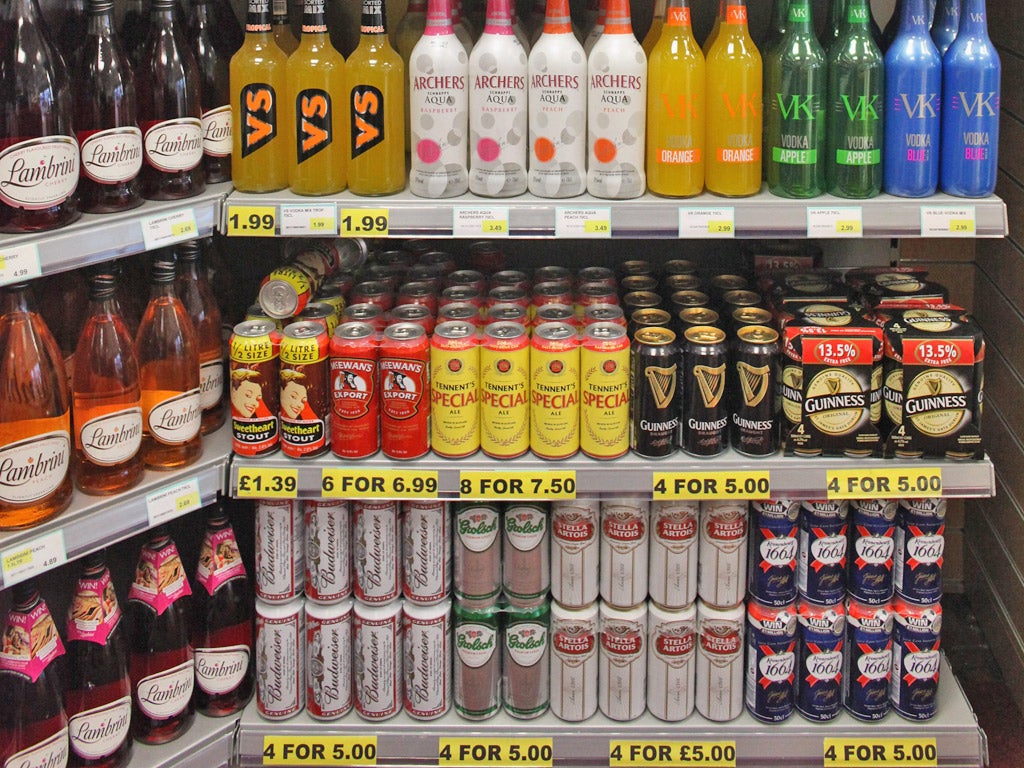
For a politician, David Cameron’s statement on minimum alcohol pricing was remarkably unambiguous.
In a signed foreword to the Government’s alcohol strategy published last year, he wrote: “We are going to introduce a new minimum unit price [for alcohol]. For the first time it will be illegal for shops to sell alcohol for less than this set price per unit.”
He said his plan would result in 50,000 fewer crimes each year and 900 fewer alcohol-related deaths a year by 2020. To reinforce the point, he added: “I know this won’t be universally popular. But the responsibility of being in government isn’t always about doing the popular thing.”
But a year is a very long time in politics – especially when you’re down in the polls. And today the Prime Minister tacitly acknowledged he was now putting popularity before responsibility and abandoning his plan to put a minimum price on a drink.
In the House of Commons, Mr Cameron was directly confronted by the Conservative MP Sarah Wollaston – a former GP – who asked about reports that the Prime Minister had had a change of heart and was preparing for a U-turn on the issue.
But, rather than provide reassurance, he resorted to the weasel words so favoured by politicians when in a difficult spot. He told her: “There is a problem with deeply discounted alcohol in supermarkets and other stores and I am absolutely determined that we will deal with this.
“We published proposals, we are looking at the consultation and the results to those proposals, but, be in no doubt, we’ve got to deal with the problem of having 20p or 25p cans of lager available in supermarkets. It has got to change.”
He failed to mention minimum alcohol pricing once. Afterwards, the Prime Minister’s spokesman effectively admitted that the plan was dead.
He could not say that Mr Cameron still agreed with what he said last year. He would not say that the Government was still committed to the proposal and, tellingly, when told that people would interpret his silence as an acknowledgement the policy had been abandoned said: “I refer you to what the Prime Minister said in the House of Commons.”
So why the change of heart? It certainly does not appear to be based on the Government’s own evidence. In a paper on the subject, the Home Office said it had found “consistently strong evidence” to suggest that increasing alcohol price is “associated with reduced consumption”, particularly among young people.
As for the health benefits, it cited international research showing that “increases in alcohol prices are linked to decreases in harms related to alcohol consumption”. The evidence from the medical profession is even clearer – as Mr Cameron himself accepted.
Less than five months ago in its consultation document on what level to set the minimum price at, the Government predicted that at 45p the move would reduce total alcohol consumption by 3.3 per cent and lead to 5,000 fewer crimes, 24,000 fewer hospital admissions and 700 fewer alcohol-linked deaths.
Downing Street was unable to say why there was a need for such a significant U-turn on a policy with which Mr Cameron had been so closely associated.
But sources suggested that the Prime Minister had made a political calculation: that at a time of general rising prices and squeezed income he could be seen to be imposing additional financial hardship on voters.
They disputed claims that he had given in to pressure from Theresa May, the Home Secretary, and Michael Gove, the Education Secretary, who had always been opposed to the move. Instead it was suggested Mr Cameron now thought it was possible to crack down on the cheapest drinks without the need for blanket minimum pricing.
Tellingly, the Department of Health was not made aware of the move before it was leaked to the media. But while Mr Cameron may have headed off a damaging row with his party’s libertarian right wing who were always opposed to such a so-called “nanny state” initiative, he will face a backlash from the medical profession.
The British Medical Association said it would be “bizarre” to let the plan wither. “This is a once-in-a-lifetime opportunity to save lives and to save the country money. Both of those are very good deals for him,” said Dr Vivienne Nathanson.
“It is damaging because none of us know where we are going next.”
The Royal College of Nursing added: “Nursing staff see the terrible effects of alcohol abuse first-hand which are entirely preventable.”
But the episode will also damage Mr Cameron’s credibility. He has made much of his integrity in sticking to pledges made to restore public faith in politicians. In a small – but totemic way – the U-turn on alcohol undermines this.
The U-turn: What they said
Theresa May
“The evidence is... that if you need to deal with the problems that are caused by the excessive consumption of alcohol then you have to address the price of it…The problem is now so acute that we…will therefore introduce a minimum unit price for alcohol.”
David Cameron
“When beer is cheaper than water, it’s just too easy for people to get drunk on cheap alcohol at home before they even set foot in the pub. So we are going to introduce a new minimum unit price – so for the first time it will be illegal for shops to sell alcohol for less than this set price per unit.”
Join our commenting forum
Join thought-provoking conversations, follow other Independent readers and see their replies
Comments
Bookmark popover
Removed from bookmarks