Diplomat 'denied foreign post due to her deafness'
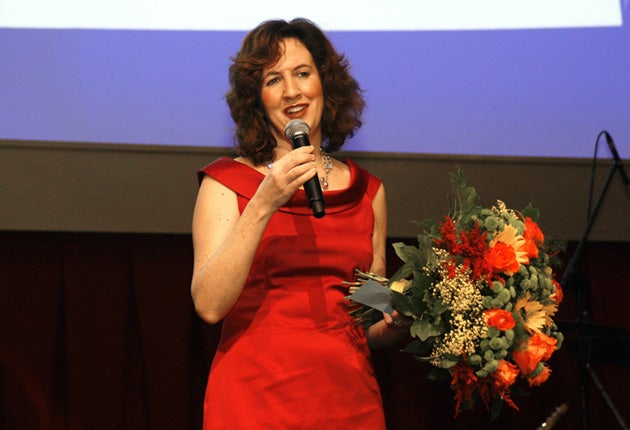
A foreign office high-flier appointed as Britain's deputy ambassador to Kazakhstan has had her posting revoked after officials ruled that her deafness makes it too expensive to send her abroad. Jane Cordell, who was lauded for her work championing disability rights during a previous diplomatic role in Poland, is suing the Foreign Office for discrimination after being told that the additional cost of providing her with trained "lip speakers" to enable her to work can no longer be justified from the public purse.
In her case, which is being supported by the Equality and Human Rights Commission, she argues that accommodating her disability is being used to restrict her career despite the fact that the Foreign Office routinely pays out large sums for the private education of the children of staff for up to 11 years who would otherwise be unable to take up their posts.
Mrs Cordell, 44, who spent four years as first secretary at the embassy in Warsaw, returning to London in January, was chosen to become deputy head of mission in the Kazakh capital, Astana, with the strong support of the ambassador. But the offer was rescinded because it would cost an additional £300,000 to fund a rota of lip speakers – specialist interpreters who help to relay conversations to a deaf person using sign language – during her posting. Mrs Cordell argues that the figure is unrealistic and her needs could be met for £176,000 per year – a slight increase on what the Foreign Office was willing to pay while she was stationed in Warsaw.
An employment tribunal judge will rule later this autumn on the case, which campaigners say has implications for the ability of people with a disability to rise to the highest echelons of Britain's diplomatic corps and other professions. Unless the court rules in her favour, Mrs Cordell, who remains employed by the Foreign Office, argues that the number of foreign posts available to her will be vastly reduced. Lawyers for the Cambridge-educated diplomat said that the Foreign Office is "effectively imposing a glass ceiling on the career prospects of the disabled".
Mrs Cordell lost her hearing over several years as a young adult, and joined the Foreign Office in 2001 after a previous career teaching English as a foreign language and working for Cambridge University Press. She rose rapidly through the ranks, earning praise from her managers for her "consistently strong performance".
She said: "I am bringing this case because sadly it is the only available way to get clarity on my future FCO career. A diplomat needs overseas experience; I would expect to be able to get this. I am doing this for myself and other staff at the Foreign Office whose disabilities require significant support. We need answers to the question 'Can we expect to have normal diplomatic careers, or not?' "
While in Warsaw as head of the embassy's political section she led a number of initiatives on disability rights in Poland, earning a nomination for a Presidential Order of Merit medal. By March last year, her superiors in London decided that she would soon make "the transition to senior management".
The decision to withdraw her Kazakhstan job offer was based on legislation which obliges employers to make "reasonable adjustments", such as the funding of specialist equipment or assistance, to allow disabled staff to carry out their work.
The Foreign Office claims that the amount required for Mrs Cordell, which would include the living and travel costs of security-cleared lip speakers shuttling between Kazakhstan and Britain on a rota, considerably exceeds the definition of "reasonable". The department, which has 228 staff registered as disabled with 52 working abroad, imposes a £10,000 ceiling on help for disabled employees and only funds extra assistance on a case-by-case basis.
Join our commenting forum
Join thought-provoking conversations, follow other Independent readers and see their replies
Comments