Dr Kelly wounds 'typical of self-inflicted injury'
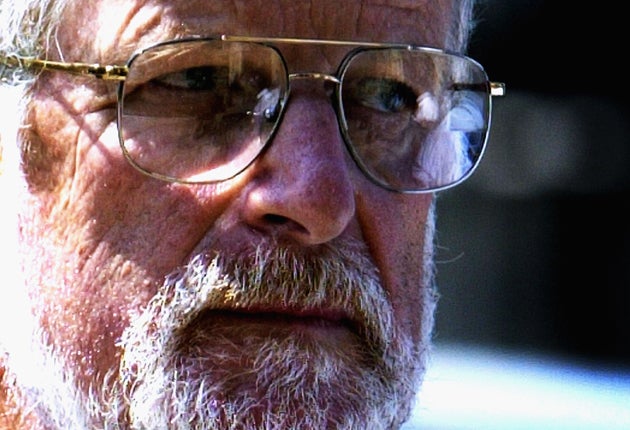
Secret medical documents released today backed official conclusions that weapons inspector David Kelly killed himself as the Government sought to end speculation over his death.
Justice Secretary Kenneth Clarke said he was publishing the documents on how Dr Kelly died "in the interests of maintaining public confidence" in Lord Hutton's inquiry into the scientist's 2003 death.
Lord Hutton denied the reports, which found Dr Kelly's wounds were "typical of self-inflicted injury", had been concealed and said he asked for them to remain secret for 70 years "solely in order to protect Dr Kelly's widow and daughters" from distress.
"My request was not a concealment of evidence because every matter of relevance had been examined or was available for examination during the public inquiry," he said
"There was no secrecy surrounding the post-mortem report because it had always been available for examination and questioning by counsel representing the interested parties during the inquiry."
The law lord said his inquiry was "open and public" and none of Dr Kelly's family, the Government or the BBC "asked for leave to question or challenge by cross examination" witnesses whose evidence "led to the conclusion that Dr Kelly had committed suicide and had not been murdered".
These included the pathologist Nicholas Hunt, leading suicide expert Professor Keith Hawton, the director of the Centre for Suicide Research at the University of Oxford and others, Lord Hutton said.
But the post-mortem examination and toxicology results were published today after doubts over Dr Kelly's death refused to go away, with several doctors calling for another examination of the case.
Releasing the documents on the Ministry of Justice website, Mr Clarke said: "I am publishing these reports in the interests of maintaining public confidence in the inquiry into how Dr Kelly came by his death.
"While I firmly believe that the publication of these documents is in the public interest, I am mindful that the contents may be distressing.
"I hope that the privacy of Dr Kelly's family will be respected at this difficult time."
Solicitor Peter Jacobsen, of Bircham Dyson Bell, who has represented the family of Dr Kelly since 2003, said they had no comment to make.
Dr Kelly's body was found in woods near his Oxfordshire home in July 2003 after he was identified as the source of a BBC story claiming the Government "sexed up" its dossier on Iraq's supposed weapons of mass destruction.
In the outcry that followed, Tony Blair appointed Lord Hutton to head a public inquiry into his death. Unusually, the then lord chancellor, Lord Falconer, ruled it should also act as an inquest.
The conclusions of the post-mortem examination by Nicholas Hunt, published today, matched those of Lord Hutton's report.
But Michael Powers QC, one of the doctors campaigning to overturn Lord Hutton's findings, told BBC News there was "nothing new" in the documents and there was still a "major conflict" over the amount of blood at the scene.
Dr Kelly may also have taken "far less than 29 tablets" and, if he had only taken six or eight, "one might draw completely different conclusions", he said.
"I don't believe any of the evidence that we have seen or heard to date can answer those questions."
Dr Powers added there was a "major conflict over how much blood was actually at the scene" and, asked about the details of the post-mortem examination, said: "These are all components which don't change things, there's nothing new in it."
In his post-mortem examination, Dr Hunt concluded: "It is my opinion that the main factor involved in bringing about the death of David Kelly is the bleeding from the incised wounds to his left wrist.
"Had this not occurred he may well not have died at this time.
"Furthermore, on the balance of probabilities, it is likely that the ingestion of an excess number of co-proxamol tablets coupled with apparently clinically silent coronary artery disease would both have played a part in bringing about death more certainly and more rapidly than would have otherwise been the case."
He gave the cause of death as haemorrhage, incised wounds to the left wrist, co-proxamol ingestion and coronary artery atherosclerosis.
The "orientation and arrangement" of his wounds were "typical of self-inflicted injury", as was the removal of Dr Kelly's spectacles and his watch while blood was already flowing, Dr Hunt said.
The pathologist added that the choice of a "very pleasant yet relatively private spot", the neat way in which the water bottle and its top were placed, and the "lack of obvious signs of trampling of the undergrowth or damage to clothing" all pointed to suicide.
"There is a total lack of classical 'defence' wounds against a sharp weapon attack," he said.
There was also "no positive pathological evidence" that Dr Kelly had been subjected to "a sustained, violent assault", or that he had had his neck compressed "such as by manual strangulation, ligature strangulation or the use of an arm hold", he added.
There was no evidence that the body had "been dragged or otherwise transported to the location at which his body was found".
Following the controversy, Attorney General Dominic Grieve is reviewing papers in the case in a bid to decide whether he should apply for a full inquest into Dr Kelly's death.
He has said he would need to see new evidence first, adding that he could not apply to the High Court for an inquest on a "hunch".
He would also have to take account of the feelings of the scientist's close family, who have not asked for a new investigation.
Calls for an inquest have come from Peter Kilfoyle, the former Labour minister, and Norman Baker, the Lib Dem transport minister. Lord Howard of Lympne, the former Conservative leader, has also added his voice.
In August, a group of prominent medical figures signed a letter stating that the official explanation of Dr Kelly's death was "extremely unlikely".
And Detective Constable Graham Coe, who found the body, said there had not been much blood at the scene.
But Dr Andrew Davison, a Home Office pathologist, said the circumstances of Dr Kelly's death were "not a game of Cluedo" and should be left to the experts.
Dr Powers said it remains unclear whether the decision is "clearing a path" for an inquest or attempting to "close it off" in the face of vocal and sustained public pressure.
Dr Powers said: "It is extraordinary that it has taken somewhere in the region of of nine months for the Ministry of Justice to decide which information should be made public.
"It is also extraordinary and most unusual that after an inquest a Government department has to make a decision that more information needs to be put into the public domain because we recognise the inquest was insufficient in answering the questions.
"That is very important because this, to our view, is recognition by the Government that there were concerns about the inadequacy of information that came out of Lord Hutton's inquiry and this is some sort of sticking plaster to address the inadequacy of that inquiry."
Join our commenting forum
Join thought-provoking conversations, follow other Independent readers and see their replies
Comments