Exposed: How lobbyists put positive spin on child labour (video)
Bell Pottinger suggested that a minimum age for child labour could improve Uzbekistan's reputation
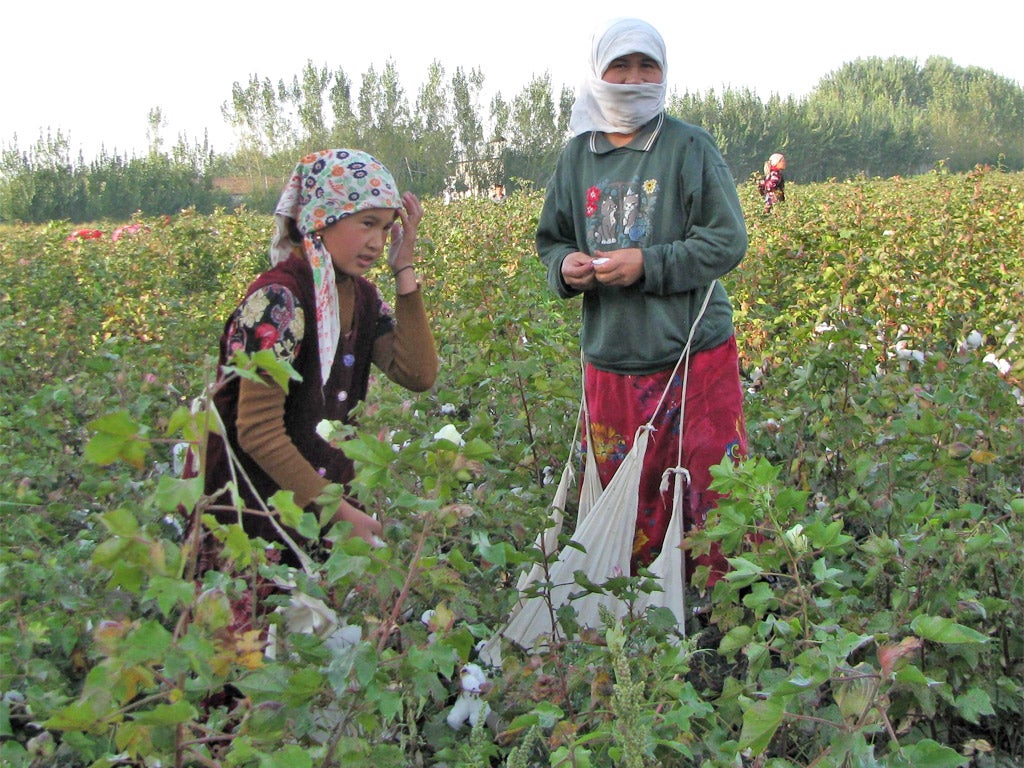
A despotic regime could continue using child labour for up to 20 years and still improve its international standing as long as reforms were under way, according to strategy prepared by senior executives from the lobbying firm Bell Pottinger.
While repeatedly insisting to undercover reporters posing as businessmen from Uzbekistan that it would be necessary to instigate reforms in the country they suggested that slow progress need not be an impediment to better international relations.
"No one is suggesting it would be realistic to say tomorrow the problem will disappear," said Tim Collins, managing director of Bell Pottinger Public Affairs.
"But we need to put some flesh on the bones of what movement in the right direction looks like.
"So it might be step by step, something like this, set a timeframe, 10, 20 years in the future when it will all be gone completely, but we take it step by step."
He stated that a minimum age for child labour and a limit on the number of days schoolchildren could work in the cotton industry could be introduced to improve the country's standing.
Mr Collins suggested an independent survey of the number of children working every six or 12 months: "It doesn't mean it's got to zero, maybe it takes quite some time to get to zero. But the number is clearly moving in the right direction. That's a story you can tell."
His colleague, Sir David Richmond, Britain's former special representative to Iraq, added: "So you don't necessarily have to make huge leaps all the time but there must be a sense in which there is constant progress."
Both men were recorded as part of the Bureau of Investigative Journalism's investigation into lobbying for The Independent.
Keen to attract business from the fictitious cotton industry representatives with links to the Uzbek government they laid out what the company could offer the regime in terms of bringing the country out of international isolation with only gradual degrees of change.
They suggested that if that was the case, the Prime Minister David Cameron might in future be prepared to increase Britain's links with the country.
"Obama and Cameron... both in different ways to their domestic audiences said that they don't believe democracy can be parachuted from 4000ft and they're less inclined to try to impose particular models of government on other countries," said Mr Collins. He went on to add: "To some extent that's an asset from your point of view because they're more interested in realpolitik."
And he used the example of Libya, under Colonel Gaddafi, to suggest how it might work. "It's not a parallel that we would draw a lot but Tony Blair for a time played very strongly on the fact that he had been able to open up Libya and Colonel Gaddafi was now becoming much more cuddly.
"That didn't turn out too well in the long term but for a time, it actually illustrates that it might be what David Cameron, or even President Obama, would quite like – neither of them are at the moment festooned with lots of overseas policy successes that there is a middle ground that can be [formed]."
In the executives' presentation pitch for the "£1m-plus" integrated strategy, they explained that "selling the status quo, or pretending things are changing if they are not, will not work. Worse, it will be counter-productive."
Sir David later added: "The only thing I would say from a sort of diplomatic point of view... is that you will not, in this country, get the politicians to completely ignore human rights issues and see Uzbekistan only through the medium of trade and commerce."
Mr Wilson had emailed the "Uzbek" representatives back after his first meeting with them asking for reassurance that the Government of Uzbekistan "is indeed committed to a reform agenda on various policies including child labour, human rights and democracy, all of which will be vital components in us being able to deliver a successful campaign".
He received a reply pointing to the Uzbek Ministry of Labour's claimed agreement with farmers that forced child labour would be prevented on cotton plantations and the use of children would be permitted "only in exceptional circumstances".
The strategy presentation also included a discussion of whether Tesco or Asda could be persuaded to drop opposition to using Uzbek cotton.
Mr Collins said: "They [industry] will respond to pressure both from the top and the bottom. The top is the political which we've talked about. The bottom is consumer pressure... There is sense in probably thinking about both because industry will respond to small-p political pressure."
Mr Collins added that using child labour to pick cotton should be presented as a historical legacy problem.
"The story shouldn't be at this point 'the problem has been solved'... No country in the world dealt with child labour or human rights overnight. It didn't happen in Britain or America until hundreds of years ago or so, maybe less. These were issues in our countries."
Child labour: The law
Cotton production is the mainstay of the Uzbek economy. More than a million children are removed from education for up to three months to pick the cotton by hand.
The scandal over child labour in the former Soviet state has led to at least 60 international retailers, including Tesco, Walmart, Marks & Spencer, Adidas and H&M boycotting Uzbek cotton. rob hastings
Reputation game: Bell Pottinger's advice
"No country in the world dealt with child labour or human rights overnight."
Tim Collins, managing director, Bell Pottinger Public Affairs
"On UK trade engagement, these are some of the people with the right messaging we could get you in to see..."
David Wilson, chairman, Bell Pottinger Public Relations
"So you don't necessarily have to make huge leaps all the time but there must be a sense in which there is constant progress."
Sir David Richmond, strategist, Bell Pottinger Sans Frontières
Related links
* Lobbyists - full related links
The Bureau of Investigative Journalism
* thebureauinvestigates.com
Join our commenting forum
Join thought-provoking conversations, follow other Independent readers and see their replies
Comments