Government to cut further £4bn from welfare bill
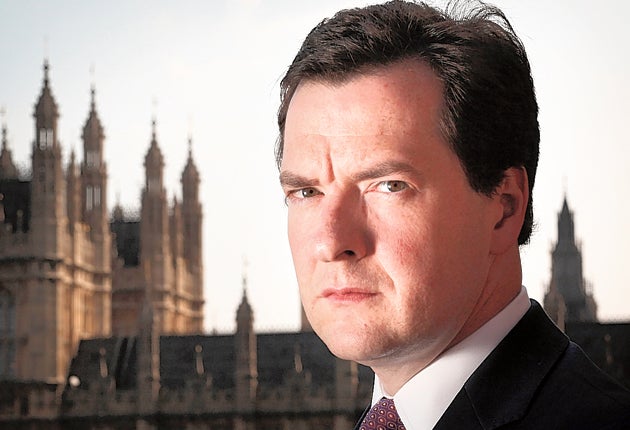
The Government is to reduce a welfare budget that is "completely out of control" by a further £4bn, George Osborne said last night. The Chancellor, who announced £11bn of savings on welfare in June, said he would no longer provide the money for the unemployed to make a "lifestyle choice to just sit on out-of-work benefits".
The combined £15bn cuts represent about 6 per cent of the budget of Iain Duncan Smith, the Work and Pensions Secretary. In return, he is trying to persuade the Treasury to allow him to bring in a universal working-age benefit to ensure that everyone who moves from welfare to work is better off. His sweeping shake-up would dismantle Gordon Brown's tax credits and merge the tax and benefit systems.
In a BBC TV interview last night, Mr Osborne suggested that such an approach had been agreed in principle. "We are going to reform out-of-work benefits so there's a strong incentive for people who can work to get work," he said. "People who think that it's a lifestyle choice just to stay on out-of-work benefits... that is going to come to an end."
Ministers are still haggling over whether to restrict universal benefits for pensioners including the winter fuel allowance, free bus passes and free TV licences. Some ministers are ready to curb them but David Cameron, who promised to protect them during this year's election campaign, has yet to give the go-ahead, fearing accusations of breaking his promises.
Yesterday Nick Clegg began a government drive to allay people's fears over the looming spending cuts, admitting that the Coalition Government faces a backlash from the public.
The Deputy Prime Minister conceded that there would be short-term pain for long-term gain and that ministers had yet to convince voters there would be "light at the end of the tunnel".
With the Treasury locked in hard bargaining with Whitehall departments ahead of the spending review to be published on 20 October, Mr Clegg said that public-sector managers had been told to reconfigure services rather than to "panic" and cut jobs.
His speech and round of media interviews reflect fears inside the Government that it has not prepared the ground for the headline cuts announced in the July Budget. In the coming days, David Cameron and Mr Osborne will make the case for cuts of 25 per cent in most departments.
"We need to do more to explain," Mr Clegg admitted. "Otherwise the consequence is that people get confused and frightened. There are plenty of reasons for people to be anxious and I understand that, particularly in those parts of the country which are over-reliant on the public sector. But there is a light at the end of the tunnel which is not evident to people at the moment and I hope will become more evident as we fill in the details."
The Liberal Democrat leader insisted a sword of Damocles would not fall immediately because the cuts would be phased in over four years. "It means, for a department that is being asked to have its finances reduced by 25 per cent, an annual reduction of about 6 per cent," he said.
According to a TUC report published today, it is likely to take 14 years for the private sector to create enough jobs to return employment levels to those seen before the recession. If jobs are created at the same rate as seen over the last 10 years, it will take more than two decades in some regions to make up for those lost in the recession and in reductions to come from spending cuts. The TUC analysis shows that 1,351,000 private-sector jobs have been lost since workforce jobs peaked at over 31 million in the second quarter of 2008. With a 10 per cut in public-sector employment expected, about 2.2 million private-sector jobs will need to be created to get the labour market back to pre-recession levels.
Join our commenting forum
Join thought-provoking conversations, follow other Independent readers and see their replies
Comments