Government to rip up rulebook and subsidise new nuclear plants
Academics claim ministers are set to break promise not to write blank cheques in bid to reassure foreign investors
The Government is planning to write a "blank cheque" to the nuclear industry by underwriting the cost of new power stations, leading energy academics have claimed in a letter to The Independent.
Under a major policy U-turn being considered by ministers, the taxpayer would be left to cover the cost of budget over-runs or building delays at new nuclear plants. Costly setbacks are almost inevitable with such complex construction projects.
The proposals, which would break a long-standing Government promise never to subsidise the nuclear industry, are intended to reassure multi-national energy firms into investing in a new fleet of nuclear plants in Britain.
EDF Energy's plans for a plant at Hinkley Point in Somerset are considered the most advanced.
Last night environmentalists accused the Government of plotting to squander public money to protect the profits of energy giants.
Richard George of Greenpeace said: "Promising no subsidy for the nuclear industry, while plotting to give a massive subsidy to the nuclear industry, is a new level of betrayal for this Government and its shambolic energy strategy. Offering to pick up the tab when new reactors go over-budget would commit billions of pounds of taxpayers' money to a desperate attempt to swim against the tide of history."
In an interview earlier this month, John Hayes, the Energy Minister, hinted at some form of nuclear subsidy, saying: "There are issues around underwriting risk. It's an argument that's been put up many times by people from outside government. That's something I will certainly look at and I do think there's an argument for considering how you imbue the market with sufficient investor confidence to get to where you want to go."
In a letter to The Independent, Paul Dorfman of Warwick University and nine other energy experts write: "The Government have promised that they would never, under any circumstances, subsidise nuclear power. However, the Coalition Energy Minister John Hayes is now considering a major U-turn in energy policy by giving a blank cheque to nuclear by 'underwriting' construction cost over-runs."
There are just two new nuclear power plants under construction in Europe, one in Finland and one in France, and both are significantly over-budget as well as suffering severe delays. Both plants use the same type of nuclear reactors that are being proposed for Britain.
Mr Dorfman said: "Nuclear companies are saying to the Government, unless you do something very serious and very soon, we're not going to undertake to build these new power stations you want. The Government has promised never under any circumstances to subsidise nuclear power but John Hayes has said he is considering underwriting the construction costs, which is a subsidy."
Opponents of nuclear power argue that over many decades it has benefited from government subsidies at the expense of public investment in renewable energy.
Former Energy Minister Chris Hulme pointed out before he stepped down from his post in February that past government subsidies to the nuclear industry meant that electricity customers today are paying for nuclear-generated electricity consumed in the 1970s.
All main political parties have opposed government subsidies to the nuclear industry. But the risks inherent in building new nuclear power plants have led the nuclear industry to seek reassurances from government about who will pay for the spiralling costs.
A spokesman for DECC said last night: "We're in preliminary discussions with EDF and Centrica about the potential financial terms on which they might go ahead with their Hinkley Point C project... There will be full transparency over the terms agreed. No commitments or final decisions have been made."
John Hayes: Profile
John Hayes, the new Energy Minister, is already raising eyebrows for more than his policy initiatives. His personal speaking style, florid and orotund in a sub-Boris Johnson manner, held the House of Commons fascinated last week when he managed not to answer questions about David Cameron's own energy initiative – the Prime Minister's off-the-cuff promise that all customers would go on the lowest tariffs.
Aged 54 and married with two young sons, he is a former sales director of a Nottingham IT company and was a long-time member of Nottinghamshire County Council before entering Parliament in 1997. He was previously Minister for Further Education, Skills and Lifelong Learning.
Costly and late: Britain's nuclear option
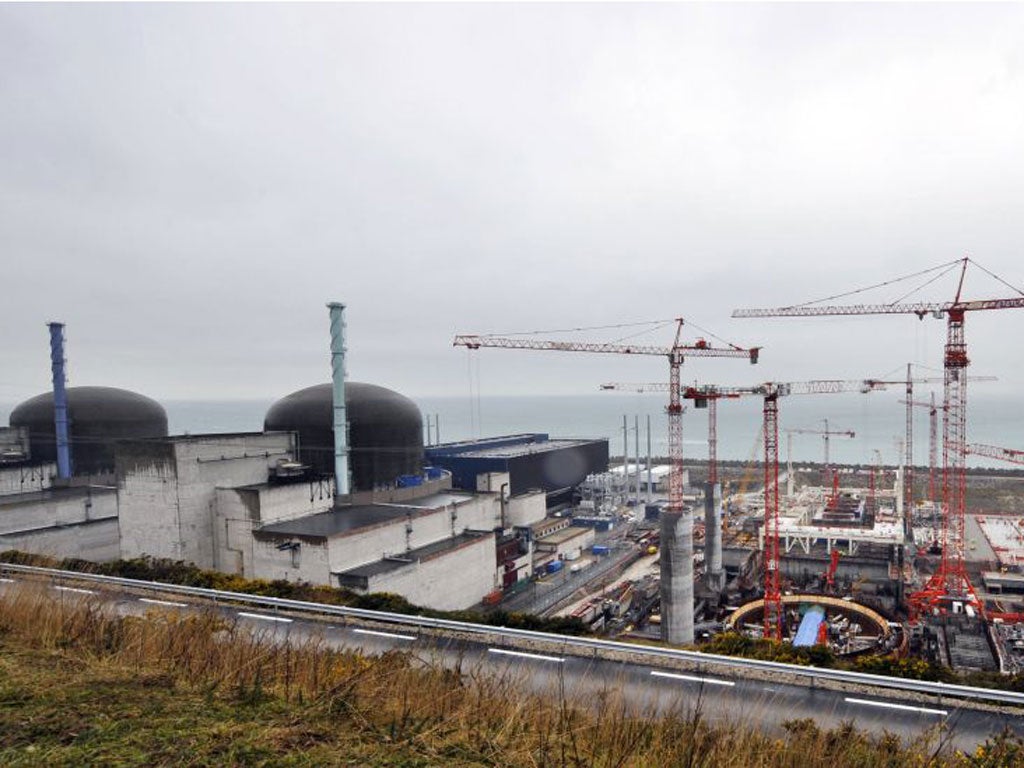
Were Britain to build a new nuclear power station it would most likely be a European Pressurised Reactor model, a newer version of the Pressurised Water Reactor variant used the last time one was built here. Two EPR plants are currently under construction in Europe – at Olkiluoto in western Finland and Flamenville in Normandy, France
Flamanville
Construction began in December 2007. It was originally expected to start operating in 2012 and to cost €3.3bn, but quality control problems, including the discovery of cracks in the concrete base of the reactor, mean the estimated cost has risen to €6bn and the start date has been pushed back to 2016. Protests have been staged across France against the project.
Olkiluoto
Work began in 2005, with the plant originally set to open in 2009. It is now expected to begin operating no earlier than 2015. The cost was estimated at €3bn, but the final price is expected to be closer to €5bn. The joint enterprise between Areva (France) and Siemens (Germany) has been beset by issues with supervision of inexperienced contractors
Sizewell
The last nuclear power plant built in Britain was Sizewell B in Suffolk, the UK’s only PWR, which took eight years and was finished in 1995. It cost just over £2bn and the engineers said it was on budget and on time, although the project was delayed in part due to a public enquiry which took five years. Site could host a new reactor if the plan goes ahead.
Join our commenting forum
Join thought-provoking conversations, follow other Independent readers and see their replies
Comments