Graphic artists condemn plans to ban erotic comics
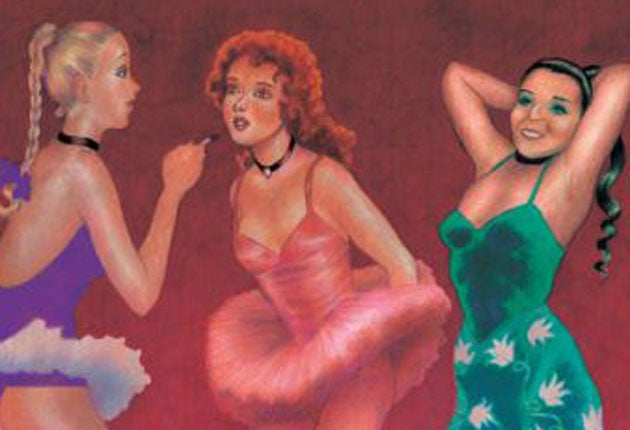
One of the books likely to fall foul of the new law is The Lost Girls by the graphic artist Alan Moore
A coalition of graphic artists, publishers and MPs have condemned Government plans to introduce a new set of laws policing cartoons of children, arguing that the current broad wording of the legislation could lead to the banning of hundreds of mainstream comic books.
This week Parliament will discuss a new Bill which will make it a criminal offence to possess cartoons depicting certain forms of child abuse. If the Coroners and Justice Bill remains unaltered it will make it illegal to own any picture of children participating in sexual activities, or present whilst sexual activity took place.
The Ministry of Justice claims that the Bill is needed to clamp down on the growing quantity of hardcore paedophilic cartoon porn available on the internet, particularly from Japan. But critics of the legislation say the current definitions are so sweeping that it risks stifling mainstream artistic expression as well as turning thousands of law abiding comic book fans into potential sex offenders.
One of the books likely to fall foul of the new law is The Lost Girls by the graphic artist Alan Moore. The world renowned British writer is the creator of critically acclaimed comics such as Watchmen and V for Vendetta, and is regarded as one of the finest writers of his generation.
The Lost Girls was published in the UK in January to largely favourable reviews and is an erotic graphic novel that imagines the teenage sexual awakenings of three famous fictional characters. In the book Alice from “Alice in Wonderland”, Dorothy Gale from the “Wizard of Oz” and Wendy Darling from Peter Pan meet as women in their 30s and discover that they all share equally high sex drives. Certain pages in the novels could fall foul of the new law because it currently defines a child as under 18-years of age. This is problematic because many of the women's sexual experiences in The Lost Girls occur in their late teens when they are above the age of consent but still under 18-years-old.
There are even fears that Watchmen, one of the industry's most critically acclaimed graphic novels, could risk being banned because one of the main superheroes sees his mother having sex when he is a young child.
Comic book writers and publishers, including Moore's daughter Leah who is herself an acclaimed graphic artist, have now set up the Comic Book Alliance to ensure that the legislation only targets overtly paedophilic and pornographic cartoons and not artistic erotica.
“We do not oppose any legislation that protects children from abuse, we understand the need for it, but some parts of the Coroners Bill do need rewording and clarifying,” said a spokesperson. “This new legislation could be used for the wrong reason and if used incorrectly thousands of people could become criminals overnight. The Government refused to impose minimum tariffs on cheap alcohol because it was unfair to punish the majority for the crimes of a minority; yet this legislation does exactly the same.”
Their campaign has won the support of a number of prominent comic book writers including Bryan Talbot, John Reppion and Neil Gaiman, the British-born writer of Stardust and The Sandman comic series. Gaimen wrote on his blog recently that cracking down on cartoon pornography invariably meant governments passed overly broad laws that stifle artistic expression and criminalise innocent people.
“If you accept - and I do - that freedom of speech is important then you are going to have to defend the indefensible,” he wrote. “That means you are going to be defending the right of people to read, or to write, or to say, what you don't say or like or want said. The Law is a huge blunt weapon that does not and will not make distinctions between what you find acceptable and what you don't. This is how the Law is made.”
The Bill currently going through Parliament is closely modelled on a similar piece of Australian legislation which has caused numerous controversies since it became law. Earlier this month an Australian man was convicted of possessing child pornography because he downloaded six images of characters from The Simpsons performing sex acts on each other as a joke.
Chris Staros, the publisher of Alan Moore's The Lost Girls, said he hoped any new legislation in Britain would not target mainstream comic book writers. “It would be a tragedy if any law was enacted that would prevent an author from telling the story that they wanted to tell,” he said. “Lost Girls is a universally praised, literary and artistic work of art, and it deserves to be read by any adult who wishes to read it. Freedom of speech is one of the cornerstones of any free society, and it is always frightening to me when legislation is proposed that would chip away at those rights.”
Jenny Willott, the Liberal Democrat MP for Cardiff, is one of the few MPs who has spoken out against the Bill. “The problem I have is that the definition of what constitutes and image and a child is incredibly broad,” she said. “The Government considers almost anything to be an image, from a painting to a private scribble on a piece of paper. At the same time they have defined a child as something that looks like a child even if it isn't.”
The Ministry of Justice has denied suggestions that Britain's comic industry would suffer from the law. A spokesperson said: "The clauses in the Bill are to tackle pornographic and obscene images of child sexual abuse which have no place in our society. It is not our intention to criminalise the possession of material that does not fall foul of the Obscene Publications Act or to criminalise the legal entertainment industry, the art industry or pornographic cartoons.”
View all comments that have been posted about this article.
Offensive or abusive comments will be removed and your IP logged and may be used to prevent further submission. In submitting a comment to the site, you agree to be bound by the Independent Minds Terms of Service.
- Print Article
- Email Article
-
Click here for copyright permissions
Copyright 2009 Independent News and Media Limited


Comments
Me. I'd ban New Labour.
Someone should let the government know that they can't ban their way to utopia.
This is a government addicted to controlling every aspect of life. They clearly have far too much time on their hands and should be fired as soon as possible to join the soup lines they helped to create. Presumably mass unemployment is much less concerning for children than someone's racy comic books. Perhaps if ministers had to spend a few weeks sleeping rough they might discover a new priority for legislation.
I think I know what obscenity is. It is the foreign military adventures of those revolting people who currently run this country.
Which is exactly what the current Government is hoping, no? The quote even seems almost justifiable.
Until you realise it's a direct quote from Mein Kampf.
"Voice or no voice, the people can always be brought to the bidding of the leaders. That is easy. All you have to do is to tell them they are being attacked, and denounce the pacifists for lack of patriotism and exposing the country to danger."
Does that sound at all familiar? Does it sound recent? It seems to fit "the post-9/11 world" pretty well, doesn't it?
"Naturally the common people don't want war; neither in Russia, nor in England, nor in America, nor in Germany. That is understood. But after all, it is the leaders of the country who determine policy, and it is always a simple matter to drag the people along, whether it is a democracy, or a fascist dictatorship, or a parliament, or a communist dictatorship. Voice or no voice, the people can always be brought to the bidding of the leaders. That is easy. All you have to do is to tell them they are being attacked, and denounce the pacifists for lack of patriotism and exposing the country to danger. It works the same in any country." - Hermann Goering.
it doesn't bother me as I am not turned on by representations of children in any form, nor are most decent people
only fans of such stuff would scream censorship, but such a law would have to be tightly drawn for fear of catching Winnie the Poo
Great art can be, and often needs to be, shocking and repulsive. Censoring pictorial representations of wickedness will not prevent wickedness from occurring, and I would argue that art which deals with child abuse and other human ugliness and forces us to confront it is vital to our ability as a society to combat it.
Would you censor the autobiography of a victim of child abuse if it contained passages detailing the abuse?
By "critically acclaimed comics", you mean "comics recently turned into successful movies", right?
Is my DVD of The Crow about to become illegal?
How about my Strangers in Paradise?
What about American Beauty? I don't own it, but I wonder now whether it would.
If the MP quoted is correct ("The Government considers almost anything to be an image, from a painting to a private scribble on a piece of paper. At the same time they have defined a child as something that looks like a child even if it isn't.") then you'll be a child sex offender just by doing a google image search for fine art.
Yes, really. Bacchus als Kind and several Cherubs would land you right in it.
Then, of course, they'll have to go round and get rid of all those Gideon Bibles. There's got to be something in there that'd fall foul of the law.
XBOX should be over 18 ONLY !
http://www.comicbookalliance.org.uk/
There is a separate issue; the ability to create more than life-like images by the use of 3d Animation technology. Computer technology can now duplicate the world and create worlds more real than reality. No matter how disgusting the results, this is not the same as actually abusing a child. We may have problems with the content - I don't watch much American output as I find it nasty, shallow and boring, but I never confused simulation with reality. What we do about made up content is completely seperate from real content and must be kept so.
For the full story I urge anyone who cares about this subject to visit the Comic Book Alliance website at: wwww.comicbookalliance.org.uk and to sign the petition asking for clarification in the law at: http://petitions.number10.gov.uk/Protec
Thank You
Shane
The Comic Book Alliance
More recently, the government claimed that "child sex" cartoons (the definition of which includes cartoons or drawings which simply focus on the genital or anal area) would "fuel the inappropriate fantasies of potential abusers". The government has jusitified its claims by citing two old sources which pre-date computer-generated pornography. They first cited the findings of the Longford Committee, which actually published its report on photographic adult pornography in 1972, before child pornography of any kind had been "discovered" by the scientific or legal community and before methodologically correct research had been undertaken. The second source which the government cites is Tim Tate's (1990) book on child pornography, in which Ray Wyre argues that a child molester will use anything (including child erotica) to justify their behaviour. If Wyre's appendix in Tate's book is correct, however, the implication is that child molesters will always find an excuse for their behaviour whether they view "child sex" cartoons or otherwise.
Current evidence suggests that, if child pornography (photographic or virtual) has any effect at all, it reduces the likelihood of someone acting on their sexual attraction to children. Justice Minister Maria Eagle, who has pushed this legislation, has blatantly ignored the literature on this matter despite having been presented with relevant information during the 2006 consultation.
Furthermore, the majority of people who commit contact offences against children are not paedophiles, rather they are situational offenders who take advantage of any easy opportunity to engage in sexual activity. Such offenders - the typical offenders - are therefore unlikely to show any interest in "child sex" cartoons, because adult pornography is easier to find than cartoon child erotica.
The main audiences for cartoon child erotica are responsible paedophiles or people who see humour in certain depictions of children. More people need to work against the current UK government's attempts to criminalise "child sex" cartoons, as this law is set to be implemented at the expense of childrens' welfare, responsible paedophiles, and comic book enthusiasts' right to enjoy their hobby. One may have some influence over this matter by lobbying their local MP to oppose this legislation for the welfare of Britain's children.
This law won't discourage morally questionable material. It'll do the opposite. Art, for better or worse, (usually better), will always find a way. The tighter the fist squeezes, the more slips through.
Let the bureaucrats do their worst, this doesn't worry me in the slightest.
Another problem with this piece of legislation is how they would define child erotica/pornography. Interpretation is a very fluid process. It changes from person to person. Yes, there is a basic definition of what it is. Yet people can not apply this basic definition to everything out there. Context must be taken into consideration.
Intent must also be considered when considering censoring an item as, in this case, child erotica. I have not read Alan Moore's "The Lost Girls", so I do not know exactly how he incorporates the three protagonists' high sex drives within the narrative. Yet one should not assume that this form of "erotica" is included to encourage potential molesters to go out into the world and rape/abuse a child. It may be a form of social commentary or just a particularly defined character trait which is not as irrelevant to the narrative as a whole. I do not know for sure, but these possibilities ought to be considered.
The government seems to be unaware that there are ways for graphic novels intended for mature audiences to be published, even if it's not necessarily mainstream. DC Comics created the Vertigo line for this very purpose. Writers and artists were thus given the chance to explore new realms in artistic expression, and DC as a company was able to expand its target audience and generate more revenue. If a young child happens to get his/her hands on a comic book and/or graphic novel that is intended for a mature audience, then it is an individual case of a child reading something that he/she shouldn't. It is the job of the parents to prevent this sort of thing from happening, not the government's.
Haven't they considered what will happen once they ban something and it becomes taboo? People will become curious, as is our nature to do so, to find out why something is taboo and they will risk imprisonment to satisfy their curiosity. Censorship in the long run doesn't completely prevent someone from reading or seeing something they shouldn't.
If, as the Minsitry of Justice says, "It is not our intention to criminalise the possession of material that does not fall foul of the Obscene Publications Act," then they don't need to pass a new law because they already have the "Obscene Publications Act."
Actually, I'm afraid that the photo of this act would be illegal under current legislation.
As an expert in Internet and Computer Crime I am often called to testify in criminal trials involving indecent images of children. The current legislation is laid out in The Protection of Children Act 1978 and the Sexual Offences Act 2003.
It is, of course, legal for a person aged 18 or over (legally an adult) to have sex with a person aged 16 or 17 (legally a child).
However, under the above legislation it is illegal for the "Adult" to take a photograph of the "Child" engaged in sexual activity or "erotic posing" (clothed or unclothed) and they could be charged with making and possession of indecent photographs of children. It is a defence for the "Adult" to prove that the couple were married or were living together as partners in "an enduring family relationship" (interpret that as you will) at the time the photograph was created.
However, even if they were married, it is still illegal for the "Adult" to show that photograph to anyone (Charge of Distribution of indecent photographs of children).
Further, while it is of course legal for this couple to have sex with one or more other persons (threesomes, group sex etc) it is illegal for the "Adult" to take a photograph depicting the "Child" with any other person appearing in the photograph.
The proposed legislation aims to extend the current legislation to cover animation - mainly due to the rise in 3D computer-modeled images of children, which can appear pretty lifelike.
The argument is one of supply and demand - It is argued that computer created "child porn" fuels an interest in the viewer for actual photographs of "child porn". This increase in demand for actual photographs of "child porn" leads to an increase in actual physical abuse of children in order to supply these images.
I do not propose to take part in the debate regarding the rights or wrongs of the proposed legislation - I just though you might like to understand the current legislation and the reasoning behind the proposal for the new legislation, as I understand it of course.
Actually, I'm afraid that the photo of this act would be illegal under current legislation.
You're right - in fact I was aware of this but I think I got a bit confused by writing it. There are two more specific areas where a photo would be legal, but a drawing illegal:
* As you note, the law on actual child porn has a defence for 16-17 year olds who are married. This new law has no such defence. Of course, talking about being married to a cartoon character gets a bit silly, but it would be relevant if someone possessed a drawing that depicted their husband or wife.
* The new law also covers depictions of an adults, if the "predominant impression conveyed" is of someone under 18. I'm not quite sure how the law on pseudo-photographs covers actual photos of people who are over 18, but might look underage (?), but with an actual photograph, there is more chance to tell someone's age. So a photo of adults role-playing at being schoolgirls would still be legal, but there is a risk of it being illegal under this law (it's hard to tell the age just from a drawing, and the presence of school uniforms etc might be deemed to convey the impression of being under 18).
Out of interest - do you know how current child porn applies to a child merely being present in an image whilst sexual acts take place between others (i.e., the child is fully clothed, and not posing, etc)? I could see that this could perhaps count as "indecent", but it doesn't seem that it is necessarily always criminalised. Do you know of any court cases? In this new law, such a scene is explicitly criminalised, even if a jury wouldn't consider it "indecent".
mainly due to the rise in 3D computer-modeled images of children, which can appear pretty lifelike.
Although realistic images are, rightly or wrongly, already illegal, so I'm not sure this works as the justification.
The argument is one of supply and demand - It is argued that computer created "child porn" fuels an interest in the viewer for actual photographs of "child porn". This increase in demand for actual photographs of "child porn" leads to an increase in actual physical abuse of children in order to supply these images.
I agree that this is one argument put forward, but I think there are others:
* MP George Howarth stated "If somebody is in the process of arousing themselves sexually by that process, it must be part of something. In a lot of cases, it will be part of something that will lead on to something else." - the argument is put forward that anyone who possess these images will go onto commit abuse, and therefore should be criminalised before they commit that crime.
* I would say there's a general intent to get rid of images deemed "abhorrent", or to send a "message" that such acts should not be tolerated. I.e., they depict something that shouldn't be allowed, so the depictions shouldn't be allowed (which seems inconsistent to me with covering acts that are legal to perform, but there you are...)