IoS Investigation: Officials plotted Sellafield cover-up
MPs were denied the chance to challenge sweetener to private firm's nuclear deal
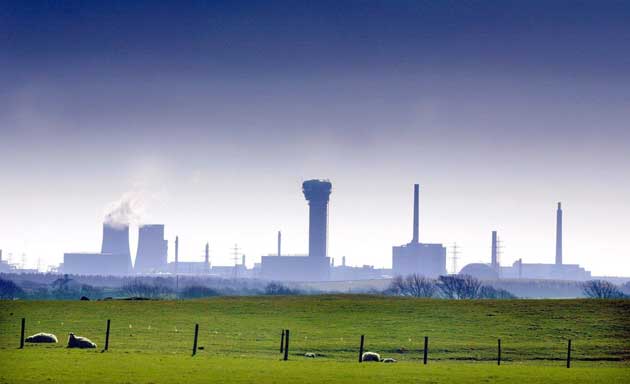
Top civil servants and nuclear administrators colluded to prevent MPs from challenging a massive sweetener to a private business taking over the running of Sellafield, internal documents in the hands of The Independent on Sunday reveal.
The documents, obtained through the Freedom of Information Act, also disclose that the Government pushed through the handover at breakneck speed because it feared that the "unstable management arrangements" of the controversial Cumbrian nuclear complex risked its safety.
Yesterday, a leading Labour MP announced that he would try to get a parliamentary investigation into the revelations in the documents, which run to 140 pages and had been so heavily censored prior to release that many whole pages, and the names of most of the officials involved, have been systematically blanked out. Paul Flynn MP, a member of the House of Commons Public Administration Committee – which examines the performance of the Civil Service – is to ask it to inquire into what he calls "an egregious example of obstruction of parliamentary accountability".
The cover-up arises from the awarding, late in November, of a contract to run the nuclear complex to Nuclear Management Partners, a consortium of US, French and British companies. Although the contract is worth some £22bn, the consortium told ministers that it would walk away from the deal unless it was fully indemnified against the costs of cleaning up an accident at what is one of the world's most hazardous nuclear sites.
Normally, as the documents repeatedly acknowledge, the Government would place a special minute before Parliament if it intended to undertake a liability of more than £250,000. MPs would then have 14 days to raise an objection, which would stop the undertaking going ahead until it had been dealt with. But MPs were not told about the Sellafield indemnity until 75 days after the last moment when they could object, even though it potentially exposes the taxpayer to liabilities running into billions.
The energy minister Mike O'Brien blames a "clerical oversight" for this. But the documents clearly show that the senior civil servants and nuclear administrators had been actively discussing how to limit MPs' chance to object at least since early last year.
The documents have come to light only as a result of persistent pressure from Dr David Lowry, an independent environmental policy and research consultant, who is a member of Nuclear Waste Advisory Associates. The documents make it clear that the Government was determined to hurry through the handover of operations at Sellafield as quickly as possible because of what one of them calls "the current unstable management arrangements overseeing these extremely sensitive sites, and their high hazard inventories". Another adds that this instability "constitutes a genuine risk to health, safety and environmental performance" at the complex.
A rushed timetable was drawn up which involved naming a preferred bidder for the contract on 11 July and signing a transitional agreement on 6 October. But this clashed with the long parliamentary summer recess, which ran from late July to the very day set aside for the signing.
If the Government were to stick to its speeded-up timetable, the documents say, "the very earliest date" in which the minute could be laid before Parliament would be 14 July, shortly before the recess began on the 22nd.
Determined not to slow down the handover, the Government decided to reduce the period in which MPs could object. On 26 March, an official whose name and department has been blanked out emailed the official Nuclear Decommissioning Authority (NDA) to stress the requirement to "shorten the 14 working parliamentary days that an indemnity would normally need before it can become effective".
The official added: "To get this down to five days, we will need to muster some persuasive arguments and I wondered where you had got to on assembling these." Two days later he was sent a "first draft" of the argument including an assertion that the "vulnerability of Sellafield operations is already seen as a significant safety risk".
But by early June, the idea of giving MPs any time at all to object had been abandoned. Another email to the NDA, from apparently the same blanked-out official, reported a "conclusion" that a letter should merely be written to Edward Leigh MP, the chairman of the House of Commons Public Accounts Committee, "rather than go for a shorter notice period to the House".
A minute "explaining what has happened" would be laid before MPs only "when Parliament reconvenes in the autumn", by which time it would be too late to raise objections. On 14 July, the then energy minister Malcolm Wicks duly wrote to Mr Leigh; he did not object and the indemnity went into force before MPs knew about it.
In his letter, Mr Wicks assured Mr Leigh that he was placing a copy of the letter and the minute in "the libraries of the house". In fact this did not happen until 15 October, 75 days after the final date on which MPs could raise an objection. Mr O'Brien, who succeeded Mr Wicks, blamed "a minor error by a junior official", but later conceded that his department had not checked for three months whether the documents had reached the libraries.
Mr Flynn says that he and other MPs had already been raising questions about the indemnity and would have been likely to raise objections, and accuse the Government of trying to push it through "without anyone noticing".
Other confidential documents, received after two Freedom of Information Act applications, divulge that three local councils in Somerset asked for £750,000 to fund a planning officer and legal advice from companies that want to build nuclear power stations in their areas, raising questions about conflicts of interest, and that the officially neutral NDA considered coming out in favour of new reactors.
Join our commenting forum
Join thought-provoking conversations, follow other Independent readers and see their replies
Comments