Miliband loses attempt to block Binyam Mohamed torture case evidence

Sign up for the View from Westminster email for expert analysis straight to your inbox
Get our free View from Westminster email
Foreign Secretary David Miliband today lost his attempt to block public disclosure of intelligence information relating to torture allegations in the case of former Guantanamo detainee Binyam Mohamed.
Three of the country's highest-ranking judges dismissed his appeal against an earlier court ruling that summaries of information received by the British security services from United States intelligence should be disclosed.
The Court of Appeal decision was hailed by international media as a "resounding victory for freedom of speech".
But Mr Miliband told MPs that the ruling was leading to a "great deal of concern" in the US.
In a statement to the Commons he said he had fought to prevent the release of the information to defend the "fundamental" principle that intelligence shared with the UK would be protected.
This "control principle" was essential to the relationship between the UK and the US.
Mr Miliband said he had spoken with US secretary of state Hillary Clinton about the case, which was being "followed carefully at the highest levels in the US system with a great deal of concern".
He added: "We will work carefully in the weeks ahead to discuss the judgment and its implications in the light of our shared goals and commitments."
The treatment of Mr Mohamed went against British principles, but it was not carried out by the UK, he said.
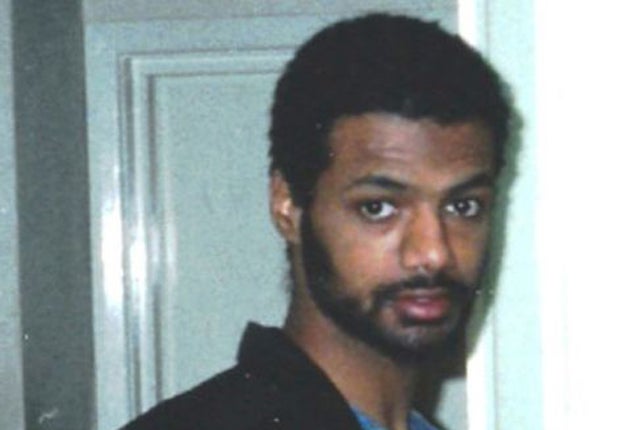
Today's judgment was the latest ruling in long-running proceedings arising out of the case of British resident Mr Mohamed, who says he was tortured in Pakistan while held by the CIA, with the knowledge of the British.
Mr Miliband said any mistreatment and torture of prisoners "violated the most basic principles of this country, never mind our national and international obligations".
He added: "There is a fundamental commitment on the part of myself, the Home Secretary and the heads and staff of the intelligence agencies to uphold the highest levels of conduct, not just for ourselves, but with the countries with whom we co-operate."
The ruling by the Lord Chief Justice Lord Judge, the Master of the Rolls Lord Neuberger, and the President of the Queen's Bench Division Sir Anthony May, related to publication of seven paragraphs, which had to be redacted from High Court judgments already handed down.
One of the key paragraphs - which were released after today's decision was announced - was that the reported treatment of Mr Mohamed "could readily be contended to be at the very least cruel, inhuman and degrading treatment of Binyam Mohamed by the United States authorities".
Mr Mohamed, 31, an Ethiopian granted refugee status in Britain in 1994, was detained in Pakistan in 2002 on suspicion of involvement in terrorism and then "rendered" to Morocco and Afghanistan. He was sent to Guantanamo Bay in 2004.
Now back in the UK, he is fighting to prove that the British authorities helped to facilitate his detention and knew about his ill-treatment in Pakistan.
The Court of Appeal's ruling was a vindication of the stance taken in the High Court by Lord Justice Thomas and Mr Justice Lloyd Jones in what was an unprecedented attack by a Government minister on the senior judiciary.
Lawyers for Mr Mohamed and the British and international media had argued that disclosure of the material was in the public interest.
They accused the Government of seeking to suppress "embarrassing and shaming" evidence of Britain's involvement in torture.
They said sensitive admissions by the CIA to the British security service over the ill-treatment of Mr Mohamed raised the prospect of both UK and US Governments being exposed to "serious criminal liability for an international war crime".
Lawyers acting for the Foreign Secretary had accused the judges of "charging in" to a diplomatically sensitive area - jeopardising UK intelligence-sharing with the US.
After the ruling, Shami Chakrabarti, director of Liberty, said a public inquiry was now "inescapable".
In the lengthy ruling, the Lord Chief Justice said: "Nothing in this judgment should be seen as devaluing the confidentiality principle, and the understanding on which intelligence information is shared between this country and the USA."
He pointed out that the redacted paragraphs would not reveal information which would be of interest to a terrorist or criminal or provide "any potential material of value to a terrorist or a criminal".
The judge added: "Indeed, it seems right to emphasise that the publication of the redacted paragraphs would not and could not, of itself, do the slightest damage to the public interest."
Lord Judge said there was no secret about the treatment to which Mr Mohamed was subjected while in the control of the US authorities.
"We are no longer dealing with the allegations of torture and ill-treatment; they have been established in the judgment of the court, publicly revealed by the judicial processes within the USA itself."
If redaction of the paragraphs was maintained, Mr Mohamed "will know less about the reasons for the court's decision than the intelligence services which, even if innocently, were involved in or facilitated the wrongdoing of which he was the victim".
Lord Judge said: "In my view, the arguments in favour of publication of the redacted paragraphs are compelling.
"Inevitably, if they contained genuinely secret material, the disclosure of which would of itself damage the national interest, my conclusion might be different.
"However, dealing with this appeal as a matter of practical reality rather than abstract legal theory, unless the control principle is to be treated as if it were absolute, it is hard to conceive of a clearer case for its disapplication than a judgment in which its application would partially conceal the full reasons why the court concluded that those for whom the executive in this country is ultimately responsible were involved in or facilitated wrongdoing in the context of the abhorrent practice of torture.
"Such a case engages concepts of democratic accountability and, ultimately, the rule of law itself."
He said Mr Mohamed "is now taking civil proceedings for damages against the UK government, in effect for their tortious involvement in the wrongdoing of the USA authorities".
Subscribe to Independent Premium to bookmark this article
Want to bookmark your favourite articles and stories to read or reference later? Start your Independent Premium subscription today.
Join our commenting forum
Join thought-provoking conversations, follow other Independent readers and see their replies