Miliband to admit Labour government mishandled economy
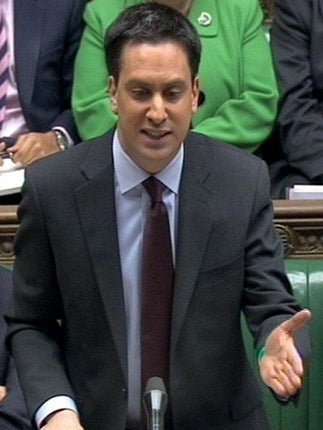
Ed Miliband will admit that the last Labour Government was too slow to use the "language of cuts" as he steps up his efforts to re-establish the party's economic credentials.
The Labour leader will also acknowledge that the Brown and Blair governments were wrong to allow the City of London to enjoy "light tough" regulation and to let the economy become too dependent on financial services.
Mr Miliband and his senior frontbenchers agreed a new message on the economy in a long debate on Labour's stance at the Shadow Cabinet's weekly meeting on Tuesday night. He is expected to outline the new approach shortly.
Privately, senior Labour figures admit that the Conservatives and Liberal Democrats persuaded many voters to blame Labour for the public deficit after the Coalition was formed last May. Labour began a four-month leadership election, handing the Coalition partners a golden opportunity to make the case for big spending cuts and accuse Labour of being responsible for the deficit.
Since the turn of the year, Mr Miliband has fought back on the economy, notably over the rise in VAT to 20 per cent. But Labour frontbenchers believe the party will regain a reputation for economic competence only if it does more to admit that it made mistakes in office.
They insist they are not conceding that David Cameron and Nick Clegg are right to blame the deficit on Labour. In fact, they hope that acknowledging the last government's errors will enable Mr Miliband to challenge the Coalition's claims that Labour is responsible, bolstering his argument that the deficit was caused mainly by the global financial crisis.
The new approach is sensitive because it may be seen as an attempt by Mr Miliband to distance himself from Gordon Brown, who was responsible for regulating the banks as Chancellor and was reluctant to use the word "cuts" when he was Prime Minister.
In 2009, Mr Brown was embroiled in a struggle with his Chancellor Alistair Darling and the then-Business Secretary Lord Mandelson, who repeatedly pressed him to concede that cuts would be needed after the election to balance the nation's books.
Although Mr Brown eventually agreed to do so, he did it reluctantly and with little follow-up, fearing that the election would become a choice between "Labour cuts" and "Tory cuts" – a battle he believed the Tories would win.
"We were too slow in government to acknowledge the need for cuts and talk about the cuts," one Shadow minister admitted yesterday. "We did have a proper plan to halve the deficit but we didn't get the language of cuts right. It was a presentational problem."
Mr Miliband will insist that the Coalition is cutting "too far, too fast". He told Tuesday's meeting that Labour should not defend everything it did while in power, but also should not allow rival parties to perpetuate the "deceit" that it caused the deficit, claiming that would lead the Coalition to make the wrong decisions about the long-term future of the economy.
The Labour leader said it was important to learn the right lessons from a global crisis sparked by irresponsible behaviour by bankers – not by spending on schools and hospitals.
Labour will say that successive governments should have taken steps to rein in the banks and restructure the economy to put more emphasis on manufacturing, rather than relying on financial services so heavily.
In an unspoken deal, the City enjoyed light regulation in return for helping to provide the tax revenue which funded the expansion of public services. Labour will point out that some senior Tories called for even lighter controls of the City at the time.
One Labour source said: "We recognise that there is a degree of anger towards the last Government. Ed [Miliband] is the last person in the world to defend everything it did."
Accusing Mr Cameron of rewriting history, Labour will argue that Britain had the second-lowest debt in the G7 when the financial crisis hit and did slow the growth in total public spending – from 4.2 per cent a year in a 2004 review to 2.1 per cent in 2007.
Labour will cite Mr Cameron's decision to match Labour's spending plans while he was in Opposition. In January 2008, he said Labour's approach was "quite tight" and that it "represents a tough approach to public spending".
Join our commenting forum
Join thought-provoking conversations, follow other Independent readers and see their replies
Comments