MoD admits human rights breaches over death of tortured Iraqi civilian
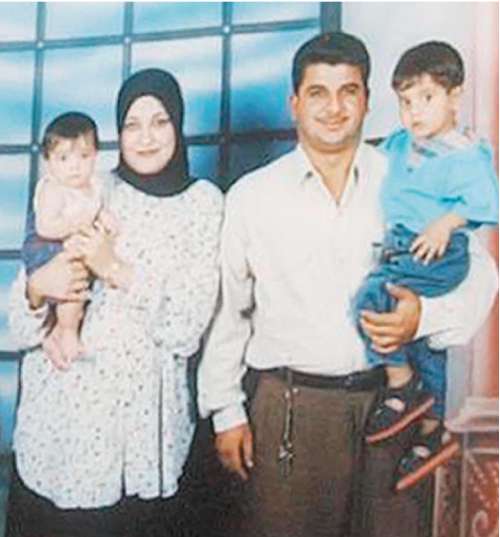
The Government admits "substantial breaches" of the European Convention of Human Rights over the killing of Baha Mousa, an Iraqi who died in the custody of British soldiers, Des Browne, the Defence Secretary, said yesterday.
Bob Ainsworth, the armed forces minister, later expressed "deep regret" over the death of the 26-year-old hotel worker and expressed "sincere apologies and sympathy" to his family and eight other Iraqis who were abused with him.
The eight former prisoners and Mr Mousa's family have started civil legal action against the Government and yesterday's admission is expected to lead to substantial compensation.
The killing of Mr Mousa in Basra, a few months after Iraq's "liberation", became a cause célèbre and led to the war's most high-profile court martial in which the highest-ranking officer to be charged with prisoner abuse, Colonel Jorge Mendonca of the Queen's Lancashire Regiment, appeared in the dock.
However, six of the seven defendants were acquitted, amid disclosure during evidence that the Army high command had sanctioned brutal treatment of prisoners. There was condemnation from the trial judge over a "cover-up" surrounding the death.
One of those accused, Corporal Donald Payne, 35, pleaded guilty to war crimes charges. The court heard he had carried out what was called "choir practice" in which the cries of the captives as they were being hit provided the "music". Cpl Payne was imprisoned for a year – and there were claims that the "over-lenient" sentence added to the grief of Mr Mousa's family.
Mr Mousa and fellow inmates, the court heard, were beaten with bars, repeatedly kicked and forced to drink their own urine. They were kept hooded with hessian sacks in temperatures of 60C, made to maintain a painful stress position for hours and deprived of sleep. Mr Mousa died after 36 hours of this mistreatment with his face forced down a lavatory.
Mr Ainsworth said yesterday: "I deeply regret the actions of a very small number of troops and I offer my sincere apologies and sympathy to the family of Baha Mousa and the other eight Iraqi detainees. All but a handful of the more than 120,000 British troops who have served in Iraq have conducted themselves to the highest standards of behaviour, displaying integrity and selfless commitment.
"But this does not excuse that, during 2003 and 2004, a very small minority committed acts of abuse and we condemn their actions."
Mr Mousa's father, Daoud, a colonel in the Iraqi police force, said last night: "This confession of guilt is a victory for us. Now I can feel that my son's blood wasn't lost in vain.
"It seemed as if the Ministry of Defence wanted to cover the truth and thought Iraqi lives were cheap. This admission shows that our voices can still be heard and that Iraqi lives do count."
Col Mousa had previously spoken in graphic terms of his son's injuries. "I was asked to go and identify my son's body. I cried when I saw what they had done to him. His face was covered in blood, his nose was broken and the skin on his face was torn. There were bruises on his neck and all over his body."
Shami Chakrabarti, director of the human rights group Liberty, said: "Baha Mousa is the Stephen Lawrence of Iraq. A direct legal and moral consequence of today's admission that Mr Mousa and others were unlawfully tortured and killed in British custody is that there must be a wholesale independent inquiry into what went wrong. British soldiers should never be sent into post-conflict situations without adequate training and advice."
Sapna Malik, a partner at Leigh Day&Co representing the claimants, said: 'We very much welcome the statement made by Des Browne today and the apology from Bob Ainsworth, finally acknowledging at governmental level the grave wrongs which were committed. We hope the mediation set for June will justly compensate our clients and enable them to move on with their lives.
"It remains vital, however, that an independent public inquiry is held, to address the extremely serious concerns raised by this and other cases.'
The court martial over Mr Mousa's death, which cost an estimated £20m and lasted 93 days, led to bitter recriminations with anger in parts of the military over claims that the prosecution was driven by the Attorney General, Lord Goldsmith, whose legal advice paved the way for the Iraq invasion. His spokesman, however, denied that he had made the decision to prosecute.
The case was among a number in which British soldiers were accused of abuse in Iraq. The Army has carried out a review of prisoner handling and human rights, by Brigadier Robert Atkins, which recommended major reforms.
Long struggle for justice
September 2003
Baha Mousa dies in British Army custody after he and a group of other Iraqis are arrested in Basra by British troops looking for insurgents. A post-mortem examination finds 93 injuries to his body.
October 2003
Inquiry begins by Special Investigation Branch of the Royal Military Police after complaints by family and media.
June 2004
Adam Ingram, Armed Forces minister, says investigation is complete but Mr Mousa's family claims that crucial witnesses have not been contacted.
March 2005
Brigadier Robert Aitken writes to commanders in Iraq seeking information in connection with his investigation into prisoner abuse after rising concern over reports of abuse.
July 2005
Colonel Jorge Mendonca and six others are charged in connection with the death of Mr Mousa. Col Mendonca of the Queen's Lancashire Regiment becomes the most senior officer in the Army to be charged over prisoner abuse.
March 2007
Mousa court martial ends with the acquittal of all defendants, apart from Corporal Donald Payne who became the first British soldier to plead guilty to a war crime, that of treating prisoners inhumanely, and is jailed for a year. With the military convinced that the prosecution was politically motivated, Col David Black, a former commander of the Queen's Lancashire Regiment, asks the Attorney General, Lord Goldsmith, to explain who was responsible behind the scenes for charges being brought.
March 2008
Des Browne, the Defence Secretary, says Government admits "substantive breaches" of European Convention on Human Rights.
Join our commenting forum
Join thought-provoking conversations, follow other Independent readers and see their replies
Comments