Political change we can believe in
How do we restore trust and revive our politics? Gordon Brown plans a constitutional debate – and to launch it we asked 14 leading thinkers for their big ideas for reform
Force parties to negotiate
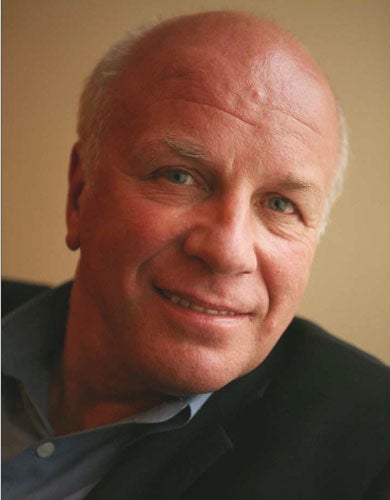
Greg Dyke
What has happened in the past two weeks is symbolic of something much bigger. Our political system has been collapsing for the past few years. You need to fundamentally change the whole political structure. In my lifetime, almost every institution has changed drastically, but Parliament looks just the same, with the same men in tights.
The first problem to address is the voting system. You can have a new party, get 20 per cent of the popular votes, and not get a seat in Parliament. That is absurd. On the other hand, with turnout falling the party in government gets elected with fewer and fewer votes and still claims it has got a mandate.
The best we can hope for is a hung Parliament, which is the only chance we have of changing the voting system to proportional representation. Then the only way you could form a majority government would be by negotiation.
Greg Dyke was director general of the BBC from 2000-04
We need PR for a new start
Caroline Lucas
MPs should not be allowed to make up the rules that govern their own expenses and communication. There should be an independent commission empowered to oversee and regulate.
MPs should have their main home in or near their constituency. When MPs who don't live in London need to stay in London, they should be paid a flat-rate overnight allowance.
But this isn't just about expenses. We have an unfair election system that practically guarantees a minority government – a government more people voted against than voted for. The system is dominated by three very similar parties. So instead of active public engagement with politics there is widespread apathy and cynicism. We need a complete overhaul of British democracy – including a proportional elections system.
Caroline Lucas is leader of the Green Party
Jobs for life have got to go
Paul Staines
A simple way to make MPs work harder to please the people is to force their parties to hold competitive, open primary elections to decide who will run as their candidate in each constituency. At the moment, if a politician is in a safe seat, they know that they will be re-elected whatever happens. If you look at the abuse of the expenses system and correlate it with the majorities enjoyed by the offenders, I think you would find a very strong relationship between the two.
MPs in marginal seats are much better behaved, because they know they have a good chance of losing their seat at an election. Holding open primaries would mean that politicians in those safe seats would know that if they didn't work hard, there will be someone from within their own party waiting in the wings, ready to take the seat off them. That is a crucial element. It is an easy way to make MPs behave themselves.
Paul Staines is the author of the Guido Fawkes blog
Decisions must be made locally
Martha Lane Fox
This is where my classical education comes in. We need to go back centuries, to 500BC, to how democracy was conducted at the very beginning – with the one very big caveat that women were excluded. We need a much more local system of government, combined with a more grandiose system at international level. The old system of representation is broken. The party system is broken. People do not come out and vote.
And yet there is a great deal of political activism on the web. We need to use that as a model to give much more access to many more people to make decisions. We need to use the internet, mobile phones, and things we have not even invented yet to bring people together. There are so many different ways that we can change the way we are governed.
Martha Lane Fox founded the consumer website Lastminute.com
Dock MPs' pay for six months
Brian Fraser
If Parliament came to me asking for an advertising campaign to restore their reputation, I could not think of one off the top of my head. The public reputation of MPs has been so damaged that simply giving back the money they should not have claimed is not enough.
What was interesting when we ran the advertising campaign for the London Evening Standard that said "sorry" is that it totally got through because it was free of artifice and spin. It was just one huge word that made you stop and think. Subsequent to that, we had Marks & Spencer saying "we boobed" and almost every politician in the country saying sorry.
But there is no point in just saying sorry. If you are sorry, you have to change. You have to give a physical demonstration that you mean it. If MPs made themselves take a 10 per cent pay cut for six months that might have an effect. It has to be a gesture that means something.
Brian Fraser is executive creative director of advertising agency McCann Erickson
Use the Greek political system
John Curtice
We've got the wrong electoral system. If you believe in a system where the party with the most votes gets the most seats, then we need to adopt a system similar to that used in Greece, where the most popular party is almost guaranteed a majority.
In Greece, a certain number of seats across the country are given to the winning party as a whole. It is systematically disproportional to ensure that whoever gets the most support wins. That is meant to be the benefit of our current first-past-the-post system, but it has proved that it cannot be relied upon to deliver.
However, the current scandal over expenses has proved that if we switch to a new voting system, it should be one in which parties are not able to choose which of their candidates are returned to office.
John Curtice is professor of politics at the University of Strathclyde
Hard work brings reward
Anthony King
If we want to restore the importance of Parliament, we need to give MPs more to do. Parliamentary committees meet less and less, making Westminster seem less important. It would help the reputation of the system if MPs on all sides of the House were given some serious work to carry out, making them centrally involved in making legislation.
I would merge the various committees that examine legislation and make them more powerful. I would also find a way of rewarding MPs who take the work of those bodies seriously. Then I would pay them the highest possible compliment by forcing the Government to take their recommendations seriously. Also, there are some circumstances in which the Government is not implementing its own policy, but simply hammering out a solution to a problem that everyone knows exists. That job could be handed to backbench MPs.
Anthony King is a professor of British government at Essex University
League tables for our MPs
Russell Hobby
One thing immediately springs out about the accountability of MPs – they are only really given a performance review every five years or so, when their constituents are given the chance to vote them out of office at a general election. Over the same time in business, managers would probably have had their performance reviewed at least 10 times.
If Parliament was our client, we would be coming up with some key criteria against which to judge the performance of MPs. Data on how often they go to Parliament, how quickly they respond to letters, how a panel of constituents judged their work, could all be included. We would then publish how each MP has performed every six months in a league table. It is used for hospitals and schools, so why not politicians? This would allow their managers, the public, to see how they are getting on.
Russell Hobby is associate director of Hay Group management consultancy
It's time for a moral crusade
Martin Bell
I have never known a time of such crisis, but it is also a time of great opportunity to send 10 or 20 independent politicians to Parliament to act as a moral force.
It is self evident that the control of parties is now causing problems within our political system. It was obvious during the build-up to the war in Iraq. Many MPs voted in favour of military action who did not want to vote for it – they were not voting with their consciences. As a result, the will of a million people marching in London was not reflected in the House of Commons.
The latest scandal has increased the opportunity for more independent candidates to enter Parliament because our current batch of politicians has failed us. A great gap has opened up between "us and them". If any of the miscreants and expense fiddlers are not dumped by their parties, then we need local heroes, known in their communities, to challenge them.
Martin Bell is a former broadcaster and independent MP
A culture of transparency
Heather Brooke
There has been one major element missing from the reforms proposed by the party leaders, and that is the most important one – greater transparency. There is still an assumption within the Government that requests under the Freedom of Information (FOI) Act should be resisted.
We need a culture change, so that the assumption is that FOI requests will be granted. We also need an expansion of the Act to include all kinds of bodies that are currently exempt, such as academy schools and the Association of Chief Police officers. The public should have the absolute right to know what these organisations are getting up to with their money.
The role of Information Commissioner should be split, so the policing of data protection and freedom of information are separated and we have a champion for gaining access to information.
Heather Brooke is a freedom of information campaigner
Forget spin and be human!
Peter Kellner
Trust takes years to build but seconds to destroy, so do not expect quick results from anything Parliament does to restore its position. Trust has to be earned, not announced. And it is not only a matter of getting the rules right, though what is proposed contains perfectly sensible suggestions. But the culture of politics needs to change.
Because there 25 news channels and so many newspapers, they have got this desire for absolute consistency. They need to be more relaxed about it. If the Chancellor of the Exchequer and the Chief Secretary of the Treasury say something different from one another, that is a 12-hour wonder for political obsessives.
We need an end to spin, and to those "positions to take" briefings that tell ministers what to say, because they make them sound like robots. There is a failure on the part of politicians to behave like human beings.
Peter Kellner is president of the polling organisation YouGov
Let voting start at 16
Jo Swinson
We already say that 16-year-olds are mature enough to pay tax, have children and get married. Surely they should be given the responsibly of voting, too. At the moment, they do not have a say in who governs them.
I received an email from a 17-year-old. He was 18 in July and wanted to know if there was any way he could vote in the June elections because he was really interested in what was going on.
We shouldn't pretend that lowering the voting age will mean that participation in politics will shoot up, or that turnout will be dramatically higher. But I simply think that it is the right thing to do. It would give thousands of people, who are passionate about a whole range of issues, a say in the political system. My experience of speaking to young people is that they are interested in politics and have an important contribution to make.
Jo Swinson is the Liberal Democrat MP for East Dunbartonshire
Safe seats? We need a contest
Douglas Carswell
The first thing we can do is elect a speaker who can come up with a reforming agenda. I would love to have some public participation in that process, such as a citizen's jury or a special session of Question Time involving all the candidates.
The single thudding fact which explains why our democracy does not work, and this applies to both parties, is that seven out of 10 of our colleagues think they have a job for life, because they come from safe seats in one-party fiefdoms.
I would like to see open primaries so that anyone who lives in a constituency can take part in selecting the candidates for that constituency.
I would like to see a right to recall, so that MPs can be fired by the electorate in a by-election. I would like to a right to initiate debate. Then there would be less of that smug, self-regarding backslapping that passes for debate in the Commons.
Douglas Carswell is the Conservative MP who put down a motion of no confidence in the Speaker
Recruit Cowell and Sugar
Max Clifford
It is going to take a long time to restore the reputation of Parliament. The greatest difficulty for them is that they attempted to cover up the expenses scandals. The Government needs to appoint a panel of a dozen people who the public really trust, who will check up on all the measures the Government wants to introduce.
Finding those people who command public respect will not be easy, but there are some obvious candidates. A successful businessman, such as Alan Sugar, would be one. Also a straight talker like Simon Cowell, who everyone knows will give his true opinion, should be on the panel.
Max Clifford is a PR guru
Join our commenting forum
Join thought-provoking conversations, follow other Independent readers and see their replies
Comments