Prescott: files on Iraq's WMD made me nervous
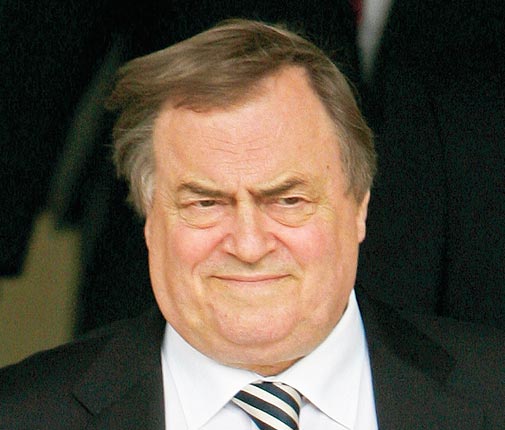
Intelligence reports that were the evidence that sent British troops into war in Iraq consisted of "a bit of tittle- tattle here and a bit more information there", the former deputy prime minister John Prescott said yesterday.
The flimsiness of those reports made him "a little bit nervous", but did not shake his support for the war, he told the Iraq war inquiry. His role, as he saw it, was to support Tony Blair and keep the Cabinet united. His remarks, on the last day of the summer session of the long-running Chilcot inquiry, will add to widespread doubts about whether Iraq's alleged weapons of mass destruction were the real reason that Mr Blair committed the UK to war. His deputy appears not to have taken anything he was told by intelligence very seriously. Giving evidence yesterday he airily dismissed the former head of MI5, Eliza Manningham-Buller, saying: "She was always on about the threat of terrorism. Along with it came 'Please give me more money'."
Yet other sources, such as the published diaries of Mr Blair's former press secretary, Alastair Campbell, show that Mr Prescott played an energetic part in rallying cabinet support for a war that was supposedly being fought because of intelligence reports that Iraq maintained a secret armoury of weapons of mass destruction.
Lord Prescott told Sir John Chilcot and his panel that he saw the reports, and they made him "nervous". He said: "I just thought: 'Well, this is the intelligence document; this is what you have. It seems robust, but not enough to justify it.' Certainly what they do in intelligence is a bit of tittle-tattle here and a bit more information there."
The comment provoked outrage from opponents of the war and families who lost loved ones in the conflict.
Mike Aston, whose 30-year-old son Corporal Russell Aston was one of six military policemen killed during a riot in Basra in June 2003, said: "His [Lord Prescott's] remarks are absolutely disgraceful. There are 179 families who have lost their loved ones in this war. It has cost me a son. I have to keep that at the back of my mind to stop it boiling over."
Rose Gentle, whose 19-year-old son Gordon was one of the first British casualties, said: "I'm disgusted. This is my boy's life they are talking about. The smug look on that man's face made it seem as if it was just a joke to him."
Tim Farron, the Liberal Democrat foreign affairs spokesman, said: "It just goes to undermine further any sense that the Government's stated reasons for going into Iraq were accurate.
"We have always suspected that there were other reasons. The sense that we were in there to protect British interests or security is further undermined by what Lord Prescott said."
Labour MP Jeremy Corbyn said: "If John really believes that, why was he so silent at a time of such a momentous decision that has led to a war that has cost the lives of half a million people?"
The SNP's defence spokesman, Angus Robertson, said: "There can be few more serious decisions than taking a country to war, yet John Prescott has dismissed some of the key intelligence as mere tittle-tattle. His evidence is consistent with what we know about Labour's dodgy dossier and absolutely reinforces the need for Tony Blair to be recalled to the inquiry. Labour's case for war in Iraq looks increasingly flimsy."
Sir John Chilcot and his panel began questioning witnesses in public last November and have now heard from almost everyone most closely involved in the decision to go to war.
From the questions directed yesterday at the former deputy prime minister, it appears that the panel are not convinced there was solid evidence that the former Iraqi regime posed a threat to the West. They are also questioning why the former attorney general Peter Goldsmith concluded that it would be legal to go to war without another resolution from the United Nations.
Lord Prescott said he had not seen the background papers that led Lord Goldsmith to his final conclusion, but said he did not need to. He also contradicted the claim made in Parliament at the time, by Mr Blair and the former foreign secretary Jack Straw that the UK had not applied for a second UN resolution authorising the invasion because the French had announced in advance that they would veto it.
Lord Prescott said they had been wrong to blame "the poor old French". He said he did not know whether Tony Blair had done a private deal with George Bush in 2002 that if the US invaded Iraq, UK troops would go in with them, regardless of the circumstances, because he was not there when the two leaders met. Lord Prescott ended his evidence by dismissing "fashionable" criticism made of Mr Blair, including by some witnesses to the inquiry.
"We have seen a few people gloss over their part in the history of what happened," he said. "I have learnt that true leadership is not about having the benefit of hindsight. It is about having the gift of vision, courage and compassion and I believe that Tony Blair had all those three."
Join our commenting forum
Join thought-provoking conversations, follow other Independent readers and see their replies
Comments