UK

Mostly Cloudy with Showers 8° London Hi 8°C / Lo 4°C

Revealed: airlines' £10bn government fuel subsidy
By Andrew Grice
Monday, 9 June 2008

null

LUCY COLLINS/PA WIRE

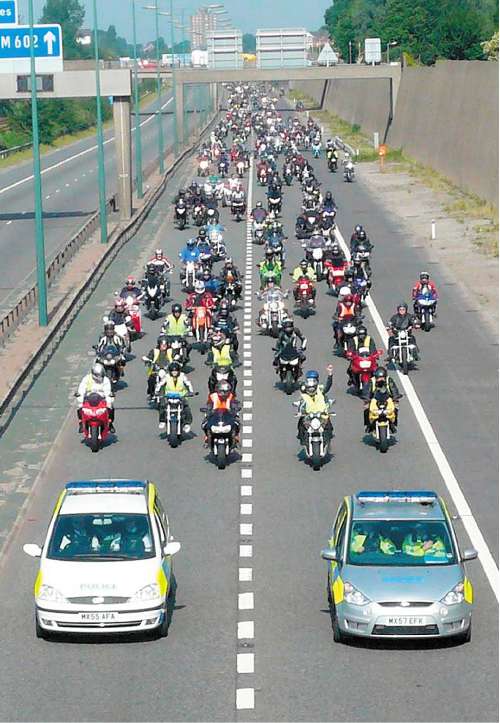
Bikers protest against rising fuel prices on the M62 in Salford, in a slow-moving convoy which brought rush-hour disruption to the area on Thursday. Lorry and taxi drivers joined them.

The Government has been urged to abolish a £10bn-a-year "hidden subsidy" to the airline industry to bring it into line with hard-pressed motorists struggling with higher petrol prices.

Although the aviation industry claims it is being badly hit by the soaring price of oil, it still enjoys a double boost denied to drivers because it does not pay fuel duty or VAT on the fuel for its planes. New figures suggest this subsidy is worth £9.92bn at current levels of fuel tax.

The proposal will be strongly opposed by airlines, which have already warned that passengers face surcharges of £30 a ticket this summer because the cost of aviation fuel has doubled in the past year.

With hauliers and fishermen protesting that their livelihoods are at risk and motorists feeling the pinch as the economy slows, the Liberal Democrats argue that the airlines should no longer get special treatment.

"This is a massive public subsidy for an industry that is one of the fastest-growing contributors to climate change," said Norman Baker, the party's transport spokesman, whose written Commons questions revealed the scale of the perk. "Ordinary motorists continue to pay fuel tax, so why should aviation continue to be exempt?"

He said it was wrong that drivers had to pay 58p per litre in fuel duty, plus VAT of 17.5 per cent, while the aviation industry only paid air passenger duty of £1bn a year.

Mr Baker called on the Government to push for an international agreement to tax aviation fuel to put the industry on a "level playing field" with other modes of transport. The figures show that the amount of aviation fuel used in the UK has risen by 50 per cent – from 8.45 million tonnes to 12.69 million tonnes – since 1997.

The Liberal Democrats' move was welcomed by Friends of the Earth, which is lobbying the Government to beef up its Climate Change Bill ahead of a Commons debate today. Martyn Williams, the group's parliamentary campaigner, said: "Words are not enough – ministers must take firm action to wean us off our fossil fuel dependency and to tackle climate change, improve energy security and stop the country being held hostage to rising fuel prices."

At first glance, extra tax revenues from the airlines might look attractive to the Chancellor, Alistair Darling, as he struggles to balance his books after finding £2.7bn to compensate losers from the abolition of the 10p rate of income tax. However, he is wary about similar calls for a windfall levy on the oil companies, believing that business needs certainty about the tax system so that it can plan ahead. He has already alienated some business leaders over plans to streamline corporation tax and the treatment of foreign residents with non-domicile status.

Imposing higher tax on aviation fuel could be seen as a "green tax" but the public's appetite for paying a price to help the environment appears to be waning as the global credit crunch bites. The Chancellor is already facing a revolt by Labour MPs over his plans to raise retrospectively by £200 a year the vehicle excise duty paid on cars up to seven years old. Critics say drivers of family cars will be hit.

Last September, David Cameron backed the idea of imposing VAT on aviation fuel for domestic flights and a new airline passenger tax linked to the carbon impact of each flight. Although the Tories remain committed to "green taxes", which they would use to cut taxes on families, some Tory insiders say Mr Cameron's enthusiasm for them has cooled because the public has "reached its limits" on tax levels as the economic picture darkens. He will set out his latest thinking on the environment in a speech this week.

The aviation industry is stepping up its campaign for lower taxation by governments, warning that airlines around the world could go bust amid the oil price hike, the twin threat of recession and inflation and lower disposable incomes.

It is pressing the EU to scale down its plans to include aviation in its emissions trading scheme (ETS) to combat climate change, which will be finalised this summer. Peter Hartman, chairman of the Association of European Airlines and chief executive officer of KLM, said: "ETS was designed at a time of $40 [per barrel of] oil. We now have $130 oil – and it could go higher. ETS was designed at a time of 6 per cent growth. We now have 3 per cent – and it will go lower. Meanwhile, we are becoming more and more energy-efficient."

The International Air Transport Association (IATA) warned that the industry will be forced into red by the fuel crisis. It predicts worldwide losses of $6.1 bn (£3bn) this year if oil remains at its current price. "Airlines are struggling for survival and massive changes are needed," Giovanni Bisignani, IATA's director-general, told its annual meeting in Istanbul last week. "Governments must stop crazy taxation, change the rules of the game and fix the infrastructure. [The] labour [force] must understand that jobs disappear if costs don't come down."

Additional reporting by Ben Russell

Interesting? Click here to explore further

Comments

39 Comments

It's illegal to tax aircraft fuel under international law, so increase airport tax instead.

If it reduces the number of transit passengers through our airports it will mean that people who live around our airports might be able to get to sleep at night as there will be fewer flights. We would also not have to rip up our towns and villages to accommodate new runways and the roads to service them.

Airlines don't pay for the infrastructure to service airports, the taxpayer does. That is a subsidy which means that the majority who do not fly are subsidising the minority who do.

There is also a net outflow of money from this country in the tourism account, i.e. we spend more abroad than incoming tourists to this country spend here. So if we discourage a few of our fellow countrymen from flying there is a benefit for most of us.

Government figures for airline growth are based on an oil price of $60 to $70 per barrel. No wonder they are predicting growth in flying.

Posted by Ken Neal | 12.06.08, 03:32 GMT

Post a complaint

Please note all fields are required.

Contact details

I don' see why huge aviation companies should be exempt from paying tax.

Fair enough - the cost will of course be passed on to consumers - maybe we'd all fly less!! Labour give us all this rubbish about how we all need to be greener then they expand the big airports further and don't tax one of the worst poluters on the planet.

It's another example of Labour screwing the individual and lining the pockets of large copmanies at the cost (financial and enviromental) of everyone else not in power.

Posted by Nick | 11.06.08, 14:00 GMT

Post a complaint

Please note all fields are required.

Contact details

The article is of dubious quality.
No money is given to airlines, it is not removed from them in tax which is not quite the same as a subsidy? The reason for this is international agreement, a fact which is lightly touched on but only those aware of the said agreement would take it on board.
No reference is made to the actual prices paid by train and bus companies for their fuel, this information might surprise some of your readers who are being encouraged to believe that the motorist is suffering (subsidising the Treasury?) while the airline passenger is not.
Any tax on aviation fuel will simply be passed onto the consumer as is any other tax. Companies already pay tax on their profits and the passenger pays airport duty, a tax introduced by a conservative government.
Let us please have a more balanced approach. In terms of gallons per passenger per mile aviation does not necessarily do that badly. The distances are greater, the reason why people take the plane.

Posted by Neil Johnson | 10.06.08, 10:45 GMT

Post a complaint

Please note all fields are required.

Contact details

I seem to remember the LibDems getting all hot under the collar about Iraq because it allegedly broke international law.

The current aviation fuel tax regime is determined by international law and here are those self-same LibDems demanding that the Government break international law.

This country will be in dire straits indeed if these idiots ever get near the levers of power.

Posted by Kali | 10.06.08, 08:37 GMT

Post a complaint

Please note all fields are required.

Contact details

Nice to see the retarded right show up to spread their manure. All this talk about the poor airlines and how hard it would be on them to tax them fairly... One person named EasyJet as one airline that would go under...

Of course, he failed to mention that EasyJet made RECORD PROFITS last year DESPITE high fuel costs. That's right, they didn't get taxed so that THEY could make a huge profit. Now tell me how THAT is fair?

I sure don't see the average person getting that kind of consideration.

Posted by Karmakaze | 09.06.08, 23:32 GMT

Post a complaint

Please note all fields are required.

Contact details

A greenwash-style headline that is factually incorrect.

The absence of a tax is not a subsidy at all -- simply the absence of a tax.

Posted by DJ | 09.06.08, 23:22 GMT

Post a complaint

Please note all fields are required.

Contact details

You've left a few things out of the article such as the subsidy to farmers on "red" diesel, the fact that global warming is just an unproven theory, that we already pay a huge airport tax and that our airlines would become uncompetitive compared to other international ones...another impractical liberal idea

Posted by Peter German | 09.06.08, 22:14 GMT

Post a complaint

Please note all fields are required.

Contact details

The absence of a tax is not a subsidy.

Posted by GB | 09.06.08, 21:56 GMT

Post a complaint

Please note all fields are required.

Contact details

Hi

Given that the majority of people in the UK travel for pleasure only a few times per year, I would support the airline paying the same amount of tax as the motorist. I have a caveat to this though:- the revenue raised should be used to reduce the tax on road fuels. If the same tax - say 30p/litre + VAT should be paid by all.

At the end of the day, people fill their tanks much more often than they take flights - and many business flights are entirely unessesary - use video conferencing instead!

It seems like madness to me that I am heavily taxed to go on holiday in the UK, spending my money at local shops and bolstering the British economy, where-as if I choose to holiday abroad, and bolster the Spanish economy I can do it almost tax free!

Nigel

Posted by Nigel | 09.06.08, 21:48 GMT

Post a complaint

Please note all fields are required.

Contact details

Applying fuel duty and VAT to aviation fuel is a very attractive propostion for the treasury but can you imagine the amount of fuel being wasted as companies fly around to fill up at the cheapest 'pump'.
Taxes on airlines should be designed to improve energy efficiency while allowing the industry to grow and provide employment.

For the stories of the day and your uncensored right of reply

THE YELL REPORT
The best of the UK press online

yellreport.com

Posted by will | 09.06.08, 21:02 GMT

Post a complaint

Please note all fields are required.

Contact details

39 Comments


Preparing for power

Article Archive

Day In a Page

Sun | Mon | Tue | Wed | Thu | Fri | Sat

Select date