Terrorist threat 'exploited to curb civil liberties'
Security measures brought in after September 11 attacks 'undermined the rule of law'
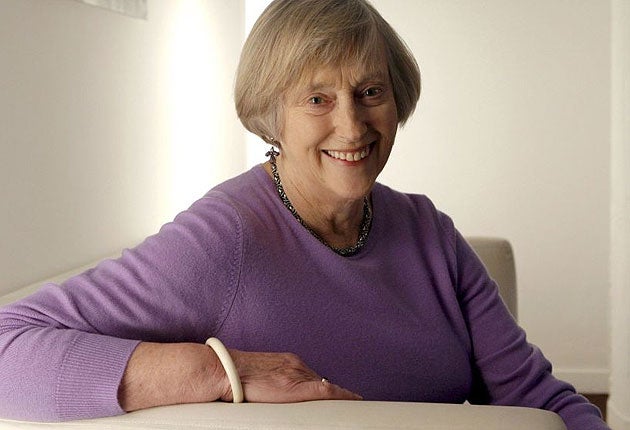
Dame Stella Rimington, the former head of MI5, has accused the Government of exploiting public fear of terrorism to restrict civil liberties.
Her comments came on the same day as a report published by international jurists suggested that Britain and America have led other countries in "actively undermining" the rule of law and "threatening civil liberties" in the guise of fighting terrorism.
In an interview with the Spanish newspaper La Vanguardia, Dame Stella said that a series of increasingly draconian policies have led British citizens to "live in fear and under a police state".
The 73-year-old said: "Since I have retired I feel more at liberty to be against certain decisions of the Government, especially the attempt to pass laws which interfere with people's privacy.
"It would be better that the Government recognised that there are risks, rather than frightening people in order to be able to pass laws which restrict civil liberties, precisely one of the objects of terrorism: that we live in fear and under a police state."
Dame Stella, who became the first female head of MI5 in 1992 and held the position until 1996, has long been a vocal critic of the Government's plans to introduce ID cards and lengthen the amount of time terror suspects are held without charge to 42 days. In the interview yesterday, she also criticised the United States.
She said: "The US has gone too far with Guantanamo and the tortures. MI5 does not do that. Furthermore it has achieved the opposite effect: there are more and more suicide terrorists finding a greater justification."
The former MI5 chief chose to air her views on the same day as a three-year study called for urgent measures to stop the erosion of individual freedom by states and the abandoning of draconian measures brought on with the "War on Terror".
The International Commission of Jurists (ICJ) said the legal framework which broadly existed in democratic countries before 9/11 was "sufficiently robust to meet current threats".
Instead, a series of security measures were brought in, many of which were illegal and counter-productive, instilling anger and resentment expressed through violent protests.
One worrying development, says the report, was that liberal democracies such as the UK and US have been at the forefront of advocating the new aggressive policies and that has given totalitarian regimes the excuse to bring in their own repressive laws.
The ICJ panel, which included Mary Robinson, the former Irish president and United Nations Human Rights Commissioner and Arthur Chaskelson, the former president of the South African constitutional court, gathered their evidence from 40 countries.
They took testimony from government officials, ministers, and people in prison for alleged terrorist offences.
The actions of the US has immense influence on the behaviour of other countries, the study maintained, and the jurists called on President Barack Obama to repeal policies which came with the "war on terror paradigm" and were inconsistent with international human rights law. "In particular, it should renounce the use of torture and other proscribed interrogation techniques, extraordinary renditions, and secret and prolonged detention without charge or trial".
The report stated: "The framework of international law is being undermined... the US and UK have led that undermining."
The jurists examined cases which included "individuals abducted and held in secret prisons, where they have been tortured and ill-treated; terrorist suspects held incommunicado for extended periods before being charged and before they have access to lawyers; a culture of secrecy (in which) suspects are being placed beyond the basic protections afforded by... international humanitarian laws".
The ICJ "received evidence that intelligence services... effectively enjoy impunity for human rights violations. In addition... state secrecy or public interest immunity have been used to foreclose civil suits and hence remedies to the victims of such abuses."
Mr Chaskelson, chairman of the panel, said: "... we have been shocked by the extent of the damage done over the past seven years by excessive... counter-terrorism measures..."
A Home Office spokesman said: "We recognise clearly our obligations to protect the public from terrorist atrocities while upholding our firm commitment to human rights and civil liberties. Our policies strike that balance."
'War on terror' The mistakes repeated
*Giving evidence to the panel, Sir Ken Macdonald, Britain's Director of Public Prosecutions said: "There is no such thing as a 'war on terror'... The fight against terrorism on the streets of Britain is not a war. It is the prevention of crime, enforcement of our laws ..."
The report also says the "war on terror" is repeating the mistakes made by the British in Northern Ireland. It states: "Sometimes the parallels are almost surreal. Witnesses talked of the failed detention policies in Northern Ireland as having led to 'hundreds of young men in working-class nationalist communities joining the IRA and creating one of the most efficient insurgency forces in the world ...' One must wonder, 30 years later, what impact the sight of the treatment of detainees at Guantánamo Bay or Abu Ghraib is having on young Muslims in Britain and elsewhere."
Join our commenting forum
Join thought-provoking conversations, follow other Independent readers and see their replies
Comments