Together at Chequers, but this was the week that the coalition's honeymoon ended
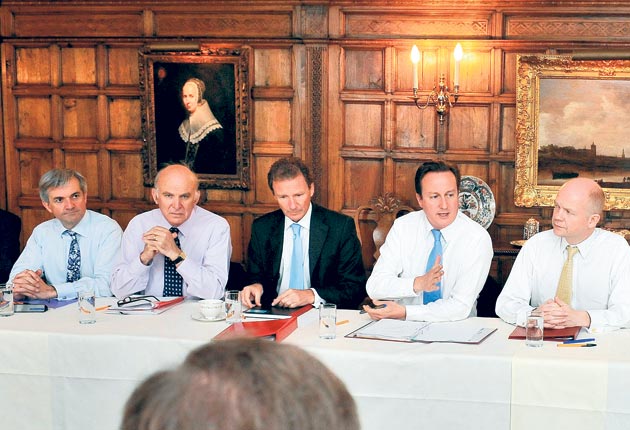
The cabinet met at Chequers yesterday for its first full political session, without civil servants, since the coalition was formed. There in the leafy Buckinghamshire countryside, far from the hustle and bustle of Whitehall, they took stock of the challenges that lie ahead.
A three-hour discussion before a suitably austere sandwich lunch focused on plans to ensure a stronger fightback against Labour's attacks on the Government. Labour will be asked the "What would you do?" question about the £155bn deficit, while the coalition will work harder to convince the public that the long-term gain of its spending cuts will be worth the short-term pain. The Conservatives and Liberal Democrats will send emissaries to each other's party conference this autumn – but they will speak at fringe meetings, not the main event. The two parties will not attack each other, but they will keep their separate identity – a more pressing need for Nick Clegg than for David Cameron.
As well as being Deputy Prime Minister, Mr Clegg has to keep his own party onside. Some grassroots activists, MPs and peers are nervous. The party has slumped in the opinion polls to just 14 per cent, according to YouGov this week – its lowest rating since February last year. Many in the party fear a mauling in next May's elections to the Scottish Parliament, Welsh Assembly and English councils; a No vote in the same day's referendum on changing the voting system; and a hammering by Labour at the next general election, especially in the north.
Although the Tories' ratings are up since this year's election, there was a sense as the Cabinet gathered yesterday that the coalition government's honeymoon may be over.
True, many voters want the partnership to work and like the idea of parties co-operating. But the contrast with 1997 is striking. Tony Blair's honeymoon lasted for years, but it seems the gloss is already coming off the coalition. In mid-June, 48 per cent of the public approved of the Government's performance, while 27 per cent did not, according to YouGov. But in the past month, the scale of the looming cuts has hit home and ministers have struggled to make the case for their public service reforms. Now only 41 per cent approve of the Government's performance, and 37 per cent disapprove.
While the Blair government attracted people who had not voted Labour, the latest YouGov figures suggest that many who voted Tory or Liberal Democrat in May are unhappy with the coalition. Only 40 per cent of Liberal Democrat voters approve of its performance; 36 per cent do not. Less than half of those who voted for the party in May would do so now; 18 per cent would switch to Labour, suggesting that, if it plays its cards right, Labour can become the focus of opposition to the coalition.
It has been a messy week for the Government as the excitement of being in power gives way to the burdens and hassles of office. A successful visit by Mr Cameron to the United States was eclipsed by the row over whether BP lobbied for the release of the Lockerbie bomber, which distracted attention from some positive signals from President Barack Obama about his personal relationship with the Prime Minister.
The Government decided that its policy on whether the Iraq war was illegal was... well, not to have a policy. There were signs of tension between the coalition partners over university tuition fees and housing benefit.
Mr Clegg's task is to persuade his restive troops to stick with the coalition for the long haul. His message is that the first priority is to display "competence", so his party can answer the "wasted vote" argument which bedevils it at elections. In the short term, that means swallowing some Tory medicine, since public disagreements would make his party look anything but competent.
Stage two of the Clegg strategy is to allay fears that his party's identity is being lost. Lord Greaves, a Liberal Democrat peer, warned yesterday: "If we lose our distinctiveness, there is no reason at all for anybody to vote for us in the future, and the party will therefore disappear." He said Mr Clegg "has to find a way of being a loyal Deputy Prime Minister and also being number one in the Liberal Democrats, explaining why the Liberal Democrats are significantly different to the Conservatives."
So there will be a drive to show how Mr Clegg and his fellow ministers are influencing the coalition's agenda. The policy chairmen the Liberal Democrats have appointed for each Whitehall department will be invited to ministerial meetings – a concept that some civil servants are struggling with – so that they are consulted before policies are announced.
There was consternation in Mr Clegg's party that the Health Secretary Andrew Lansley's plan to hand more power to GPs came out of the blue, as it was not included in the "coalition agreement" struck in May. Norman Lamb, Mr Clegg's chief political adviser, and Ed Llewellyn, the No 10 chief of staff, will try to oil the wheels to make the partnership work more smoothly.
There are (less visible) doubts about the coalition on the Tory backbenches. Some MPs are angry that Mr Cameron offered a referendum on the voting system. They suspect the Prime Minister is happier to rely on the Liberal Democrats for a comfortable Commons majority than his own MPs. They are right.
Tory right-wingers suspect the Liberal Democrats have turned the heads of Tory ministers away from their natural supporters. They cite Europe, on which the Tories have dropped plans to repatriate powers from Brussels, and sentencing, where the Justice Secretary, Kenneth Clarke, has disowned Michael Howard's "prison works" mantra.
The truth is more complicated. In a recent Cabinet discussion, several Tory ministers enthusiastically backed Mr Clarke's plans for a sentencing shake-up – to the delight of Liberal Democrat ministers. On Europe, Mr Cameron never wanted a debilitating battle with Brussels, and was relieved that the Liberal Democrats gave him the cover to avoid one. "We are doing what we wanted to do anyway," one Cameron ally says. "If people want to blame the Liberal Democrats, so be it."
Despite the jitters on their backbenches, Mr Cameron and Mr Clegg remain wedded to the coalition, and determined to ensure that it lasts for the five-year parliament. The worry for many Liberal Democrats is that they can see a happy ending for Mr Cameron but not for Mr Clegg.
A week of living dangerously
Iraq
Nick Clegg caused turmoil by declaring in his despatch box debut at PMQs that the Iraq war was "illegal". Later it was explained that he was speaking personally, not for the Government.
Afghanistan
David Cameron denied the Government was sending mixed messages on when British troops would withdraw from Afghanistan. The Prime Minister hoped troops would start pulling out next year but said it would depend on conditions on the ground.
Prisons
Downing Street dumped on Crispin Blunt, the Justice Minister, after he suggested prisoners would be allowed party nights. Lord Howard, the former Home Secretary, fired a broadside at plans by Kenneth Clarke, the Justice Secretary, to jail fewer offenders.
Universities
A senior Tory source said the Government was unlikely to bring in a "graduate tax", only a week after Vince Cable, the Liberal Democrat Business Secretary, said the move was under consideration. The Liberal Democrats' policy is to phase out tuition fees but the Tories may raise them.
Cuts
Alarm bells rang at Downing Street after Liam Fox, the Defence Secretary, admitted he was embroiled in a row with the Treasury over whether his department should fund Trident's renewal. No 10 wants negotiations in the Government-wide spending review to be conducted in private to limit headlines about "cuts".
Industry
The Government faced its first allegations of sleaze after it emerged that Andrew Cook, a millionaire Tory donor, successfully lobbied ministers to halt a £80m loan to Sheffield Forgemasters authorised by the Labour government.
Join our commenting forum
Join thought-provoking conversations, follow other Independent readers and see their replies
Comments