Why my niche vote won't be a wasted vote
Ten years ago, as a first-time voter, Sophie Morris thought supporting the Greens was just about saving polar bears. Now, she argues, the party is getting serious
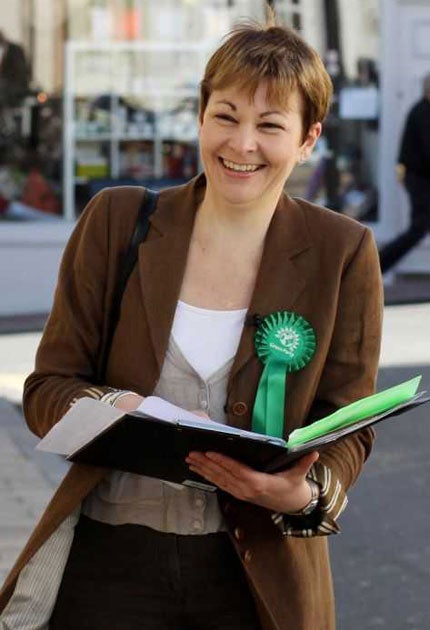
When I cast my first vote in a general election in 2001 it was for the Green Party. This was pre-9/11, pre-Afghanistan, pre-Iraq, and pre-credit crunch, and my reasoning was unsophisticated. The Green Party was set up in 1973 to develop a sustainable society, but back then, in the salad days of my political engagement, sustainability meant making 10 Marlboro Lights last a whole day. Yet I liked trees and I liked polar bears, so a political party that believed in a world where the trees, the polar bears and I could all muddle along together seemed worth a vote.
Almost 10 years on, the Green Party remains unrepresented in the Commons, though it does have two MEPs, leader Caroline Lucas and Jean Lambert, and the Scottish Green Party has two MSPs, Patrick Harvie and Robin Harper. This year it's fielding over 300 candidates, the party's largest push ever.
If this is a reaction to increased interest in the environment, the sticking point is that the environment is now a mainstream topic. As such, are the Greens still the go-to party for dedicated eco-warriors? And can they inspire confidence elsewhere? A government cannot be built on energy-efficient lightbulbs alone.
The manifesto provides a whiff of nostalgia, transporting me back to the days when real social justice seemed like a political possibility rather than a pipe dream. It's riding with the slogan "fair is worth fighting for", which sounds an awful lot like the Liberal Democrats, but the Greens propose far more radical tactics than even an outlier like Nick Clegg can risk. A wholesale redistribution of wealth and a clampdown on any anti-green activity are the main objectives, stimulated by concepts such as a "Robin Hood tax", "ecological debt" and a "citizen's income".
Essentially the Greens have assumed the position of the old Left, offering succour to disgruntled and disenfranchised former Labour supporters in the form of a "Green New Deal". A campaigning leaflet highlights promises you'd expect to hear bellowed from a Socialist Worker soapbox – renationalise the railways, subsidise the Post Office, raise the minimum wage, stop privatisation of the NHS and crack down on big bonuses and tax evasion.
But the big question is whether we can build a green economy without crippling the present one. Businesses focused on short-term profits argue you can't go green in a recession. But the Greens are in it for the long term: slow and sustainable growth and large emissions cuts (10 per cent each year until 2030). They would tax their way towards a fairer Britain and yes: it would hit the rich hard – taxes would be raised to Thatcher-era highs of a 45 per cent average, which means a 50 per cent rate on those earning £100,000 or more, a tax on bonuses and a rise in capital gains tax. Taking the long view, sadly, has never been a way to win votes.
Like Labour, they plan to halve the deficit by 2013 without cutting public spending. Revenues would be raised by abandoning the ID card programme, saving £2.5bn, and by Britain going nuclear free when the Trident weapons policy expires, saving £97bn. Then they'll recoup the £30bn earmarked for road building while improving public transport and slashing its cost. The Robin Hood tax is a tiny levy on international financial transactions, designed to hit bankers and raise billions and already generating huge interest online.
On the environmental front the Greens believe they remain the canary in the mine. Given the shortcomings of Kyoto and the failure of Copenhagen, no one else is genuinely offering to fight it out on climate change and food security.
There is a real chance Green candidates could be elected in Brighton Pavilion, Norwich South and Lewisham Deptford. New faces at Westminster don't mean inexperienced politicians, just politicians new to the Commons. If you're still furious about the expenses scandal and are looking for a protest vote, new MPs, whether Green, independent or anything else, could break the corrupt status quo kept in place by career politicians.
Yet championing the local inevitably requires a retreat from the global. The Greens say they are internationalists, but retiring inwards can narrow our broadly cosmopolitan world view, something Britain is rightly proud of. The quiet skies of the past few days have been enjoyed by many, but the idea of an isolated Britain is not a pleasant one.
Voters always grumble about being offered no real choice and say a vote for a marginal candidate is a wasted vote, but real change occurs incrementally. If the Greens win two seats this time round, next time it could be 10. And it's no longer just about the trees and the polar bears, but about the bees and the robins and the food in your fridge, and keeping the fuzzy glow in those energy-efficient lightbulbs.
Join our commenting forum
Join thought-provoking conversations, follow other Independent readers and see their replies
Comments