Will the credit crunch force a Conservative policy rethink?
Preparing for Power - the economy: In the second of a week-long series, Andrew Grice investigates the Tories’ tax-and-spend plans and why they may need revising
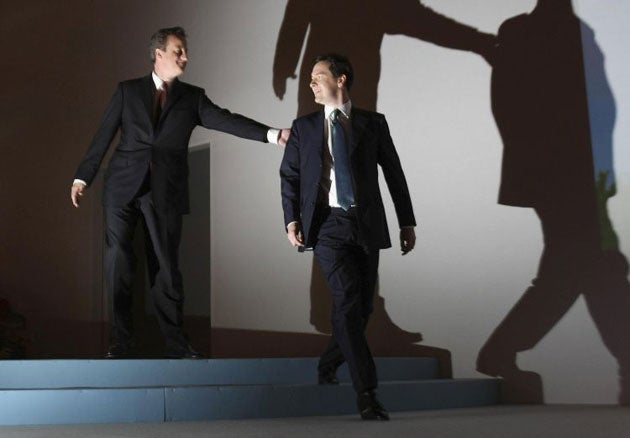
When David Cameron was running for the Tory leadership three years ago, he and his close allies mapped out a plan to take him not just to the top of his party but all the way to Downing Street. As leader, he would spend two years drawing up the policies of a Tory government and then the next two years selling them to the voters.
The Cameron Project has gone remarkably according to plan. Although he had to fillet the voluminous reports pumped out by six policy reviews last year, they gave the Tory leader the bones – and some of the flesh – of his programme for government. In recent weeks, however, a cloud has appeared on the Tory horizon. As the economic downturn threatens to turn to recession, some Tories have begun to wonder whether the party's best-laid plans may have to be rewritten because of the scale of the mess they would inherit.
The leadership insists its strategy is built to withstand such an economic shock; after all, the Opposition has long warned that Gordon Brown's economic success has been based on an unsustainable borrowing and credit binge. Privately, senior Tories hope the worst of the current economic storm will have passed by 2010, the likely election year. But they have started to lower expectations just in case it has not.
This explains Mr Cameron's surprise hint this month that an incoming Tory government might have to raise taxes, let alone bow to demands from party traditionalists to cut them. The interesting thing is, his remarks did not provoke howls of outrage from right-wingers who believe their party stands for nothing if it doesn't promise tax cuts tomorrow.
Mr Cameron and the Shadow Chancellor George Osborne, who have repeatedly refused to offer immediate tax cuts, rightly feel vindicated. It would look odd to pledge lower taxes now when there is no money in the kitty. And the current uncertainty makes it more plausible for the Opposition to say it cannot write its Budget for the summer of 2010 now. Since Mr Cameron became Tory leader, the internal debate about the party's direction has often been conducted through the prism of tax cuts. But the mood may be changing. John Redwood, a tax-cutter who headed the party's economic competitiveness review, said yesterday: "I think we will go into the election promising very little on either tax or spending. George Osborne very much believes that taxes are too high and wants to get them down." Mr Redwood is pressing the leadership to promise a wide-ranging audit of government spending as soon as it takes power.
Mr Cameron is prepared to take "tough decisions" on spending but may be reluctant to advertise them before the election as it might give Labour much-needed ammunition. Labour has found the Tory leader an elusive target. He has limited his party's policy pledges, just as Tony Blair did before the 1997 election. Mr Cameron is open to the charge of opportunism, notably over Mr Brown's abolition of the 10p rate of income tax, where he made hay but refused to say what the Tories would do because it was the Prime Minister's problem. Ditto Northern Rock. But it doesn't seem to do Mr Cameron much harm; in the past year the two main parties have changed places when voters are asked which is best-placed to run the economy. And the Cameron-Osborne team is trusted much more than Mr Brown and Alistair Darling.
The Cameroons think Mr Brown is fighting the last war by trying to re-draw his favourite dividing line of "Labour investment versus Tory cuts." So do some cabinet ministers, recognising that people feel taxed to the limit and, after the Tories' pledge to match Labour's spending total, no longer seem to fear that a Cameron government would take an axe to public spending. There are signs that Labour is refining its attack to say that the Tories' sums do not add up – a more plausible charge. Mr Osborne tries to rein in unfunded spending commitments by Shadow Cabinet colleagues but more discipline is required, senior figures admit. The Tories have raised the prospect of a bigger Army; more high-speed rail links and light railways; a national school-leaver programme and more money to combat MRSA and help stroke patients. Labour has counted £10bn of unfunded pledges by the Tories and claims their plan to vary petrol duty with the oil price would cost another £3bn – although the Tories insist it would be revenue-neutral. At the same time, Mr Cameron pledges to "get borrowing and tax rates down". Further work is required to bolster the Tories' credibility, especially in the heat of an election battle, when their plans will be subjected to much greater scrutiny.
The Tories are wary of predicting a recession and overdoing the economic gloom, as they want to project a positive vision for Britain. But there are growing signs that they may have to scale down their ambitions when they finalise their election manifesto.
Robert Chote, the director of the independent Institute for Fiscal Studies, said: "The nightmare for the Cameron-Osborne team is that they get into office and discover that most of the budget deficit they inherit is 'structural' rather than a temporary consequence of a weak economy. Whatever is left of Labour's famous fiscal rules by then, that would place them under pressure to repair the damage."
He pointed out that Labour was now committed to the Tory strategy of "sharing the proceeds of growth" between spending and tax cuts – ensuring that spending grows less quickly than the economy – and is aiming to reduce spending by 0.9 per cent of national income over the next five years.
"This would leave the Conservatives with an unpalatable choice: to squeeze spending even tighter or to announce fresh tax increases. There is nothing certain in economic and fiscal forecasting, but they should certainly be preparing for that eventuality," he said.
Key policy commitments
Spending
Tories would match Labour's spending totals until 2010-11, but not necessarily the budgets in each area.
Marriage
Would recognise marriage in the tax system. No official costing but transferable allowances would cost around £3.2bn.
Taxes
Scrap stamp duty for first-time buyers of homes costing up to £250,000 at a cost of £400m. Raise inheritance tax threshold to £1bn. Reduce corporation tax to 27 per cent by cutting reliefs.
Unanswered questions
*How would the Tories "share the proceeds of growth" between tax cuts and spending if there is no economic growth?
*How would they bring down the level of government borrowing?
*How would they increase working tax credit for couples now that Labour has adopted the welfare plans due to raise the £3bn needed?
*Have their plans to raise £2.8bn from non-domiciles been scuppered by Labour's decision to hit them?
*When will they spell out their plans to raise green taxes so that they can in turn cut taxes for families?
Face to watch: Justine Greening
Junior Treasury spokeswoman destined for higher things. Won plaudits from Tory leadership for "running rings" round the Government with her campaign against Alistair Darling's plans to increase vehicle excise duty for older cars. Her forensic Commons questions flushed out figures about the number of cars affected which embarrassed ministers. Became an MP in 2005 by winning marginal Putney, Roehampton and Southfields seat. Appointed a vice-chairman of the party seven months later, with responsibility for youth. Former finance manager at Centrica.
Tomorrow: Health and education
Join our commenting forum
Join thought-provoking conversations, follow other Independent readers and see their replies
Comments
Bookmark popover
Removed from bookmarks