You would be daft to scrap Trident, Hutton tells Brown
Former defence secretary says we don't know whether we will face a nuclear threat
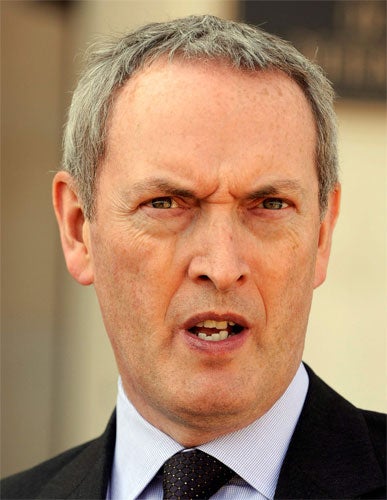
John Hutton, the former defence secretary, has warned Gordon Brown that it would be "daft" to scrap the Trident nuclear weapons system, and predicted that his plans to scale it back will not save much money.
In an interview with The Independent, Mr Hutton appealed to the Prime Minister to resist pressure from within the Labour Party to kill off the £25bn programme to renew Britain's independent deterrent.
Mr Brown has announced his intention to reduce the number of submarines from four to three. Some senior Labour figures are urging him to go further by scrapping plans to modernise what critics describe as a "Cold War relic", with the savings divided between cutting the national debt and higher spending on equipment for frontline troops.
Mr Hutton said: "I don't think the answer to the current problems we face to get our public debt down should be done exclusively or largely at the expense of our armed forces. That would be a stupid thing to do. You cannot put all your eggs in one basket. The idea that we can say we don't need Trident because the only threat we face is from international terrorism is daft. Can you honestly say to the public that for the next 50 years we are not going to face the threat of nuclear blackmail or weapons of mass destruction? You can't.
"My strong view is that we are a long way from a position of even thinking about giving up our independent nuclear deterrent."
Mr Hutton is "not convinced" by Mr Brown's proposal to cut the number of submarines, saying that four subs are needed to ensure that one boat always remains at sea. Instead, he believes Britain should offer to reduce the number of warheads at global disarmament talks next spring.
He warned that reducing the number of boats by a quarter would not provide savings of anything like 25 per cent of £25bn, because the remaining three subs would need better propulsion systems and less frequent refuelling. "It is not a cheap solution; there is a price to be paid for upgrading," he said.
Mr Hutton's stance was influenced partly by his being MP for Barrow-in-Furness, where the new Trident submarines would be built. He said Britain should not relegate itself from the "premier league" in defence engineering, as once skills were lost they would never come back.
He quit the Cabinet in June because he had decided to leave Parliament at the next election and believed Mr Brown needed ministers who would stay the course up to and beyond the election. He wants to spend more time with his family and pursue his passion for writing military history books, with two about the First World War planned for next year. He admits that this writing is unlikely to "pay the bills" and he will need some private-sector work too.
He has started speaking at private dinners for the law firm Eversheds, but turned down a post with EDF Energy, the British arm of the French state-controlled nuclear energy company.
Mr Hutton dismissed speculation that he could have helped to force Mr Brown out of office if he had joined James Purnell, who resigned in the same week, in calling for the Prime Minister to stand down. "It did not cross my mind because it is not my view," he said.
Although some fellow Blairites want a change of leader before the election, Mr Hutton insists that Labour can still win under Mr Brown provided it sets out a forward-looking vision and maintains its commitment to public service. He admits that 12 years in government is tiring, but denies that Labour has run out of steam.
He said: "We have chosen our leader. Our responsibility is to support him. If we continue to bang on about that, we will do ourselves immense damage."
He wished Mr Brown's decision to send 500 more troops to Afghanistan had been announced earlier to give military chiefs more clarity, but strongly supports the Government's stance on the conflict. Admitting that British troops might need to remain in Afghanistan for 10 years, he said: "This is a defining struggle." If Britain were to pull out, the risk of terrorist acts in this country would increase, he said.
Mr Hutton concedes that people like David Cameron, but says they have not warmed to his party's policies, and insists that the Tories are woefully unprepared for government."This new-found enthusiasm for the softer side of politics Mr Cameron espouses is not shared by his parliamentary colleagues. They are rubbing their hands with glee at the idea of picking up where Margaret Thatcher left off in 1990," he said.
Join our commenting forum
Join thought-provoking conversations, follow other Independent readers and see their replies
Comments
Bookmark popover
Removed from bookmarks